
Safety
WHS Consulting Services in Australia: A Guide for Modern Organisations
SiteSherpa · 2025-12-18 · 14 min read
Introduction: Why WHS Consulting Matters More Than Ever
Work Health and Safety has never been more complex or more critical for organisations across Australia. Whether you operate in construction, manufacturing, logistics, retail, aged care, education, or professional services, your ability to protect workers, maintain compliance with legislation, and manage organisational risk directly determines your operational stability and reputation.
Today’s regulatory environment is evolving rapidly. Safe Work Australia continues to expand expectations around psychosocial safety, fatigue risk, plant safety, incident reporting, risk management, and officer due diligence obligations. At the same time, industries across the country face labour shortages, skill gaps, subcontractor dependency, and increased scrutiny from government regulators, insurance providers, and major clients.
Amid this growing complexity, many organisations are turning to WHS consulting services in Australia for specialised guidance, strategic advice, and hands-on implementation support. These consultants help organisations cut through the noise, improve safety outcomes, reduce incidents, and build robust systems that align with legislation, standards, and industry expectations.
This comprehensive guide explores everything you need to know about the role of Work Health and Safety consultants, the services they provide, how they add value to businesses of all sizes, and how to select the right WHS partner for your organisation.
1. What Are WHS Consulting Services?
WHS consulting is a professional service delivered by qualified health and safety experts who help organisations understand, implement, and maintain their legal and operational obligations under Australian WHS legislation. These consultants typically offer:

Their primary function is to ensure your business doesn’t just comply with WHS law but that it strengthens operational performance, reduces downtime, and promotes a culture of responsibility and continuous improvement.
2. Why Australian Organisations Need WHS Expertise
Many businesses assume that internal teams or basic documentation are sufficient to meet WHS obligations. Unfortunately, this assumption can be costly.
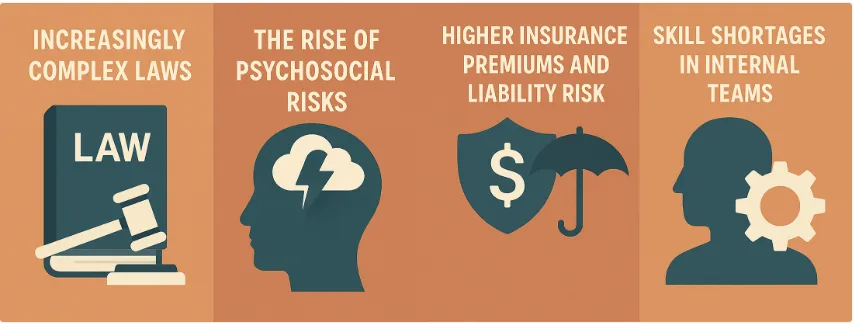
Increasingly Complex Laws
Australian businesses must comply with:
- Work Health and Safety Act 2011
- WHS Regulations
- State-specific legislation where relevant
- Codes of Practice
- Australian Standards
- Industry frameworks such as ISO 45001
A qualified consultant understands how these layers interact and translates them into practical, actionable steps.
The Rise of Psychosocial Risks
Safe Work Australia now recognises psychosocial hazards including job demands, bullying, violence, remote work pressures, and role conflict as legal obligations. These are difficult to identify and even harder to manage without expert support.
Higher Insurance Premiums and Liability Risk
Insurance providers increasingly require proof of:
- Risk assessments
- Training coverage
- Incident investigations
- Contractor safety management
- WHS Management System reviews
Poor compliance directly correlates with higher premiums, denied claims, and reputational damage.
Skill Shortages in Internal Teams
Even large organisations may not have dedicated WHS professionals or may rely on one person juggling multiple responsibilities. WHS consultants fill this gap by offering expertise without the cost of a full-time internal team.
3. What WHS Consultants Actually Do: Full Service Breakdown
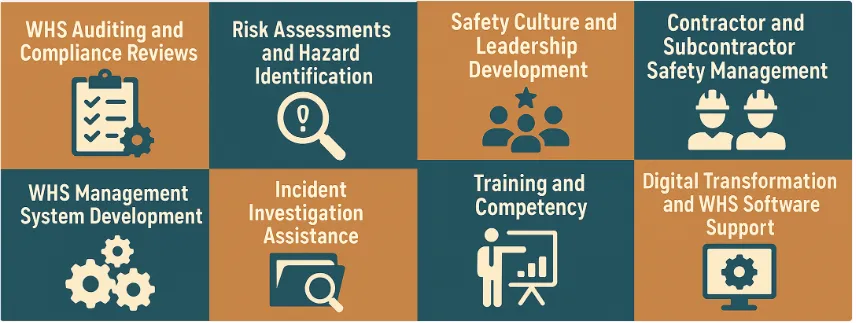
WHS Auditing and Compliance Reviews
Consultants undertake detailed audits aligned with:
- Legislation
- Industry standards
- Client requirements
- Internal policies
This includes reviewing:
- Workplaces
- Documentation
- Processes
- Records
- Training
- Incident documentation
- Plant and equipment
- Contractor controls
Findings are benchmarked and accompanied by clear corrective actions.
Risk Assessments and Hazard Identification
A core function of WHS consulting involves:
- Hazard inspections
- Risk rating using structured matrices
- Control implementation and prioritisation
- Specialised assessments (chemical, noise, ergonomic, psychosocial, or plant-related)
Consultants ensure hazards are not just identified but effectively controlled.
WHS Management System Development
A modern WHSMS must include:
- Policies
- Procedures
- Registers
- Forms
- Checklists
- Training and competency frameworks
- Consultation processes
- Emergency procedures
- Audit and review schedules
Consultants create or refine these systems so they meet ISO 45001 principles and legislative requirements.
Incident Investigation Assistance
When incidents occur, consultants help you:
- Establish root causes
- Interview witnesses
- Gather statements and evidence
- Reconstruct events
- Determine contributing factors
- Develop corrective actions
- Prevent recurrence
- Report outcomes to regulators if required
This ensures incidents are managed thoroughly, not superficially.
Safety Culture and Leadership Development
Safety isn’t paperwork, it’s behaviour. Consultants support:
- Leadership coaching
- Worker engagement workshops
- Cultural diagnostics
- Behavioural programs
- Toolbox talk improvements
- Communication strategies
These help build a workplace that genuinely values safety.
Contractor and Subcontractor Safety Management
Contractor safety is one of the most challenging compliance areas. Consultants can assist with:
- Prequalification
- License and insurance verification
- Safe work method statement (SWMS) review
- High-risk permit oversight
- Site inspections
- Performance scoring
For businesses with large contractor workforces, this service alone significantly reduces risk.
Training and Competency
WHS consultants deliver:
- Inductions
- Hazard identification training
- Risk management training
- Supervisor leadership training
- Incident reporting and investigation modules
- Emergency response exercises
Training is contextual, practical, and aligned with workplace operations.
Digital Transformation and WHS Software Support
Many consultants now help businesses transition to digital systems, including:
- WHS compliance platforms
- Risk registers
- Incident management software
- Training and competency trackers
- Contractor management portals
This improves transparency, accountability, and efficiency.
4. The Benefits of Engaging WHS Consulting Services Australia
Here are the biggest advantages organisations gain:

Reduced Incidents and Injuries
Expert assessments identify hazards long before they cause harm. This improves worker wellbeing and saves organisations from costly disruptions.
Stronger Compliance and Reduced Liability
Consultants ensure the business meets the requirements of Work Health and Safety legislation protecting Directors and Officers from prosecution.
Major Cost Savings
WHS incidents can cost a business tens of thousands in:
- Workers’ compensation
- Legal costs
- Productivity loss
- Insurance premiums
- Reputational harm
Consultants help organisations avoid these preventable costs.
Better Operational Performance
Safe businesses are more:
- Productive
- Efficient
- Stable
- Trusted
Good safety is good business.
Independent, Unbiased Insight
Internal staff often overlook issues due to familiarity. External consultants bring fresh perspective and real-world experience from many industries.
5. Industries That Rely Heavily on WHS Consultants
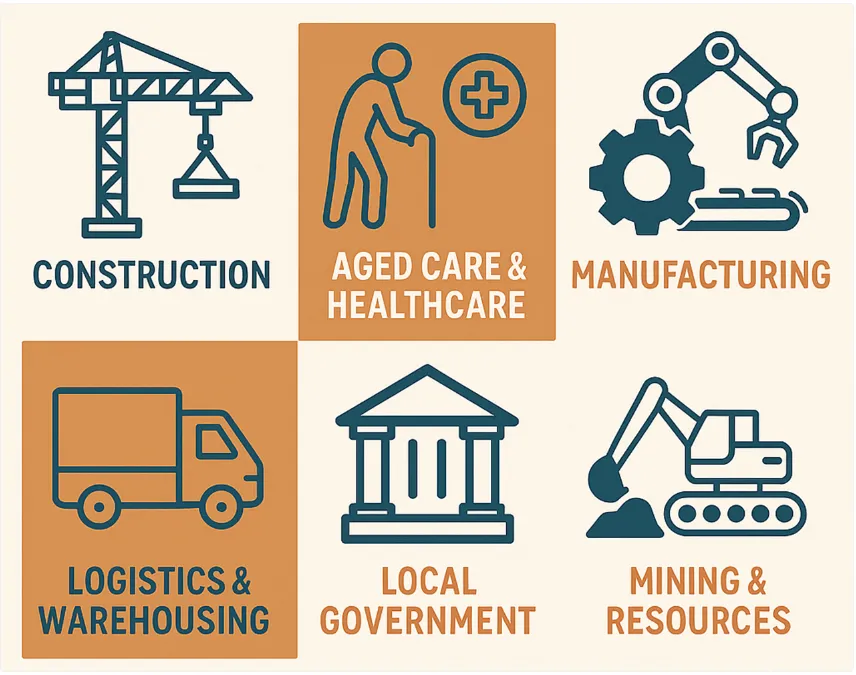
Construction
High-risk work, strict regulations, and multiple contractors mean construction companies depend heavily on WHS consultants.
Aged Care & Healthcare
With complex manual handling, infection control, and psychosocial risks, aged care heavily benefits from external WHS guidance.
Manufacturing
Machinery, plant safety, noise, chemicals, and energy control require specialised risk expertise.
Logistics & Warehousing
Vehicle movement, fatigue, manual handling and loading dock risks are critical.
Local Government
Councils manage:
- Parks
- Roads
- Facilities
- Waste services
- Community services
These require strong WHS frameworks.
Mining & Resources
High-risk environments depend on deep WHS expertise.
6. How to Choose the Right WHS Consultant
When selecting a provider of WHS consulting services Australia, look for consultants who:

Have Industry-Specific Experience
Aged care is not construction. Manufacturing is not logistics. You need someone who understands your environment.
Hold Appropriate Qualifications
This may include:
- WHS diplomas or degrees
- Lead auditor qualifications
- Incident investigation certifications
- Industry licenses
- High-risk credentials
Use Clear, Practical Language
Avoid consultants who rely on jargon or overly complex documents. Effective safety is simple.
Offer Both Strategic and Hands-On Support
The best consultants can:
- Develop systems
- Provide advice
- Conduct audits
- Attend sites
- Train staff
- Support implementation
Provide Software or Digital Enablement
Modern WHS management requires digital support.
Have a Track Record of Results
Ask for:
- Case studies
- Testimonials
- References
7. When Should You Engage a WHS Consultant?
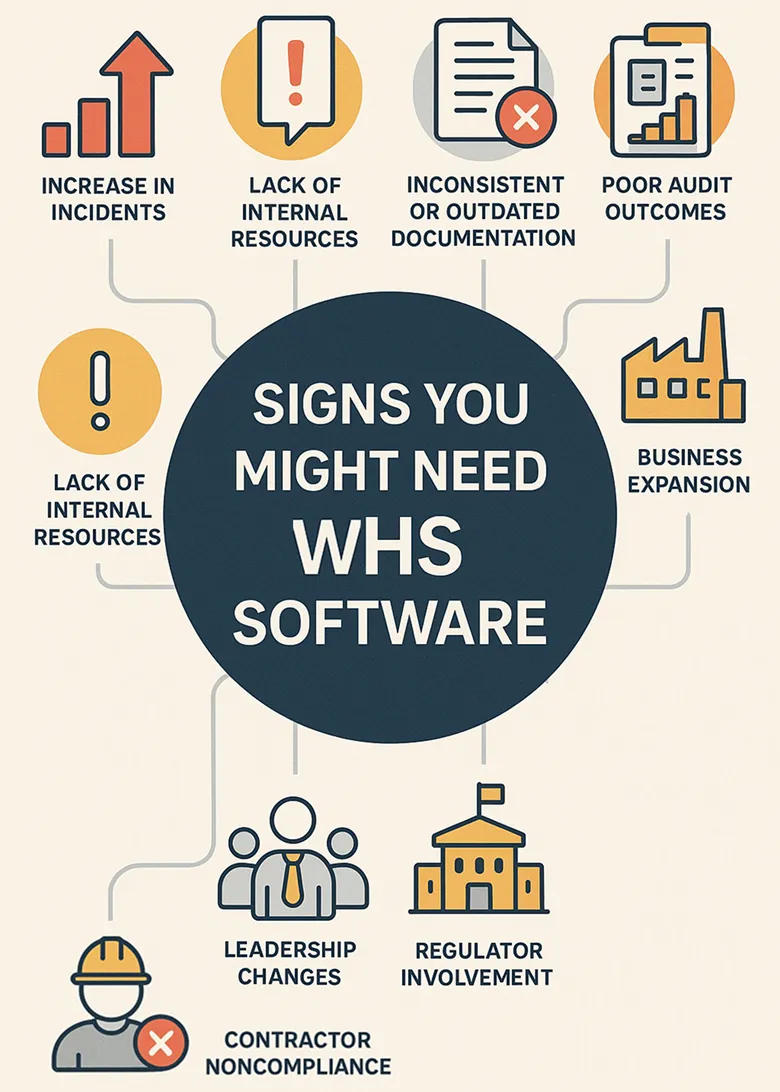
WHS consultants help stabilise systems during periods of organisational change or rapid growth.
8. Future of WHS Consulting in Australia
The landscape of WHS is moving quickly. Over the next decade we can expect:
Increased AI and Automation
Digital tools will support:
- Real-time hazard analysis
- Automated risk assessment
- Photo-based hazard detection
- Predictive analytics
Greater Focus on Psychosocial Management
Consultants will help organisations:
- Measure stress risks
- Improve workload design
- Enhance leadership capability
- Build resilient workplaces
Stronger Accountability for Officers
Board-level WHS consulting will continue to grow as Directors take on increasing legal responsibility.
Integration of Safety, Quality, Environment and Cybersecurity
Many organisations are already moving toward combined management systems across:
- ISO 45001
- ISO 9001
- ISO 14001
- ISO 27001
WHS consultants are expanding into these integrated compliance spaces.
Conclusion
Australia’s regulatory expectations, worker wellbeing priorities, and industry pressures are rapidly increasing. No organisation large or small can afford to fall behind in Work Health and Safety.
Engaging WHS consulting services in Australia gives businesses the expertise, structure, and support they need to remain compliant, reduce incidents, improve productivity, and build lasting safety culture. Whether you’re navigating legislative changes, managing contractors, or preparing for organisational growth, a qualified WHS consultant helps your business remain safe, stable, and future-ready.
As workplaces evolve, safety will remain a fundamental priority. With the right guidance and the right partnership, organisations can move beyond compliance and build safety systems that truly support their people and their long-term success. When you invest in expert WHS guidance, you are investing in the wellbeing, sustainability, and excellence of your entire organisation.
Stay in the loop.
WHS news, platform updates, and the occasional rant. No spam.
By subscribing you agree to our Terms.