
Safety
Safe Work Method Statements Explained: A Guide to Planning High-Risk Work Safely
SiteSherpa · 2026-01-21 · 11 min read
Managing workplace risk is not about producing more paperwork. It is about ensuring people understand the hazards they face, the controls in place, and their role in working safely. One of the most widely used tools to support this in higher-risk environments is the Safe Work Method Statement.
When developed properly, a Safe Work Method Statement does far more than satisfy a regulatory requirement. It becomes a planning tool, a communication aid, and a reference point that supports consistent, safe decision-making on site. When done poorly, it becomes just another document that sits unread in a folder.
This article provides a comprehensive, practical guide to Safe Work Method Statements, including what they are, when they are required, how they should be structured, and how organisations can ensure they are genuinely used in practice. It also explains how a Safe Work Method Statement template can support consistency while still allowing for task-specific risk control.
What Is a Safe Work Method Statement?
A Safe Work Method Statement (often referred to as a SWMS) is a document that sets out how high-risk construction or operational work will be carried out safely. It identifies the hazards associated with the task, assesses the risks, and documents the control measures that must be implemented.
The purpose of a SWMS is not to restate generic safety rules. Its purpose is to clearly explain:
A well-written SWMS should be understandable to the people doing the work, not just those approving it.
When Is a Safe Work Method Statement Required?
In Australia, Safe Work Method Statements are most commonly required for high-risk construction work. High-risk activities typically include tasks such as working at heights, operating mobile plant, working near live services, excavation, demolition, and confined space work.
While the exact triggers can vary by jurisdiction, the intent is consistent: when work carries a higher potential for serious harm, additional planning and documentation is required.
It is important to note that a SWMS is not always required for every task. Overusing them can dilute their effectiveness. They should be reserved for activities where structured planning and communication are genuinely necessary.
Why Safe Work Method Statements Matter
Safe Work Method Statements play a critical role in risk management because they sit at the intersection of planning and execution. They translate hazard identification and risk assessment into clear instructions for how work will be performed.
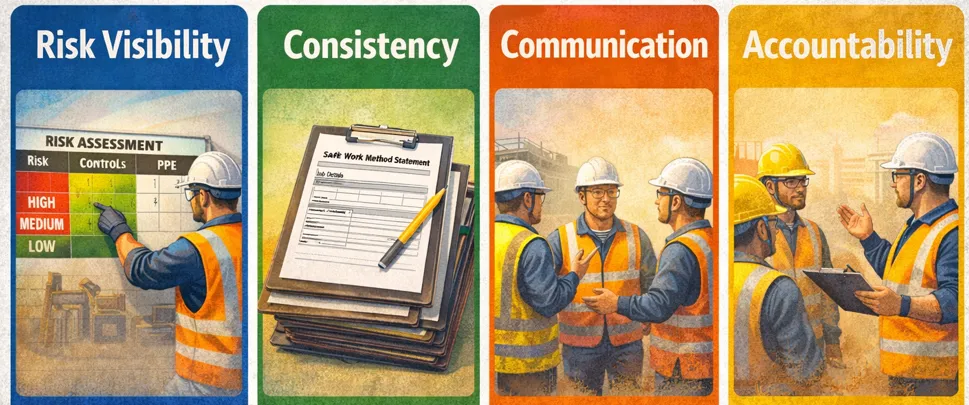
Their value lies in several key areas:
Risk Visibility
By breaking work into steps and identifying hazards at each stage, risks become visible rather than assumed.
Consistency
A documented method helps ensure work is performed consistently across different workers, shifts, and sites.
Communication
SWMS provide a shared reference point that supports pre-start briefings, inductions, and toolbox talks.
Accountability
By clearly documenting responsibilities, it becomes easier to verify whether controls have been implemented as planned.
The Difference Between a SWMS and Other Risk Documents
Safe Work Method Statements are often confused with other safety documents such as job safety analyses or risk assessments. While there is overlap, they are not the same thing.
A risk assessment identifies hazards and evaluates risk. A SWMS goes further by describing the sequence of work and embedding controls into each step.
Think of it this way:
Understanding this distinction helps organisations use the right tool for the right purpose.
What Makes a Good Safe Work Method Statement?
Not all SWMS are created equal. The quality of a Safe Work Method Statement has a direct impact on whether it is useful in practice.
A good SWMS is:
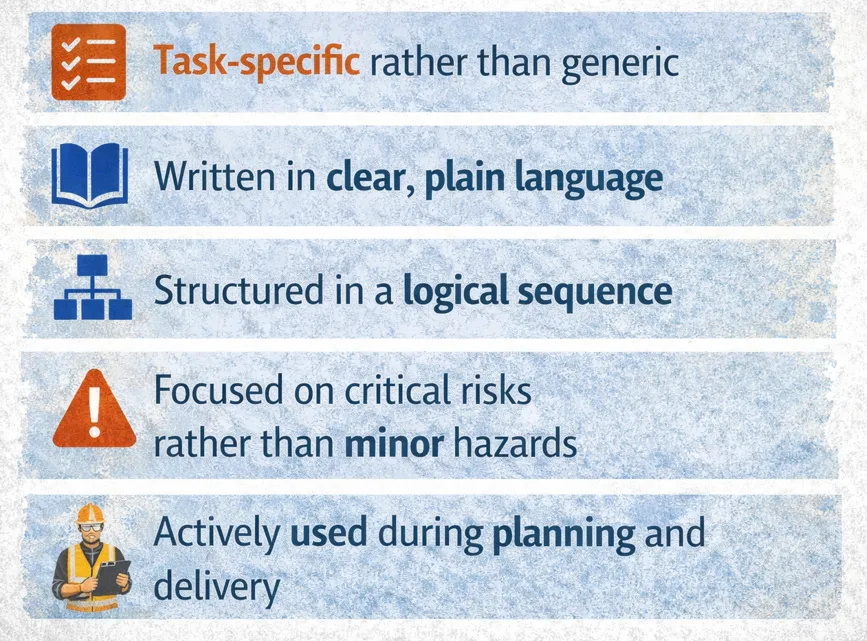
A poor SWMS, by contrast, is often copied from previous jobs, filled with generic statements, and disconnected from how work actually occurs.
Typical Structure of a Safe Work Method Statement
While formats vary, most effective Safe Work Method Statements include the following sections.

This section outlines what task or activity the SWMS applies to. It should be specific enough that workers can easily tell whether the document is relevant to the work they are about to perform.

Clear identification of who is responsible for supervising the work, implementing controls, and monitoring compliance supports accountability.

Breaking the task into logical steps helps align hazards and controls with the actual sequence of work.

Each step should identify the key hazards associated with that part of the task. The focus should be on hazards that could result in serious injury or harm.

Controls should be practical, achievable, and clearly described. They should reflect how the work will actually be performed, not just ideal conditions.

A SWMS should include confirmation that workers have read, understood, and agreed to follow the documented method.
The Role of a Safe Work Method Statement Template
Many organisations use a Safe Work Method Statement template to support consistency and efficiency. Templates can be extremely helpful when used correctly, but they can also undermine safety if relied on blindly.
A good template:
However, a template should never replace task-specific thinking. It is a starting point, not a finished product.
Common Mistakes When Using Templates
Templates are often criticised not because they are inherently flawed, but because of how they are used.
Common issues include:
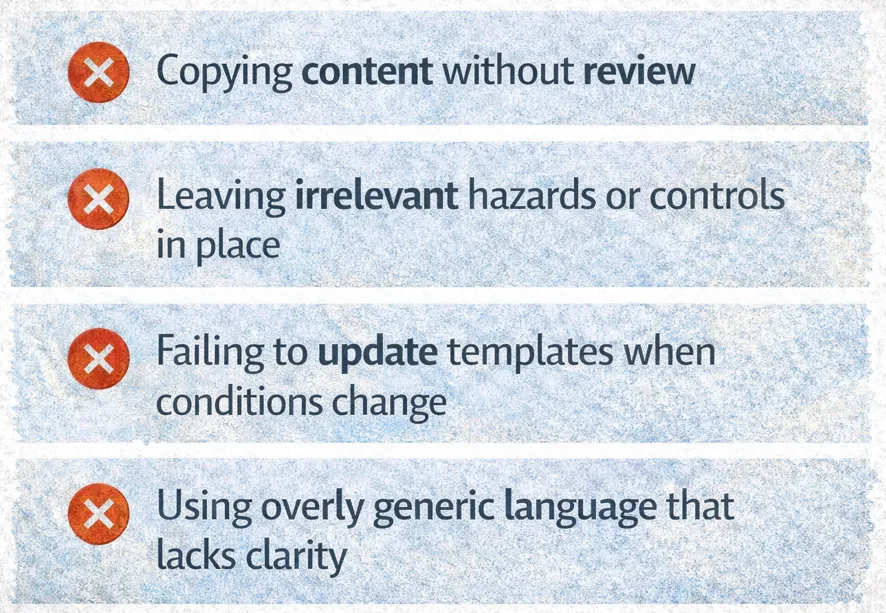
To avoid these pitfalls, templates should be treated as frameworks that require tailoring for each task and site.
Developing a SWMS That Reflects Real Work
One of the most important aspects of an effective Safe Work Method Statement is involving the people who actually perform the work.
Workers often have practical insights into:
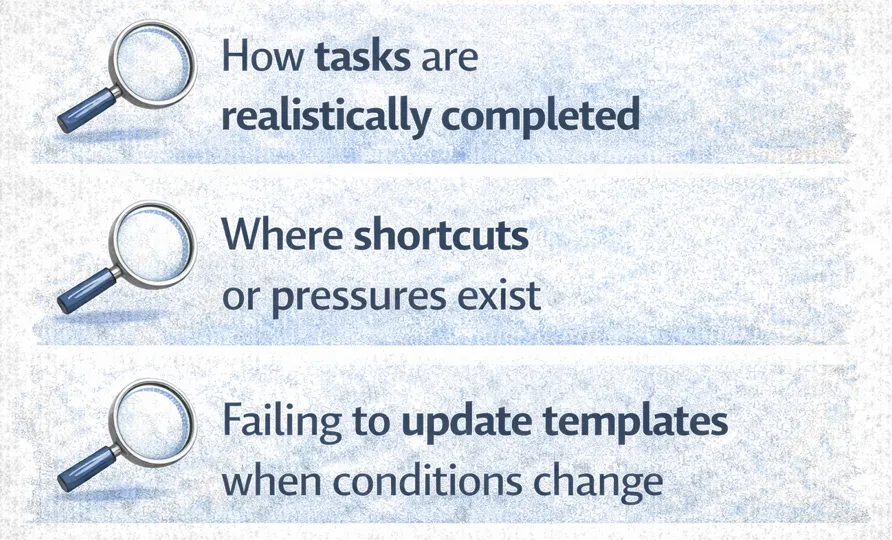
Involving workers in SWMS development improves accuracy, relevance, and acceptance. It also reinforces shared ownership of safety outcomes.
Using SWMS as a Living Document
A SWMS should not be written once and forgotten. It should be reviewed and updated when:
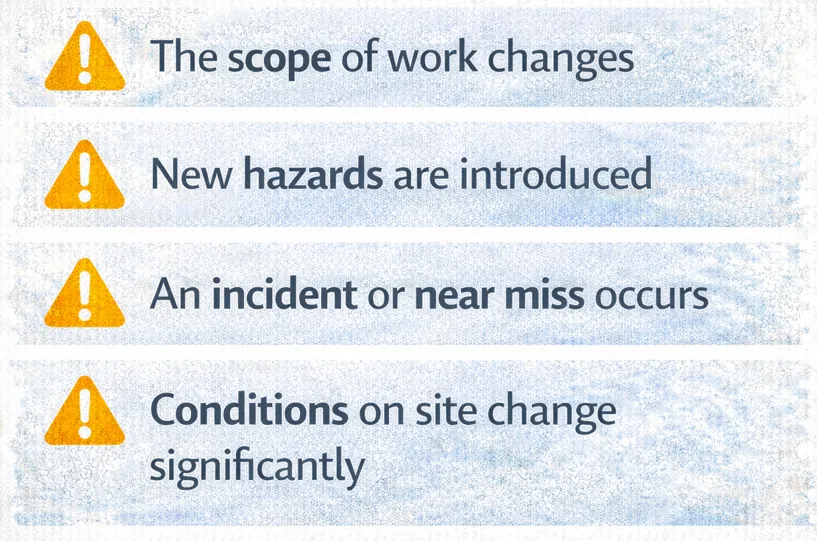
Treating the SWMS as a living document ensures it remains relevant and effective over time.
Integrating SWMS Into Daily Operations
The true value of a Safe Work Method Statement is realised when it is actively used, not just stored.
Practical ways to integrate SWMS into daily operations include:
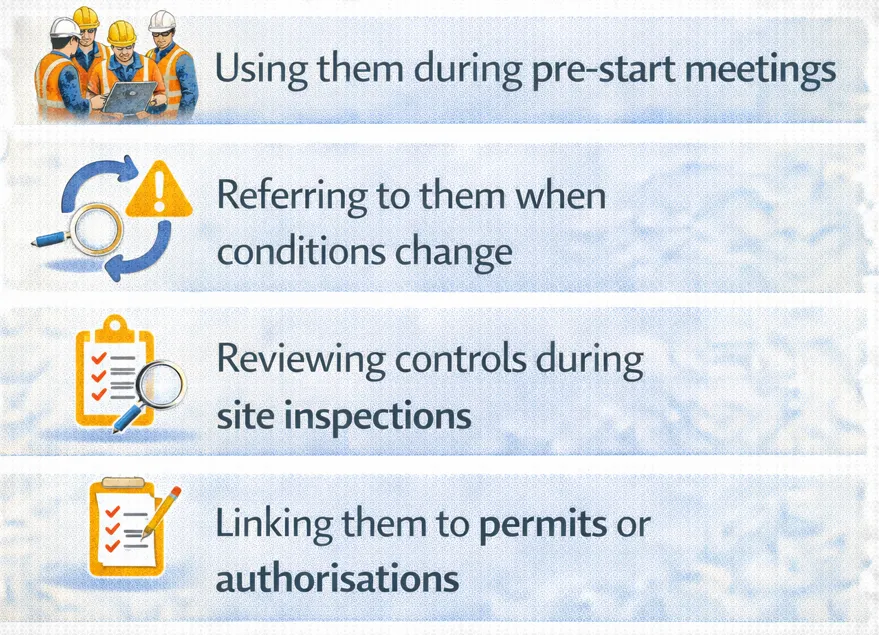
This integration reinforces the SWMS as a practical tool rather than an administrative requirement.
SWMS and Contractor Management
Safe Work Method Statements are particularly important in contractor environments where multiple parties may be involved in a task.
Clear, task-specific SWMS help ensure:
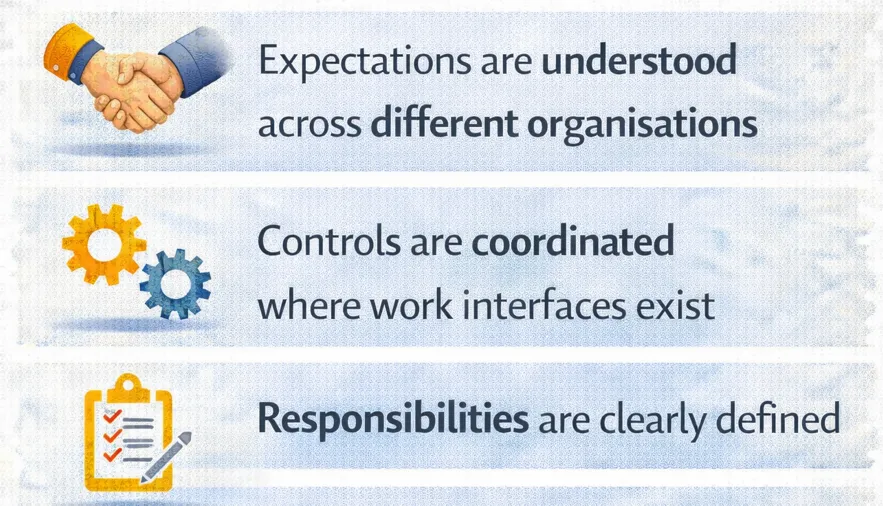
Reviewing and approving contractor SWMS is a key part of effective contractor oversight.
Balancing Detail and Usability
One of the ongoing challenges with SWMS is finding the right balance between detail and usability.
Too little detail can leave gaps in understanding. Too much detail can overwhelm workers and discourage engagement.
Effective SWMS focus on:
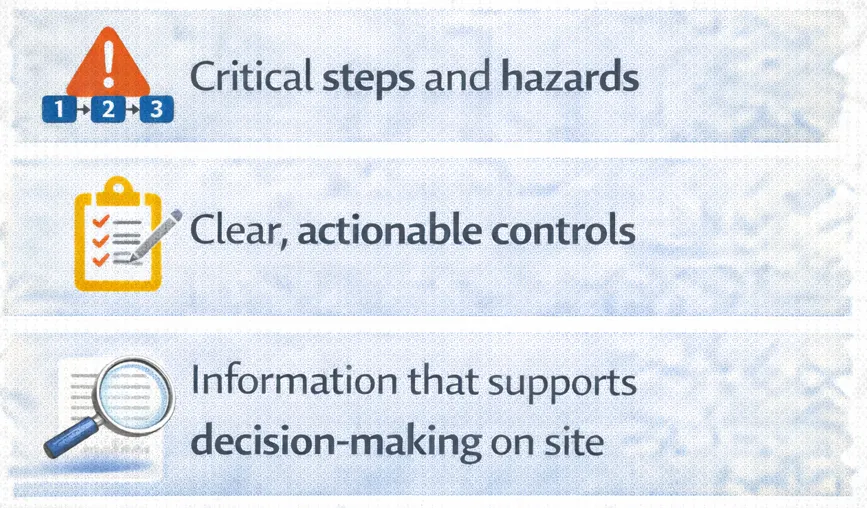
Clarity should always be prioritised over volume.
The Link Between SWMS and Safety Culture
The way Safe Work Method Statements are developed and used says a lot about an organisation’s safety culture.
When SWMS are:
- Rushed
- Copied without thought
- Signed without discussion
They reinforce the perception that safety documentation is just a formality.
When SWMS are:
- Discussed
- Updated
- Used as reference points
They support a culture of planning, communication, and shared responsibility.
Digital Tools and Modern SWMS Practices
Many organisations are moving away from paper-based systems toward digital platforms that support easier creation, review, and distribution of SWMS.
Digital tools can:
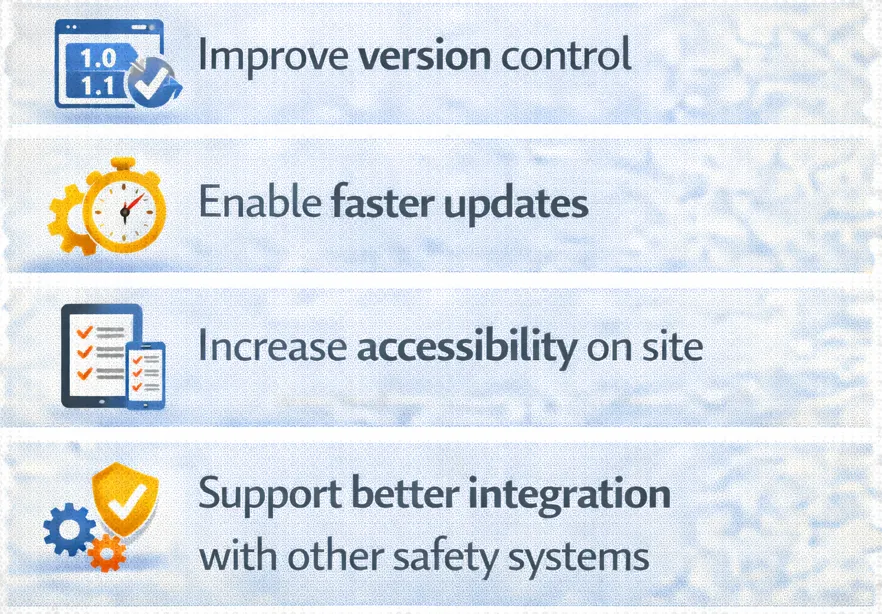
However, technology should support good practice, not replace it. A poorly thought-out SWMS remains ineffective regardless of format.
Measuring the Effectiveness of Safe Work Method Statements
To understand whether SWMS are working, organisations should look beyond completion rates and focus on outcomes.
Indicators of effective SWMS use include:
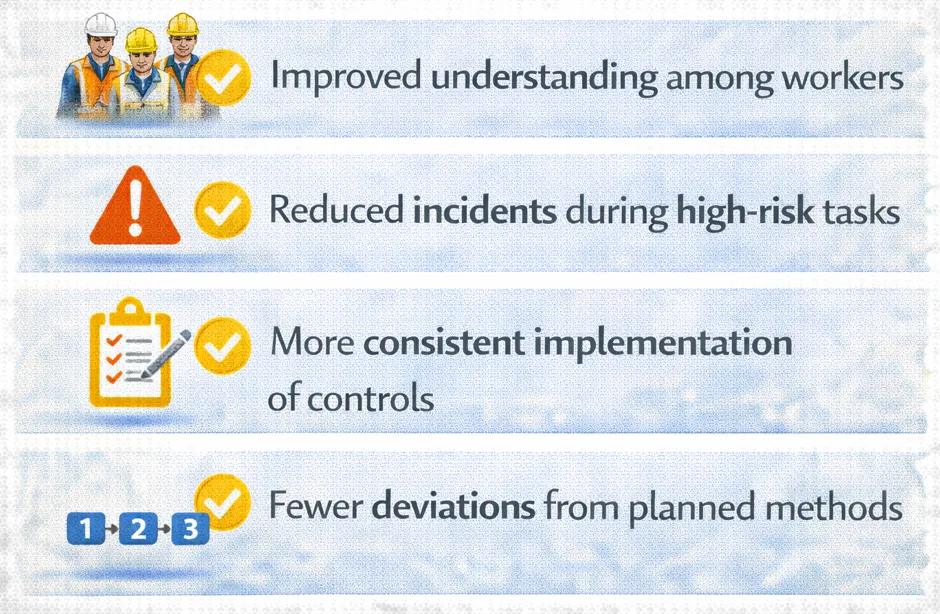
These indicators help determine whether SWMS are supporting safer work, not just compliance.
Conclusion
Safe Work Method Statements remain one of the most important tools for managing high-risk work. When developed thoughtfully and used consistently, they support planning, communication, and accountability at every stage of a task.
A Safe Work Method Statement template can be a valuable aid in this process, providing structure and consistency while still allowing for task-specific risk control. The key is to ensure templates are adapted, reviewed, and actively used rather than treated as static paperwork.
Ultimately, the effectiveness of a SWMS is not determined by how comprehensive it looks on paper, but by how well it supports people to understand risks and work safely in real-world conditions.
Stay in the loop.
WHS news, platform updates, and the occasional rant. No spam.
By subscribing you agree to our Terms.