
Safety
Hazard Identification Training: Building the Skills That Prevent Incidents Before They Happen
SiteSherpa · 2026-01-19 · 12 min read
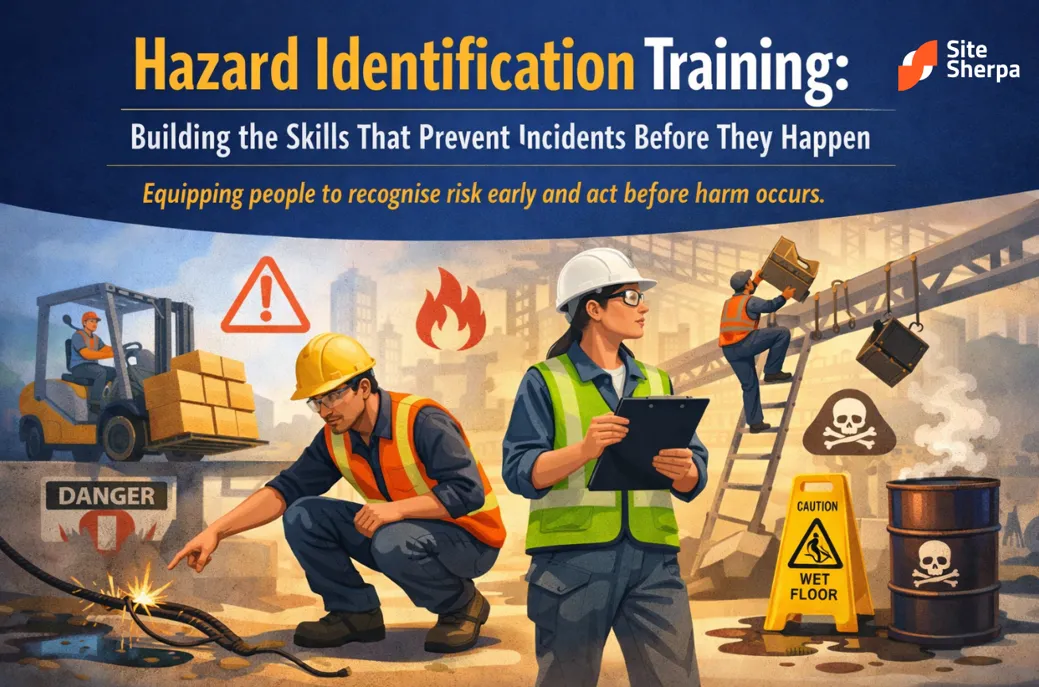
Every workplace injury, near miss, or dangerous occurrence has a common starting point: a hazard that was not recognised, not understood, or not managed early enough. While policies, procedures, and safety systems all play an important role, they rely on one critical human capability to function effectively, the ability of people to identify hazards in real-world conditions.
This is where Hazard identification training becomes one of the most important investments an organisation can make. When workers, supervisors, and leaders are trained to recognise hazards early, understand how risks evolve, and speak up when something is unsafe, incidents are far more likely to be prevented than investigated.
This article explores what hazard identification training really involves, why it matters across all industries, how it should be delivered, and how organisations can ensure it leads to genuine risk reduction rather than surface-level compliance.
What Is Hazard Identification?
Hazard identification is the process of recognising anything that has the potential to cause harm. Hazards may be physical, chemical, biological, psychosocial, or environmental, and they exist in every workplace from construction sites and warehouses to offices, healthcare facilities, and remote work environments.
Identifying hazards is not a one-off task. Hazards change as:
Effective hazard identification requires ongoing awareness rather than reliance on static documents or assumptions.
Why Hazard Identification Skills Matter
Many organisations have risk registers, procedures, and audit programs, yet still experience incidents. In many cases, the issue is not a lack of systems, but a gap in people’s ability to recognise hazards as they emerge in real time.
Strong hazard identification skills:
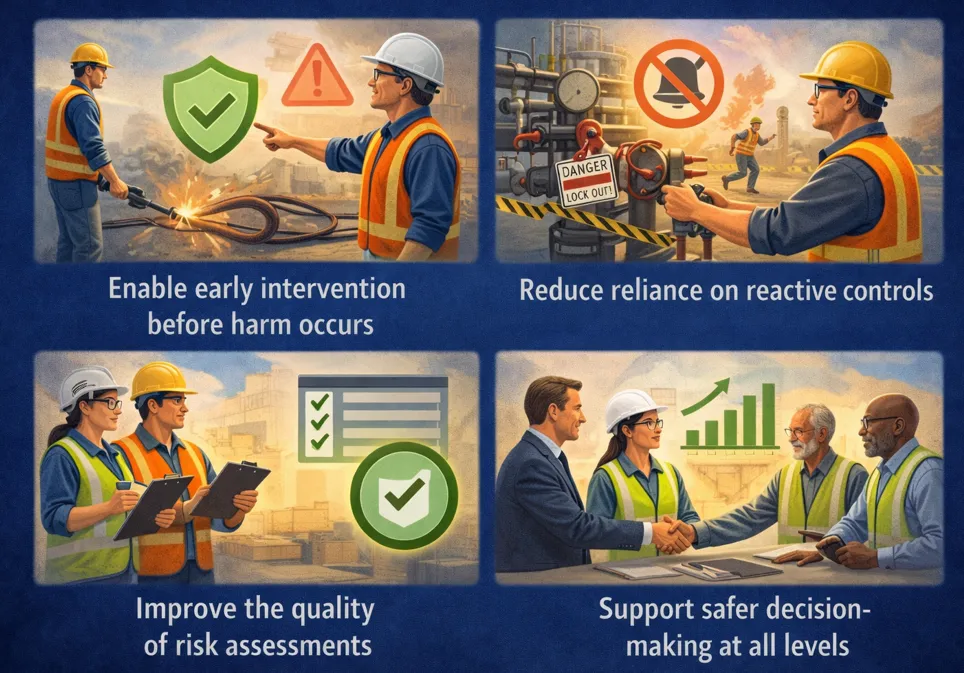
Without these skills, even the most comprehensive safety systems struggle to perform as intended.
The Role of Training in Hazard Identification
Hazard identification is often assumed to be intuitive something people will naturally do with experience. In reality, it is a skill that needs to be developed, practised, and reinforced.
Training helps people learn:
- What hazards look like in different contexts
- How risks change as conditions change
- How to look beyond obvious dangers
- How to raise concerns confidently and constructively
Well-designed training moves people from passive awareness to active risk recognition.
Legal and Organisational Expectations
Australian work health and safety legislation places clear obligations on organisations to identify hazards, assess risks, and implement controls. These duties apply not only to employers, but also to officers, supervisors, and workers.
Training is a practical way to demonstrate that:
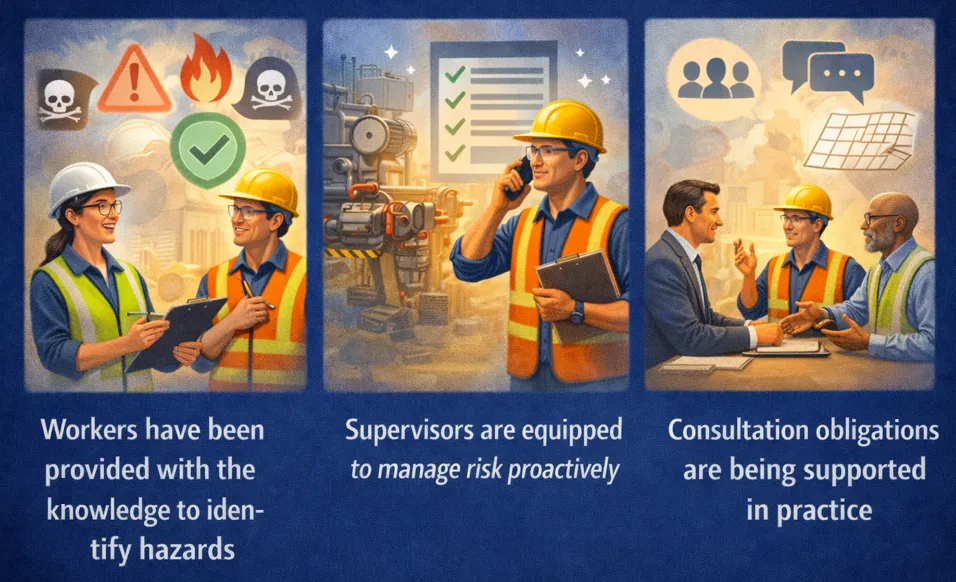
From a due diligence perspective, training is a key mechanism for ensuring that hazard identification is not left to chance.
Types of Hazards Workers Need to Recognise
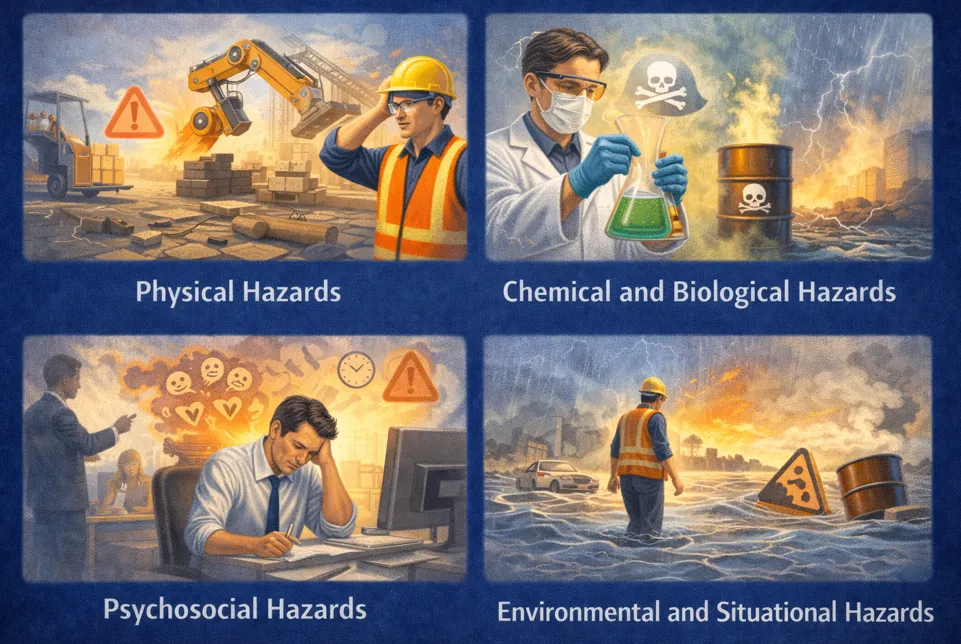
Effective hazard identification training should cover the full range of hazards relevant to the organisation’s activities. This typically includes:
Physical Hazards
These are often the most visible and include risks such as:
- Slips, trips, and falls
- Moving plant and vehicles
- Working at heights
- Manual handling
- Noise and vibration
Training should focus not just on identifying these hazards, but on recognising when controls are missing or ineffective.
Chemical and Biological Hazards
Exposure risks may include:
- Hazardous substances
- Dusts and fumes
- Cleaning chemicals
- Biological agents in healthcare or waste environments
Training helps workers understand exposure pathways and early warning signs.
Psychosocial Hazards
Increasingly recognised as critical risks, psychosocial hazards include:
- Work-related stress
- Fatigue
- Poor role clarity
- Exposure to traumatic events
- Workplace conflict or bullying
These hazards are often less visible but can have significant health and safety impacts if not identified early.
Environmental and Situational Hazards
Environmental conditions can change rapidly and introduce new risks, such as:
- Weather conditions
- Poor lighting
- Confined or congested spaces
- Remote or isolated work
Training builds situational awareness so workers can adapt to changing conditions.
Moving Beyond the Obvious: Seeing Hidden Hazards
One of the biggest challenges in hazard identification is complacency. Familiar environments can cause people to stop noticing risks that are present every day.
Good training challenges assumptions by encouraging people to ask:
- What has changed since the last time this task was done?
- What could reasonably go wrong here?
- Who else could be affected by this activity?
- What happens if this control fails?
These questions help surface less obvious hazards before they escalate.
Who Should Receive Hazard Identification Training?
Hazard identification is not just a frontline skill. While workers are closest to the task, supervisors and leaders play a critical role in recognising broader system-level hazards.
Training should be provided to:
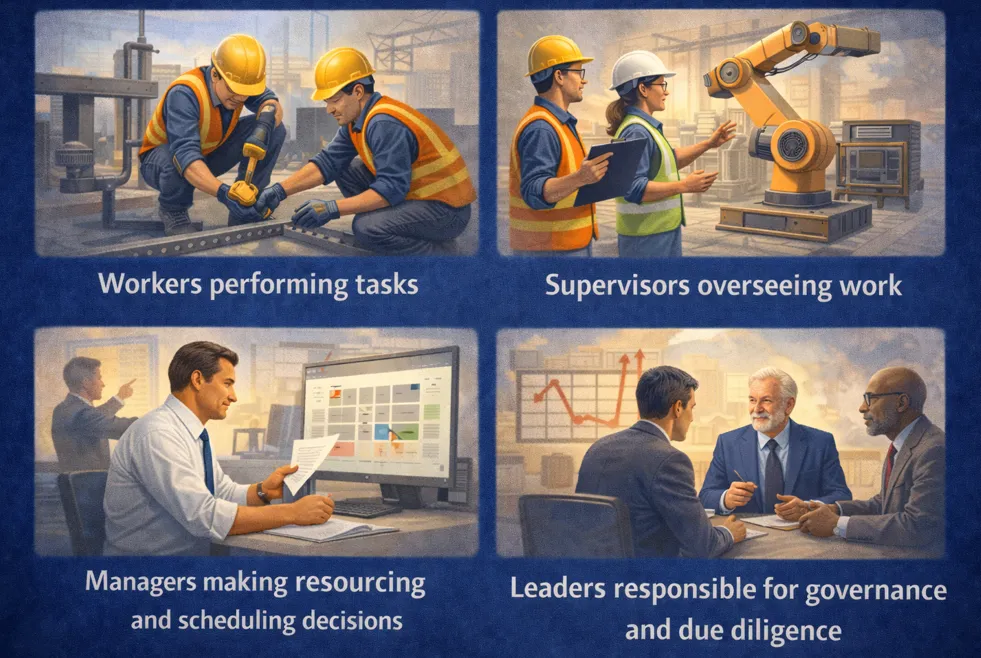
Each group requires a different emphasis, but the core principles remain the same.
Designing Effective Hazard Identification Training
Not all training delivers the same results. The most effective programs are practical, relevant, and grounded in real work.
Key characteristics of effective training include:
The goal is to build confidence and capability, not just awareness.
Classroom, On-Site, and Digital Training Approaches
Different delivery methods suit different environments and workforces.
Classroom-Based Training
Useful for building foundational knowledge and introducing concepts. Best combined with practical examples to avoid being overly theoretical.
On-Site Training
Highly effective because hazards are identified in the actual work environment. This approach reinforces learning through real-time observation.
Digital and Microlearning Approaches
Increasingly used for refresher training and dispersed workforces. These approaches work best when they complement, rather than replace, practical engagement.
A blended approach often delivers the strongest outcomes.
Linking Training to Everyday Work
Training is most effective when it connects directly to how work is performed. This means:
When people see a clear link between training and their daily work, retention improves significantly.
Hazard Identification and Reporting Culture
Training alone is not enough if workers do not feel safe to speak up. Hazard identification must be supported by a culture that encourages reporting without fear of blame.
Effective training reinforces:
- That reporting hazards is expected and valued
- That early reporting prevents incidents
- That feedback will be acted upon
This cultural reinforcement is just as important as technical knowledge.
Measuring the Effectiveness of Training
Organisations often measure training by attendance or completion rates, but these metrics do not tell the full story.
More meaningful indicators include:
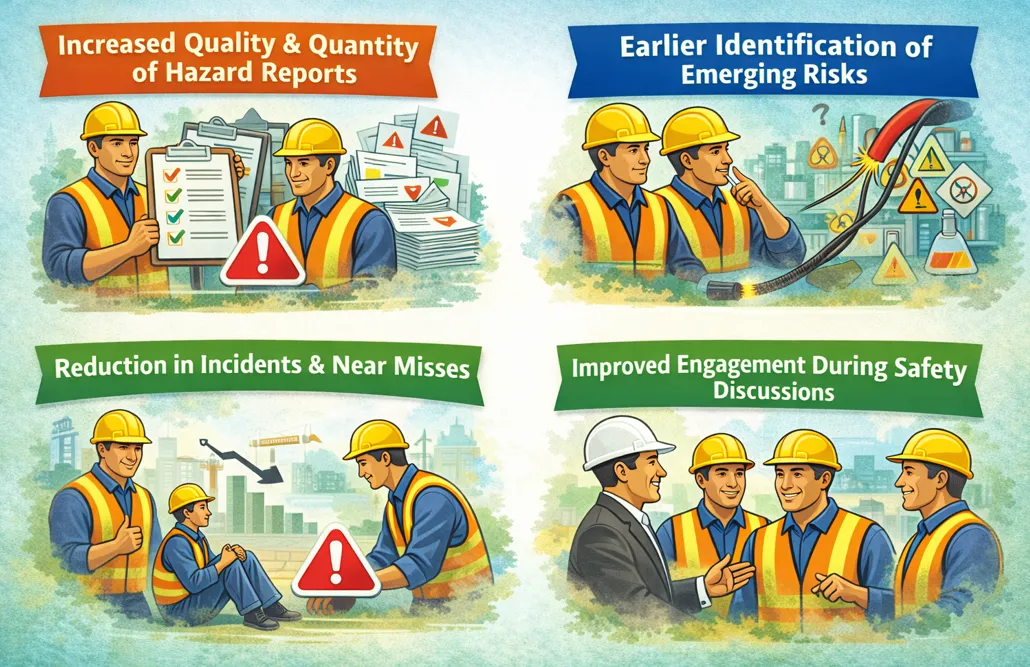
These indicators help determine whether training is translating into safer behaviour.
Common Pitfalls to Avoid
Even well-intentioned training programs can fall short if certain pitfalls are not addressed.
Common issues include:
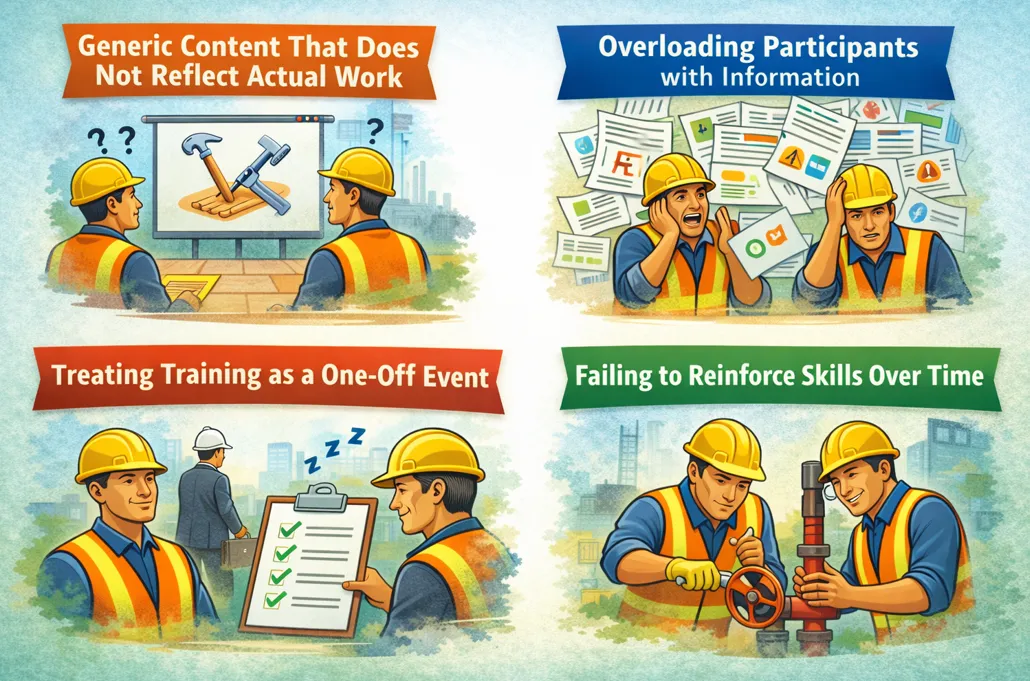
Avoiding these pitfalls requires ongoing commitment rather than a tick-the-box approach.
Integrating Hazard Identification Training Into Safety Systems
Training should not sit in isolation. It should be integrated with:
Integration ensures that skills learned in training are reinforced through everyday processes.
The Long-Term Value of Hazard Identification Skills
Developing strong hazard identification capability delivers benefits far beyond compliance. Organisations with mature hazard identification practices often see:
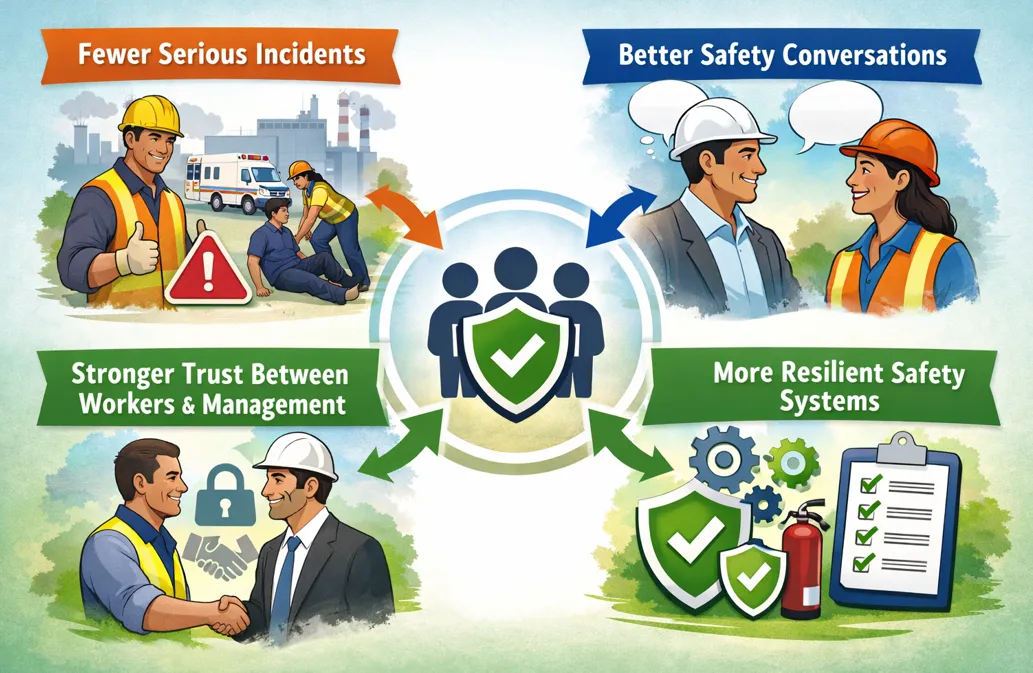
These outcomes support both safety performance and broader organisational goals.
Why This Training Is More Relevant Than Ever
Workplaces are becoming more complex, with:
In this environment, relying solely on procedures is not enough. People must be able to think critically about risk as it unfolds.
This is why Hazard identification training remains one of the most effective ways to strengthen proactive safety management.
Building Capability Over Time
Hazard identification is not mastered in a single session. Skills develop through:
Organisations that view training as an ongoing capability-building process are far more likely to see lasting improvement.
Conclusion
Hazard identification is the foundation of effective risk management. Without the ability to recognise hazards early and accurately, even the strongest safety systems will struggle to prevent harm.
Well-designed Hazard identification training equips people with the skills to see risk before it escalates, to speak up when something is unsafe, and to take action that protects themselves and others. When embedded into everyday work and supported by a positive safety culture, this training becomes a powerful driver of prevention rather than a compliance exercise.
Ultimately, safer workplaces are built not just on rules and procedures, but on people who know what to look for and are empowered to act when they see it.
Stay in the loop.
WHS news, platform updates, and the occasional rant. No spam.
By subscribing you agree to our Terms.