
Safety
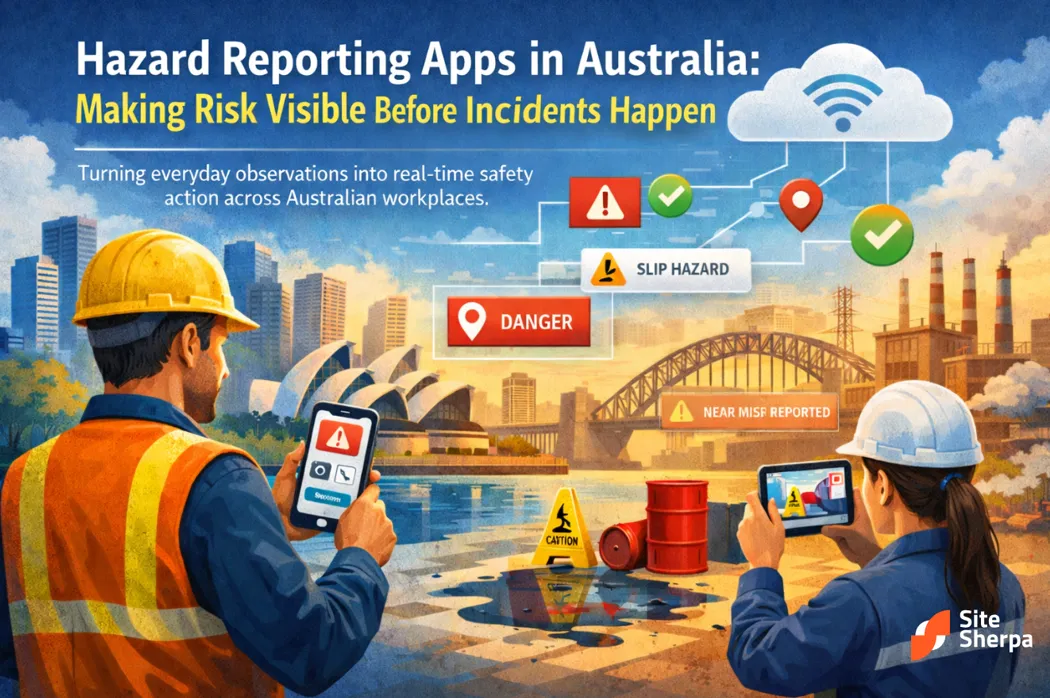
Hazard Reporting Apps in Australia: Making Risk Visible Before Incidents Happen
SiteSherpa · 2026-01-07 · 13 min read
Introduction: Why Hazard Reporting Matters More Than Ever
Every serious workplace incident is preceded by warning signs. Slippery surfaces, damaged equipment, unsafe behaviours, fatigue, poor supervision, or unclear procedures often exist long before an injury occurs. The difference between a near miss and a life-altering event is frequently whether those hazards were identified, reported, and addressed in time.
Across Australia, regulators, insurers, and industry bodies consistently emphasise proactive hazard identification as the foundation of effective Work Health and Safety management. Yet many organisations still rely on outdated reporting processes that unintentionally discourage participation. Paper forms, lengthy spreadsheets, and delayed follow-up often result in hazards being ignored, forgotten, or normalised.
This is why the adoption of a Hazard reporting app Australia wide is accelerating. Digital hazard reporting tools are transforming how risks are captured, communicated, and controlled, shifting safety from a reactive compliance task to an active, worker-driven process.
This article explores what a hazard reporting app is, why it is critical in the Australian context, how it supports legislative compliance, and what organisations should consider when selecting a solution.
Understanding Hazard Reporting in Australian Workplaces
Hazard reporting refers to the process by which workers identify and communicate anything that could cause harm. Hazards can be physical, chemical, biological, ergonomic, or psychosocial, and they exist in every industry, from construction and manufacturing to healthcare, retail, education, and professional services.
Under Australian Work Health and Safety legislation, persons conducting a business or undertaking must provide safe systems of work and actively manage risks. This includes having mechanisms in place for workers to report hazards and for those hazards to be assessed and controlled.
However, the effectiveness of hazard reporting is not determined by whether a policy exists. It depends on how easy, safe, and meaningful it is for workers to speak up.
The Limitations of Traditional Hazard Reporting Methods
Many organisations still use hazard reporting processes that were designed for a different era of work. These methods often include:
While these approaches may meet basic requirements, they introduce significant barriers.
Low Participation Rates
If reporting a hazard takes too long or feels bureaucratic, workers are less likely to do it. This is particularly true for contractors, casual staff, and mobile workers.
Delayed Response
When hazards are reported on paper or via email, there is often a delay before they reach the right person. During this time, the risk remains unmanaged.
Poor Visibility and Tracking
Without a central system, it is difficult to track whether hazards have been assessed, controls implemented, or actions closed out.
Limited Learning and Trend Analysis
Paper and spreadsheet systems make it almost impossible to identify recurring hazards or systemic issues across sites or teams.
These limitations directly undermine the intent of Australian safety legislation, which focuses on prevention rather than reaction.
What Is a Hazard Reporting App?
A hazard reporting app is a digital tool that allows workers, supervisors, and contractors to quickly report hazards using a mobile device or computer. Reports are captured in real time, stored centrally, and linked to workflows for assessment, control, and follow-up.
Unlike traditional systems, hazard reporting apps are designed around ease of use. They typically allow users to:
In the Australian context, these apps are increasingly aligned with local legislation, industry guidance, and modern safety management systems.
Why Australian Organisations Are Adopting Hazard Reporting Apps
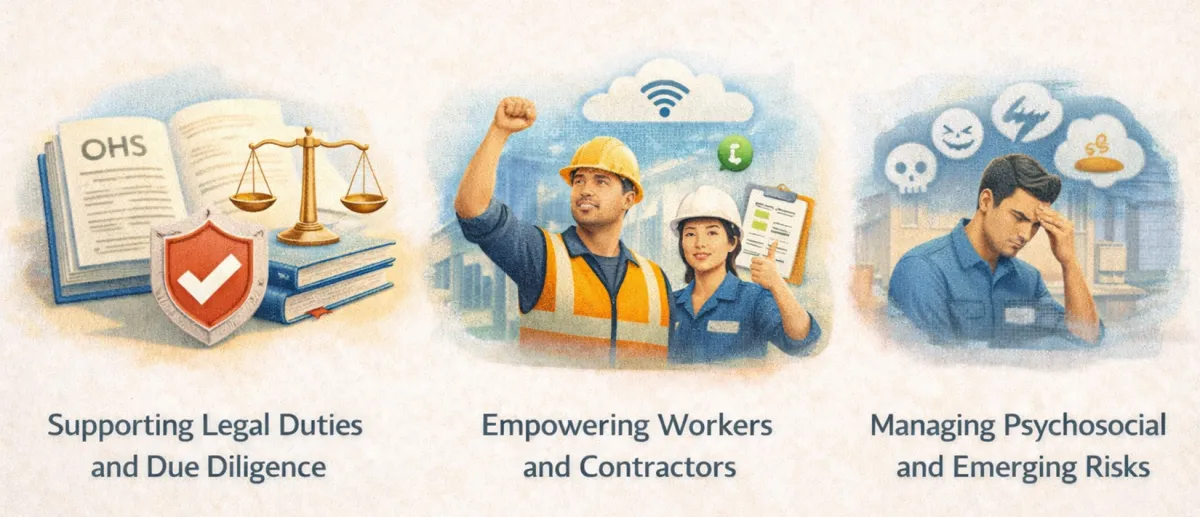
1. Supporting Legal Duties and Due Diligence
Australian Work Health and Safety laws place clear duties on organisations to identify hazards and manage risks. Officers must exercise due diligence by ensuring systems are in place and working effectively.
A digital hazard reporting system provides evidence that hazards are being identified, reviewed, and controlled. Audit trails, timestamps, and action tracking support compliance and demonstrate proactive management.
2. Empowering Workers and Contractors
One of the strongest predictors of safety performance is worker engagement. When workers can easily report hazards and see meaningful action taken, trust in the system increases.
A Hazard reporting app used Australia wide enables participation across diverse workforces, including contractors, labour hire, and remote workers.
3. Managing Psychosocial and Emerging Risks
Australian regulators have placed increasing emphasis on psychosocial hazards such as workload, fatigue, bullying, and poor role clarity. These hazards are often under-reported because they are less visible and harder to raise.
Digital apps can include psychosocial categories and anonymous reporting options, making it safer for workers to speak up.
Key Features of an Effective Hazard Reporting App
Not all hazard reporting apps deliver the same value. Australian organisations should look for features that support both compliance and real-world usability.
Simple and Intuitive Reporting
The reporting process should be quick, logical, and accessible on mobile devices. Workers should not need extensive training to use the app.
Photo and Evidence Capture
The ability to attach photos or videos improves accuracy and reduces ambiguity, particularly for site-based hazards.
Automated Notifications and Escalation
Once a hazard is submitted, the system should automatically notify the relevant supervisor or manager, reducing delays in response.
Reporting and Analytics
Dashboards and reports help organisations identify trends, high-risk areas, and recurring issues, supporting continuous improvement.
Alignment With Australian Legislation and Standards
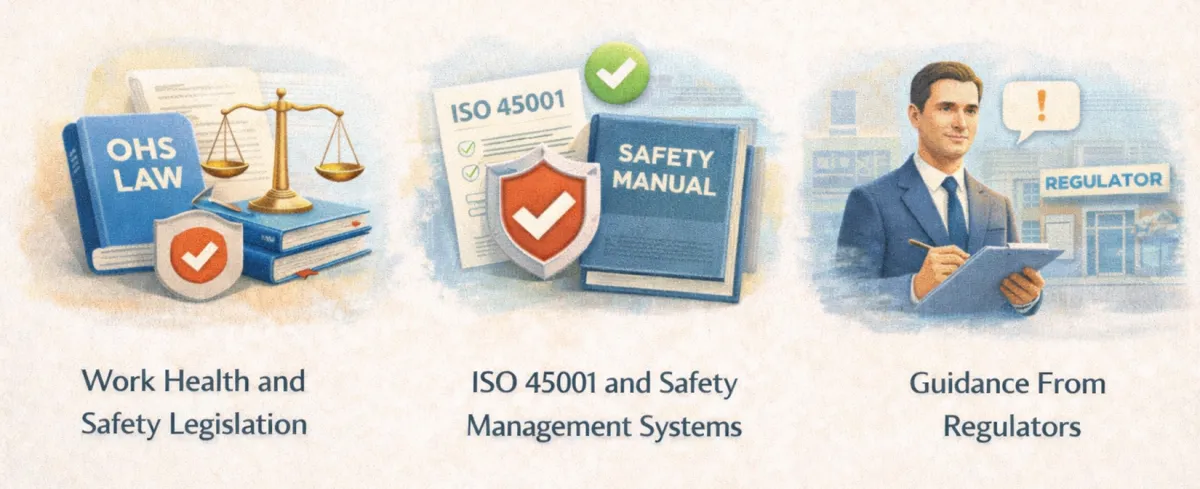
Work Health and Safety Legislation
Hazard reporting apps directly support legislative duties to identify hazards, assess risks, and implement controls. They also assist with consultation requirements by making hazard information visible and accessible.
ISO 45001 and Safety Management Systems
For organisations aligned with ISO 45001, hazard reporting apps support systematic hazard identification, risk assessment, and ongoing review, all core elements of the standard.
Guidance From Regulators
Many platforms are designed to align with guidance from Safe Work Australia, ensuring consistency with national expectations across jurisdictions.
Beyond Compliance: The Strategic Value of Digital Hazard Reporting
While compliance is often the initial driver, organisations quickly discover broader benefits.
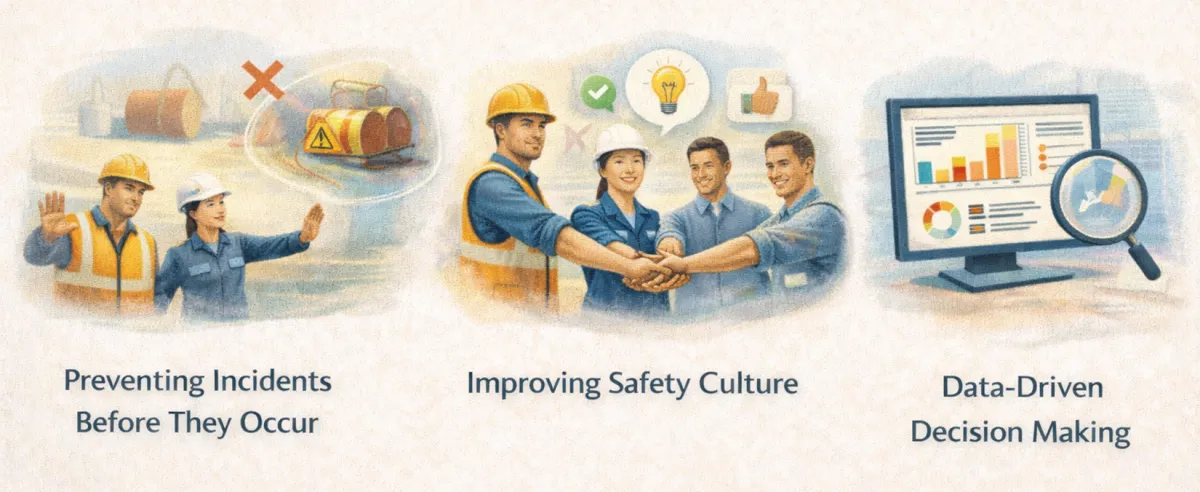
Preventing Incidents Before They Occur
Early identification of hazards allows controls to be implemented before an incident happens, reducing injuries and associated costs.
Improving Safety Culture
When workers see that hazards they report lead to action, reporting becomes part of everyday work rather than a compliance task.
Data-Driven Decision Making
Aggregated hazard data provides insight into systemic issues, enabling targeted interventions and smarter resource allocation.
Common Challenges and How Apps Address Them
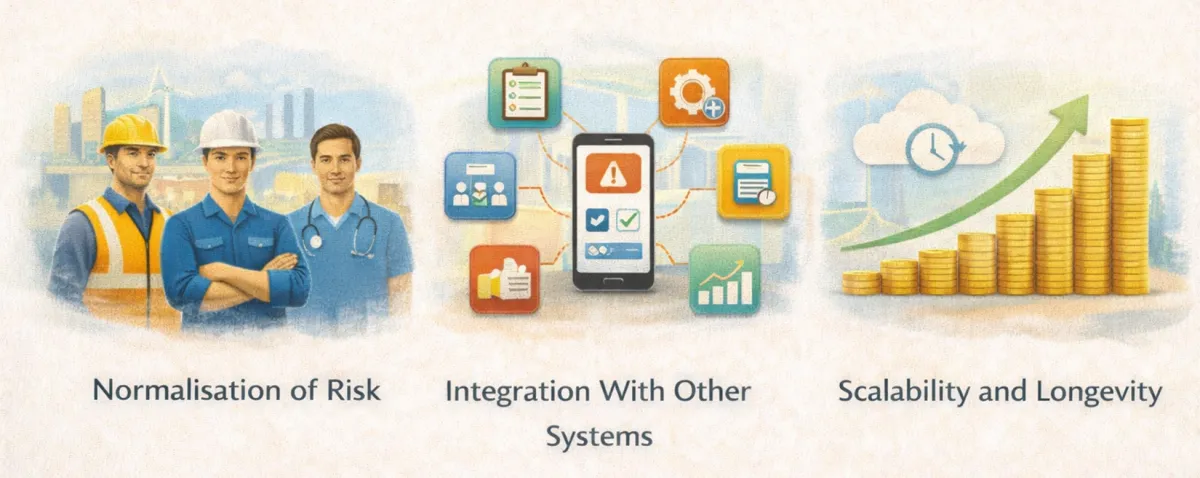
Normalisation of Risk
In many workplaces, hazards become accepted as “just part of the job.” Easy reporting tools help break this cycle by making hazards visible and actionable.
Fear of Blame
Digital systems can support anonymous reporting and reinforce a no-blame culture focused on learning rather than punishment.
Inconsistent Follow-Up
Automated workflows ensure hazards are assessed and closed out, reducing the risk of issues being forgotten.
Selecting the Right Hazard Reporting App
Choosing the right solution requires more than comparing features.
Fit for Your Industry
Different industries face different hazards. The app should support custom hazard categories that reflect your operational reality.
Integration With Other Systems
Hazard reporting should link with incident management, risk registers, audits, and training records to form a cohesive safety system.
Scalability and Longevity
The platform should grow with your organisation, supporting additional sites, users, and reporting requirements over time.
The Future of Hazard Reporting in Australia
As technology advances, hazard reporting apps are evolving beyond simple data capture. Emerging features include predictive analytics, artificial intelligence-supported insights, and integration with wearable and sensor technologies.
In Australia, regulatory expectations around psychosocial safety, contractor management, and officer accountability are likely to continue increasing. Organisations that adopt flexible, future-ready systems will be better positioned to meet these challenges.
Why Hazard Reporting Apps Are No Longer Optional
Effective hazard reporting is the cornerstone of prevention. Without visibility of hazards, risks cannot be controlled, and incidents become inevitable.
A Hazard reporting app used Australia wide is no longer a nice-to-have. It is a practical, strategic tool that supports compliance, strengthens culture, and protects people.
By making hazard reporting simple, immediate, and meaningful, organisations can shift safety from reactive paperwork to proactive risk management, creating safer, healthier workplaces where people can perform at their best.
Stay in the loop.
WHS news, platform updates, and the occasional rant. No spam.
By subscribing you agree to our Terms.