
Safety
Safety Inspection App in Australia: A Guide to Smarter, Faster, and More Compliant Workplaces
SiteSherpa · 2025-12-03 · 15 min read
Introduction
Workplace safety is one of the most important responsibilities for any organisation operating in Australia. Whether you manage a construction site, a warehouse, a manufacturing facility, a retail chain, a transport fleet, or a small business with mobile workers, keeping people safe requires more than checklists and good intentions. It demands consistency, documentation, accountability, and real-time oversight.
This is where modern digital tools are transforming the safety landscape especially through the increasing adoption of safety inspection apps in Australian platforms. These digital applications make it possible to conduct inspections from mobile devices, capture evidence immediately, raise corrective actions, monitor compliance trends, and build a proactive safety culture. With regulatory expectations rising under Australian Work Health and Safety legislation, organisations are moving away from paper-based and manual processes in favour of streamlined, automated systems.
This in-depth article explores how a safety inspection apps in Australia can improve compliance, efficiency, and overall risk management and why more businesses are adopting these tools as the backbone of their safety operations.
The Shift from Paper to Digital: Why Businesses Are Moving to Safety Inspection Apps
For decades, safety inspections were completed on clipboards, later transferred into spreadsheets, and emailed around for review. This introduced several issues:
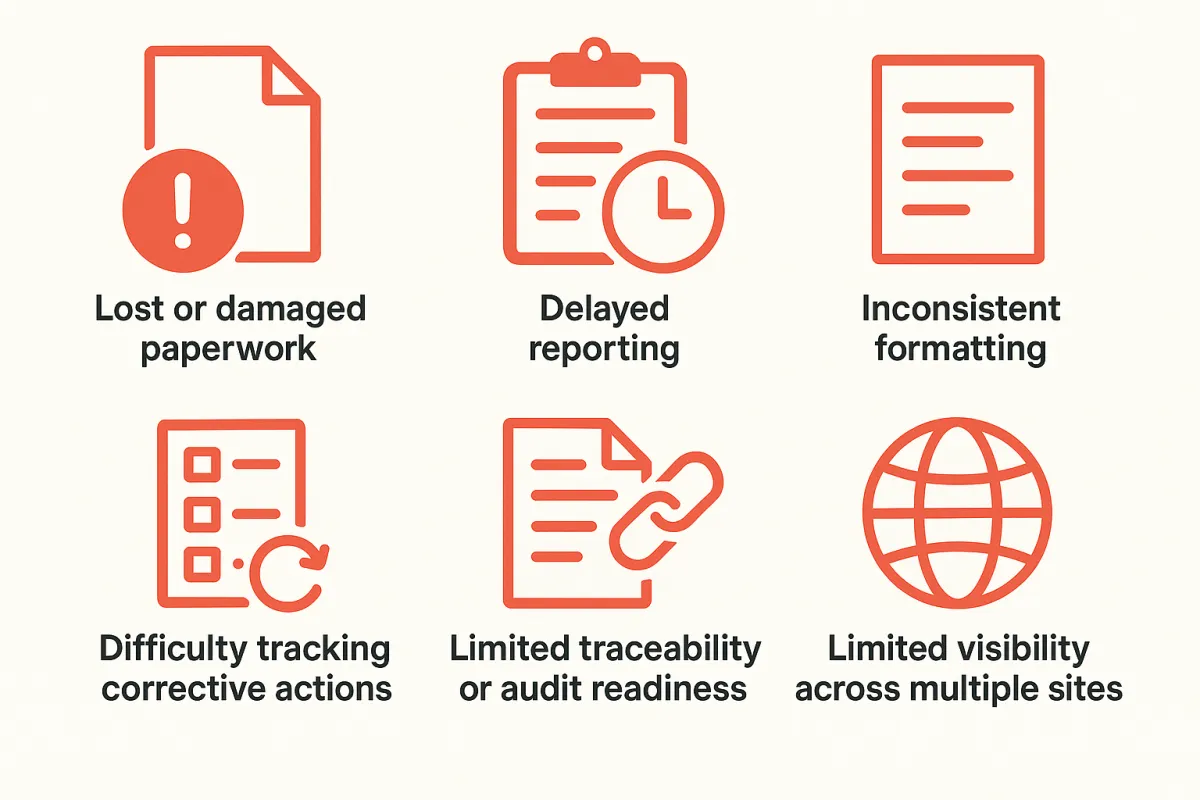
The rise of mobile technology changed expectations. Organisations now need real-time visibility and instant reporting, not delayed summaries.
A safety inspection app in Australia allows inspections to be completed directly from a phone or tablet, with data syncing instantly to cloud dashboards. This removes friction from the inspection process, making it easier, faster, and far more accurate.
How a Safety Inspection App Improves WHS Compliance in Australia
Australia has one of the most robust workplace safety frameworks in the world. Under the Work Health and Safety Act and Regulations (adopted nationally with state-specific variations), businesses must provide:
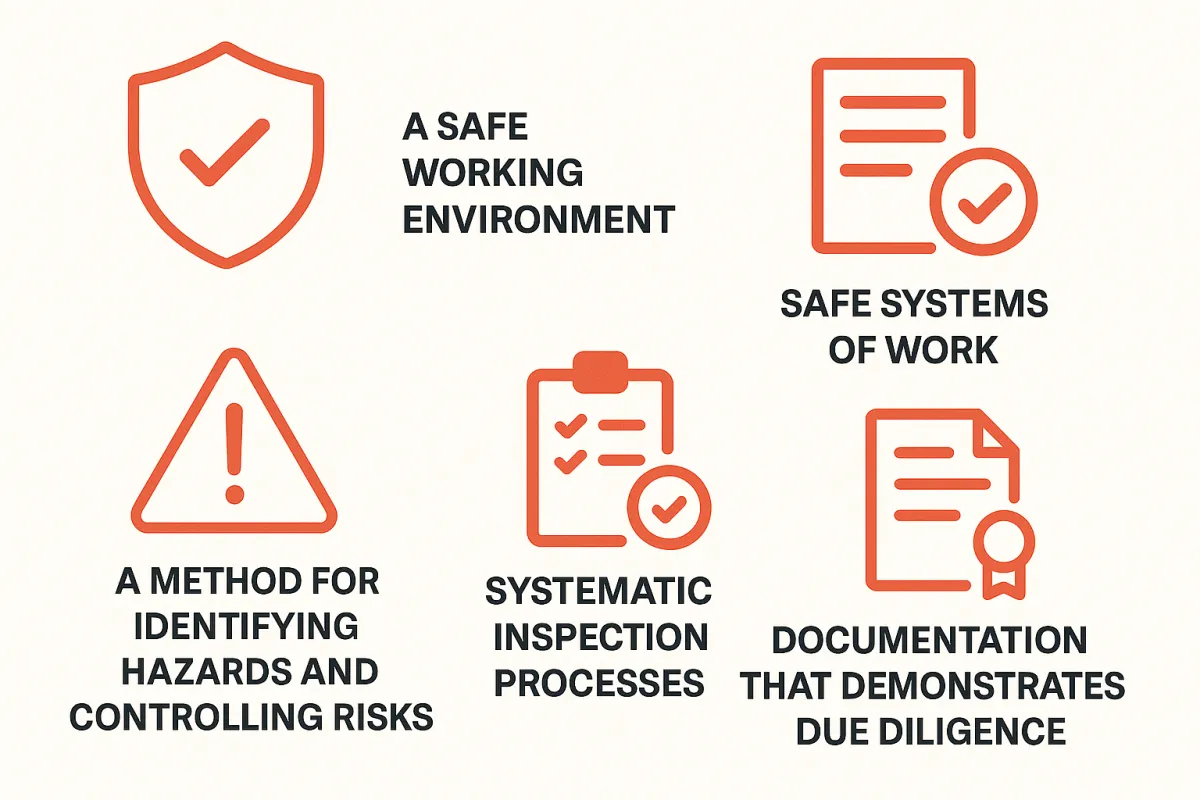
A safety inspection app for Australia supports these requirements through features that ensure evidence-based, auditable compliance. This includes:
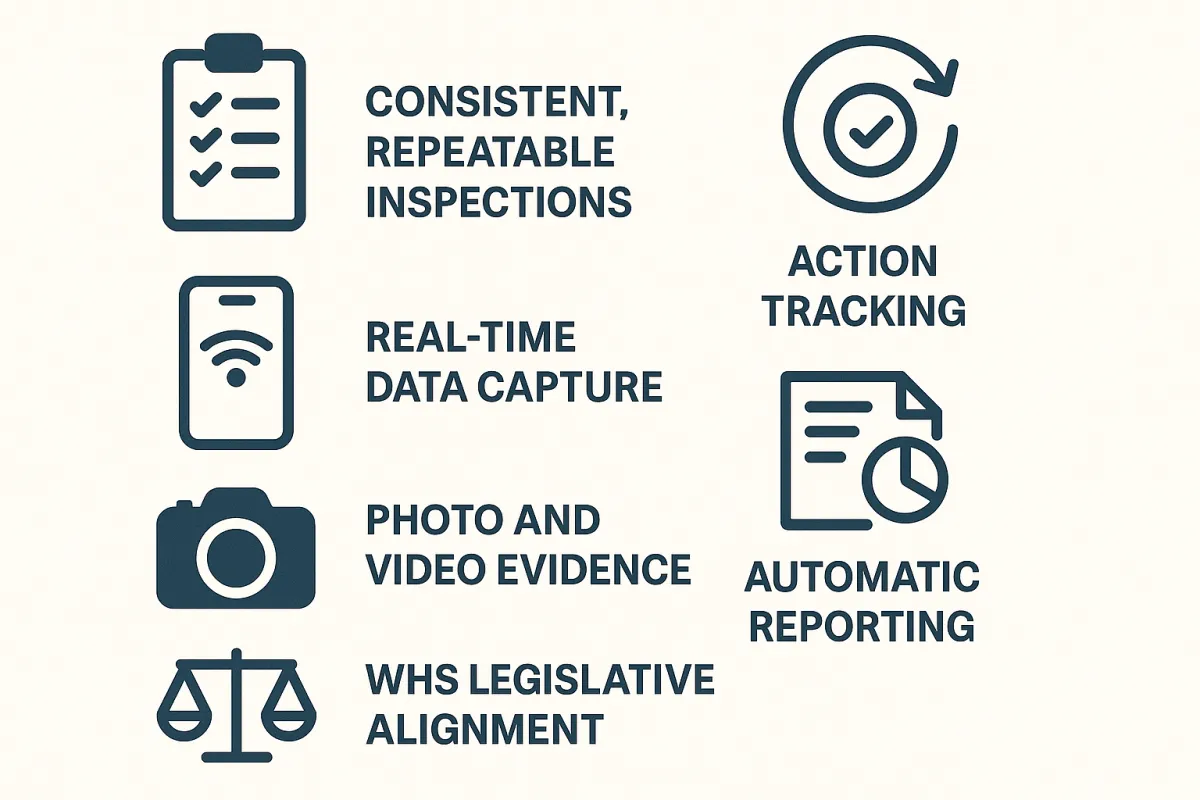
1. Consistent, Repeatable Inspections
Apps provide structured templates that ensure every inspection covers the same critical points. Whether it’s plant, equipment, site safety, fire systems, first aid, hazardous substances, or chemical registers, consistency eliminates gaps.
2. Real-Time Data Capture
Instead of waiting days or weeks for reports, managers receive instant updates as inspections are completed. This helps supervisors respond faster to hazards.
3. Photo and Video Evidence
Visual evidence strengthens compliance and provides clarity when hazards are identified.
4. Action Tracking
Corrective actions can be assigned, monitored, and closed out in-app, ensuring accountability.
5. Automatic Reporting
Reports are generated instantly with timestamps, geolocation, and digital signatures supporting audit readiness.
6. WHS Legislative Alignment
Templates can be aligned with Australian standards including:
- Work Health and Safety Regulation 2011
- Safe Work Australia Codes of Practice
- ISO 45001
- Industry-specific safety standards
Key Features of a High-Quality Safety Inspection App in Australia
Not all safety apps are created equal. The best platforms offer a full suite of tools that replace multiple manual processes.
Below are the most valuable features to look for:
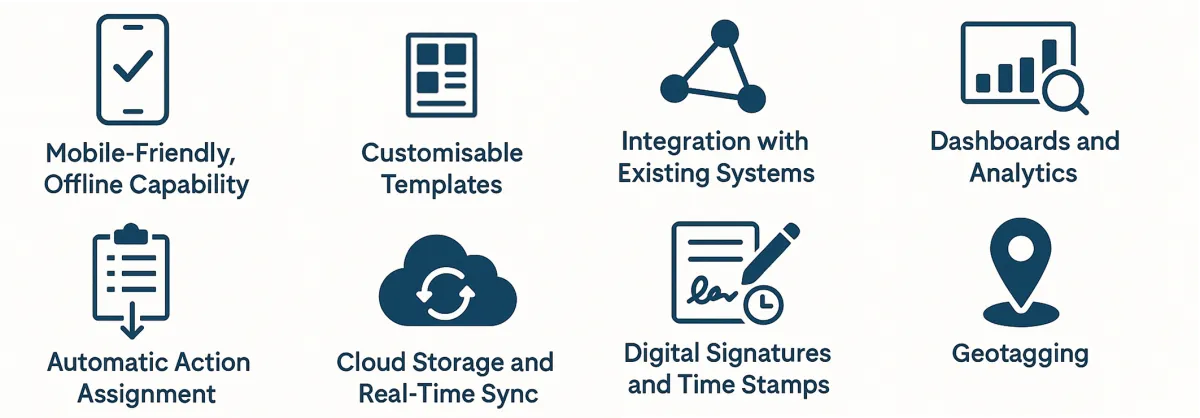
1. Mobile-Friendly, Offline Capability
Workers must be able to complete inspections anywhere, even in low-coverage environments.
2. Customisable Templates
Every organisation has unique hazards. Customisable templates help tailor inspections to risk profiles.
3. Automatic Action Assignment
When a hazard is identified, the app should assign an action to the correct person instantly.
4. Cloud Storage and Real-Time Sync
This ensures that data is never lost and is available to managers immediately.
5. Dashboards and Analytics
A safety inspection app within Australia should help identify:
- Trends
- Recurring hazards
- High-risk sites
- Departments requiring training
- Overall safety performance
6. Integration with Existing Systems
Many Australian organisations link their safety inspection tools with:
- Contractor management systems
- Risk registers
- Incident reporting apps
- HR platforms
- Asset maintenance systems
7. Digital Signatures and Time Stamps
This ensures compliance authenticity.
8. Geotagging
Geolocated data supports transparency and accountability.
Industries Benefiting Most from a Safety Inspection App in Australia
1. Construction
High-risk sites require daily inspections. Mobile apps reduce downtime and improve compliance across subcontractors and multiple sites.
2. Manufacturing
Machine inspections, chemical audits, plant compliance, and production line assessments are simplified through digital workflows.
3. Transport and Logistics
Fleet inspections, fatigue checks, loading assessments, and depot audits can be digitised.
4. Warehousing and Distribution
Manual handling, racking, forklift, and emergency equipment inspections benefit from structured digital processes.
5. Healthcare and Aged Care
These sectors have extensive compliance needs, including infection control, facility inspections, equipment checks, and emergency procedures.
6. Local Government
Councils inspect:
- Playgrounds
- Pools
- Footpaths
- Buildings
- Parks
- Waste facilities
Digital inspections significantly improve their reporting accuracy and response times.
7. Energy, Utilities, and Mining
Remote sites, high-risk tasks, and strict regulations require real-time inspection data.
Benefits of Implementing a Safety Inspection App
Organisations typically experience improvements across four key areas:
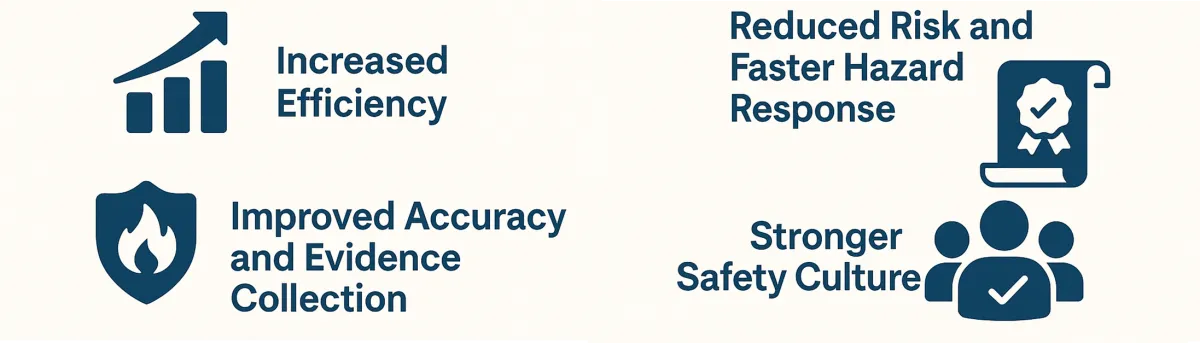
1. Increased Efficiency
Digital inspections take far less time. No more:
- Formatting reports manually
- Transcribing notes
- Searching for photos
- Chasing incomplete paperwork
Apps automate most of this, allowing staff to focus on higher-value activities.
2. Improved Accuracy and Evidence Collection
Paper forms rely on memory or rushed handwriting. A safety inspection app for use in Australia captures:
- Time-stamped photos
- Voice-to-text comments
- Automated hazard categories
- Consistent scoring
This creates stronger, more defensible safety documentation.
3. Reduced Risk and Faster Hazard Response
If a high-risk hazard is identified, managers are alerted instantly. This reduces the likelihood of incidents, injuries, and regulatory breaches.
4. Stronger Safety Culture
When inspections are digital, simple, and fast, participation increases. This helps:
- Engage frontline workers
- Improve reporting
- Reduce under-reporting
- Build proactive safety habits
Implementing a Safety Inspection App: Best-Practice Strategy
Adopting a digital inspection platform requires planning and structured rollout. Here’s a recommended approach:

Map out:
- Current forms
- Existing reporting workflows
- Gaps in compliance
- Departments with poor participation
- High-risk areas needing closer oversight

Assess the platform’s:
- Usability
- Customisation
- WHS alignment
- Offline capability
- Photo and video functions
- Integration ability

Ensure alignment with:
- WHS Regulation 2011
- Safe Work Australia Codes of Practice
- Industry-specific laws
- Site-specific safety needs

Training should cover:
- Field workers
- Supervisors
- Safety managers
- Administrators
Micro-training and short mobile-friendly sessions work best.

Start with:
- One site
- One department
- One inspection type
Then expand to full implementation.
Use dashboards to assess:
- Compliance rates
- Time to close actions
- Recurring issues
- Site-level trends
- High-risk equipment
Continuous improvement should follow data insights.
Why Australian Businesses Are Prioritising Digital Inspection Tools Now
Several key trends are pushing organisations to adopt modern safety technology:
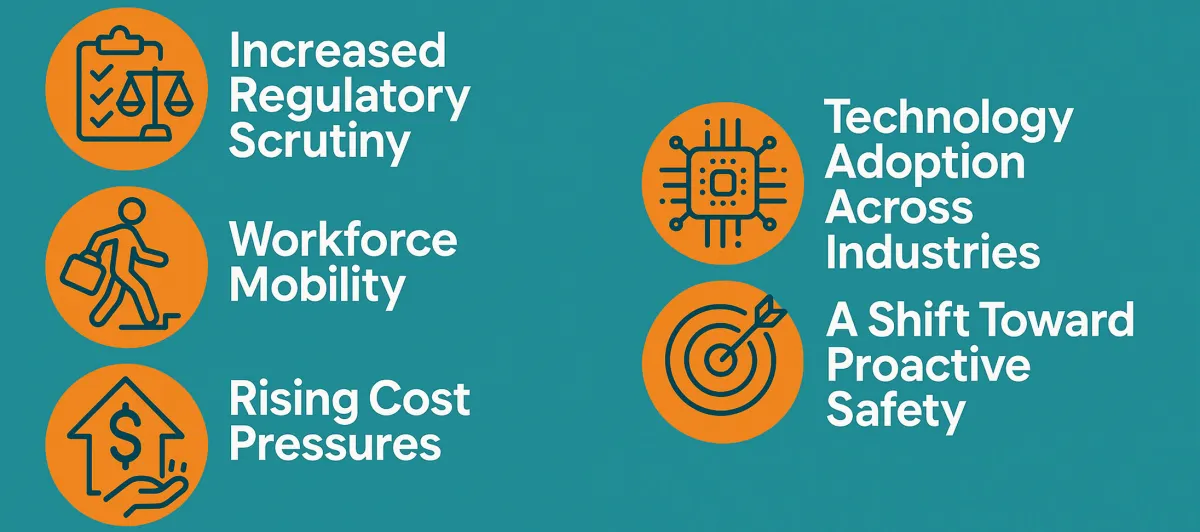
1. Increased Regulatory Scrutiny
Regulators expect consistent, auditable records something paper rarely delivers.
2. Workforce Mobility
With more remote workers, digital tools are essential.
3. Rising Cost Pressures
Digital systems reduce administrative overhead.
4. Technology Adoption Across Industries
Businesses recognise that manual WHS processes fall behind modern expectations.
5. A Shift Toward Proactive Safety
Data-driven insights allow organisations to address issues before incidents occur.
How a Safety Inspection App Supports a Broader WHS Ecosystem
A safety inspection app for Australian workforces does not exist in isolation. It connects to broader digital safety systems, including:
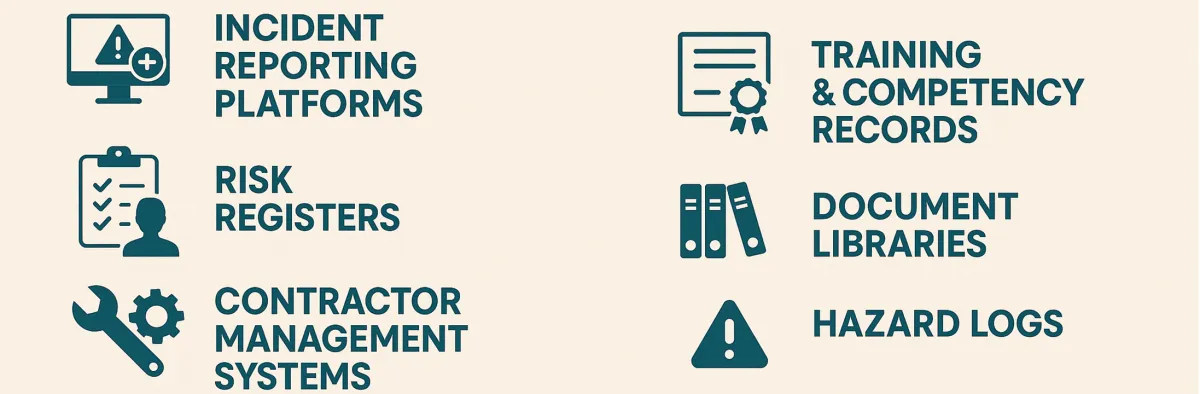
This integration allows businesses to move toward a true all-in-one safety management system, providing comprehensive visibility and control.
Conclusion
A safety inspection app within Australian organisations is no longer a “nice to have”, it is a crucial component of modern WHS management. Organisations that adopt digital inspection tools experience improved efficiency, stronger compliance, faster hazard response, and deeper insights into safety performance across their sites.
As Australian workplaces face increasing regulatory expectations and operational pressures, digital transformation is the most effective way to build a safer, smarter, and more accountable workplace.
If your organisation wants consistent inspections, real-time reporting, and audit-ready documentation, a safety inspection app is the path forward.
Stay in the loop.
WHS news, platform updates, and the occasional rant. No spam.
By subscribing you agree to our Terms.