
Safety
Incident Reporting Software Australia
SiteSherpa · 2025-12-01 · 16 min read
Introduction
Workplace health and safety in Australia has undergone dramatic transformation over the past decade. Expectations have shifted, legislation has strengthened, and organisations across all sectors now carry a clear responsibility to prevent harm and continuously improve their safety performance. One of the core functions underpinning a mature safety system is the ability to identify, capture, analyse, and act on incidents. From near misses and hazards to injuries and property damage, every event provides crucial insight into operational risk.
However, many Australian organisations still rely on outdated reporting practices. Paper forms left in site sheds, spreadsheets buried in folders, lost emails, and inconsistent reporting behaviours are still common across construction, aged care, logistics, manufacturing, retail, and local government operations. These outdated methods lead to incomplete data, slow responses, inconsistent records, and ultimately higher risk exposure.
This is where modern digital safety platforms have reshaped the landscape. Incident reporting software in Australian solutions have become essential tools for improving visibility, strengthening safety culture, and ensuring organisations meet their legal obligations. By replacing manual systems with mobile friendly reporting tools, businesses can improve accuracy, reduce administrative time, and create a safer, more proactive environment for their workforce.
This article explores why incident reporting matters, the legal context, key features to look for in digital systems, the benefits of adoption, and how organisations across Australia are using technology to improve safety outcomes.
Why Incident Reporting Matters
Incidents are not just paperwork events. They are signals. Each reported hazard, near miss, injury, or unsafe behaviour represents a moment where a risk was either realised or narrowly avoided. Without capturing these events, organisations lose critical insight that could prevent future harm.
Early detection of patterns
Reporting allows safety teams to identify emerging trends before they escalate. This might include recurring faults with equipment, behavioural patterns, environmental risks, or gaps in procedures. A single event may not seem significant, but repeated occurrences reveal underlying issues requiring immediate attention.
Legal obligations
Under the Work Health and Safety legislation in Australia, employers are required to:
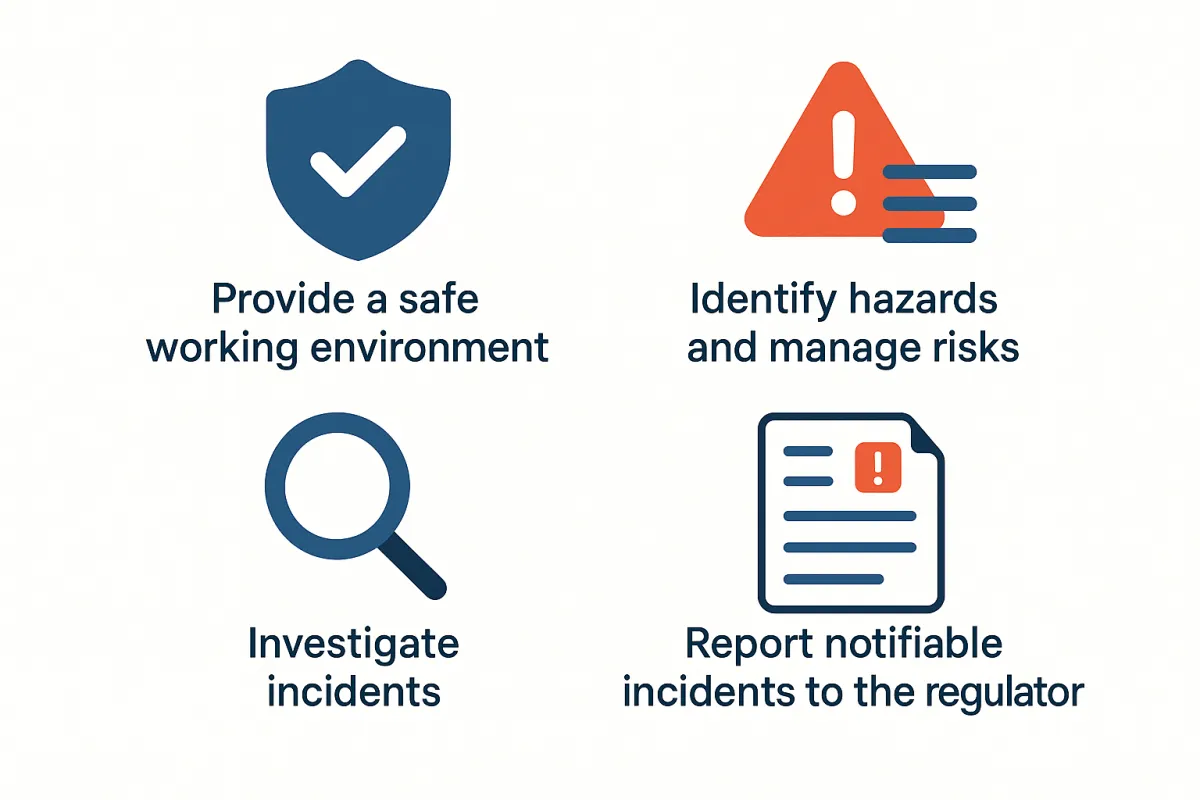
Failure to maintain adequate reporting processes can result in enforcement action, penalties, reputational damage, and in severe cases, prosecution.
Continuous improvement
A strong incident reporting culture builds stronger safety performance. The ability to investigate root causes, implement corrective actions, and monitor effectiveness is essential for reducing risk exposure and preventing recurrence.
Challenges With Traditional Reporting Methods
Despite clear benefits, many organisations continue to rely on manual reporting processes that introduce delays, inconsistencies, and inaccuracies.

Paper forms or spreadsheets require time to complete, manually submit, transcribe, and file. Workers often delay reporting until the end of shift or forget entirely.

Supervisors, managers, and safety personnel often receive information late, preventing quick intervention. Critical details may be missed or misinterpreted.

Paper forms can be damaged, lost, or submitted with missing information. These gaps compromise future analysis and investigations.

Without an integrated digital system, follow up tasks can be forgotten or untracked, increasing residual risk.

Manual systems cannot provide real time dashboards, trend analysis, or automated reporting, preventing leadership from seeing the bigger picture.
Transitioning from paper based processes to a streamlined digital solution resolves all these challenges.
Why Organisations Are Adopting Digital Reporting Systems
In recent years, the demand for incident reporting software solutions in Australia has accelerated. Industries with high risk exposure such as construction, mining, logistics, and manufacturing were early adopters, but sectors like aged care, healthcare, local government, and education have now caught up due to increasing compliance expectations and operational complexity.
Key drivers for change include:

Workers can submit reports directly from their phone with photos, location tags, and voice to text capability. Supervisors receive instant notifications to act quickly.

Digital forms ensure all required fields are completed, reducing errors and incomplete submissions.

Templates standardise the reporting process, ensuring uniformity across multiple locations or teams.

Corrective actions can be assigned, monitored, escalated, and closed out within the system.

Digital storage and audit trails ensure records are accurate, secure, and accessible for audits or investigations.
Key Features to Look for in Incident Reporting Software
Organisations selecting incident reporting software for Australian options should focus on functionality that supports both compliance and practical usability across diverse workplaces.
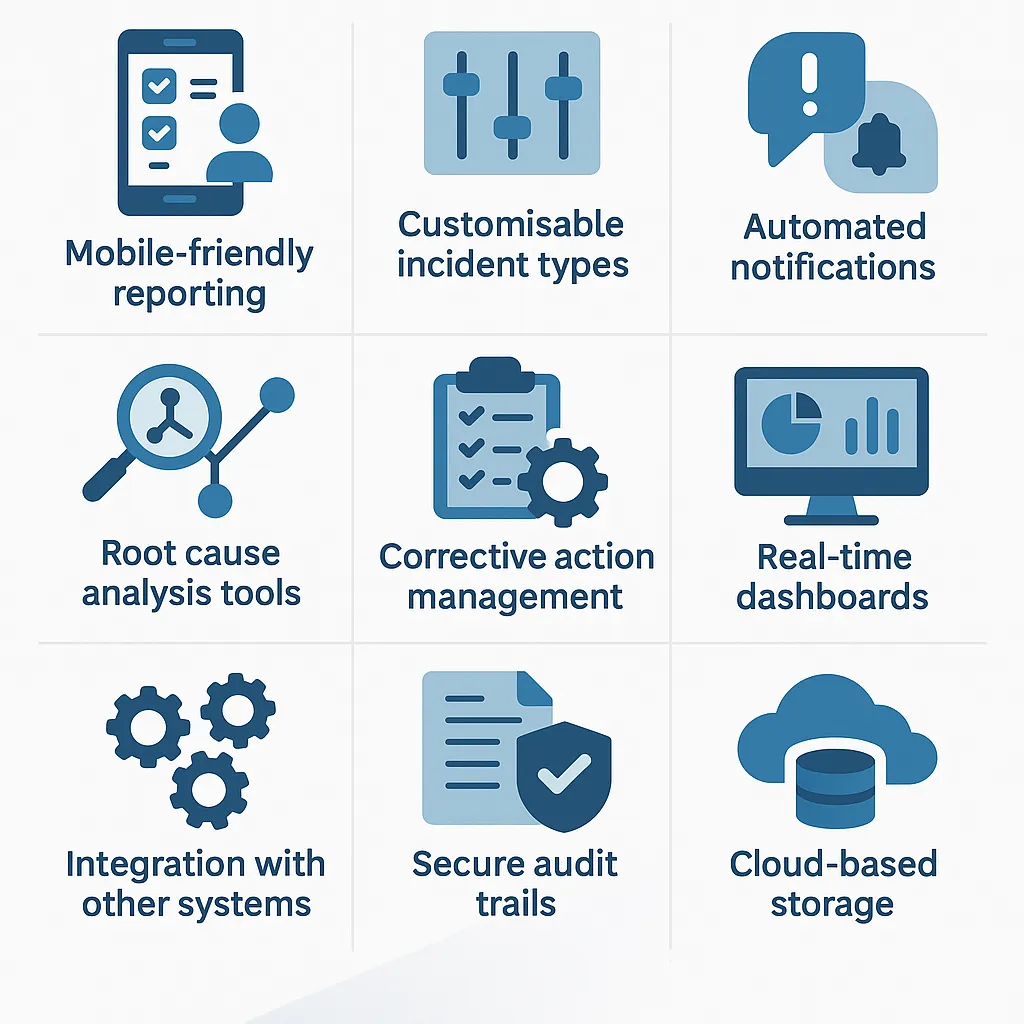
1. Mobile friendly reporting
The workforce is increasingly mobile. Incident reporting must be accessible from any device, anywhere. Tools like photo upload, voice notes, and quick submit options significantly increase reporting rates.
2. Customisable incident types
Every business has unique risks. The system should support different categories such as:
- Near miss
- Injury
- Illness
- Environmental
- Property damage
- Behavioural observations
- Security incidents
3. Automated notifications
Supervisors, safety teams, and management should receive immediate alerts for high severity incidents or regulatory reporting triggers.
4. Root cause analysis tools
Capabilities such as 5 Whys or fishbone diagrams help identify contributing factors and underlying causes.
5. Corrective action management
Actions must be trackable with owners, deadlines, statuses, and escalation pathways.
6. Real time dashboards
Visual analytics help organisations understand trends and identify priorities.
7. Integration with other systems
Integration with contractor management, asset management, risk registers, or training systems strengthens the overall safety framework.
8. Secure audit trails
Every update, action, or comment must be timestamped for compliance.
9. Cloud based storage
Secure, backed up, and accessible for audits and regulatory inspections.
How Incident Reporting Software Improves Safety Culture
Technology alone does not create a strong safety culture, but it empowers people to participate effectively.

1. Encourages reporting of small events
Easy to use tools help workers report hazards and near misses quickly. This leads to increased transparency and earlier risk mitigation.
2. Builds trust
Workers feel heard when incidents are acknowledged quickly and followed up consistently.
3. Reduces blame culture
Structured digital forms emphasise facts, not fault finding.
4. Promotes proactive behaviour
Real time visibility encourages teams to take ownership of safety and engage in continuous improvement practices.
Legal and Regulatory Considerations in Australia
Work Health and Safety legislation requires that organisations respond to incidents, maintain accurate records, and in some cases notify the regulator. Incident reporting software supports
Regulators in Australia expect businesses to demonstrate that they have functional systems in place to manage risks and respond appropriately to incidents. Digital reporting platforms fulfil these expectations and reduce risk exposure.
Real World Examples of Digital Incident Reporting in Action
Construction
Large contractors use digital reporting to manage thousands of workers across multiple projects. Mobile forms have reduced incident investigation times and increased hazard reporting by more than 40 percent.
Aged Care
Providers are using digital reporting to manage falls, medication errors, resident incidents, and staff injuries. Dashboards help identify patterns related to staffing levels, time of day, or environmental factors.
Logistics and warehousing
Forklift collisions, manual handling injuries, and near misses are captured instantly. Cameras combined with digital forms allow rapid escalation and corrective action.
Manufacturing
Production facilities are using digital platforms to monitor equipment related incidents and automate maintenance requests.
Benefits of Implementing a Modern Digital Incident Reporting System

With increased visibility and early detection of hazards, organisations can prevent harm before it occurs.

Digital systems maintain secure, consistent records that are audit ready and regulator friendly.

Streamlined workflows reduce paperwork, save time, and allow safety teams to focus on prevention.

Executives can access dashboards showing:
- High risk areas
- Trend patterns
- Site performance comparisons
- Root cause themes

When the process is simple, workers participate more readily.

Notifications and automated workflows shorten the time between identification and corrective action.
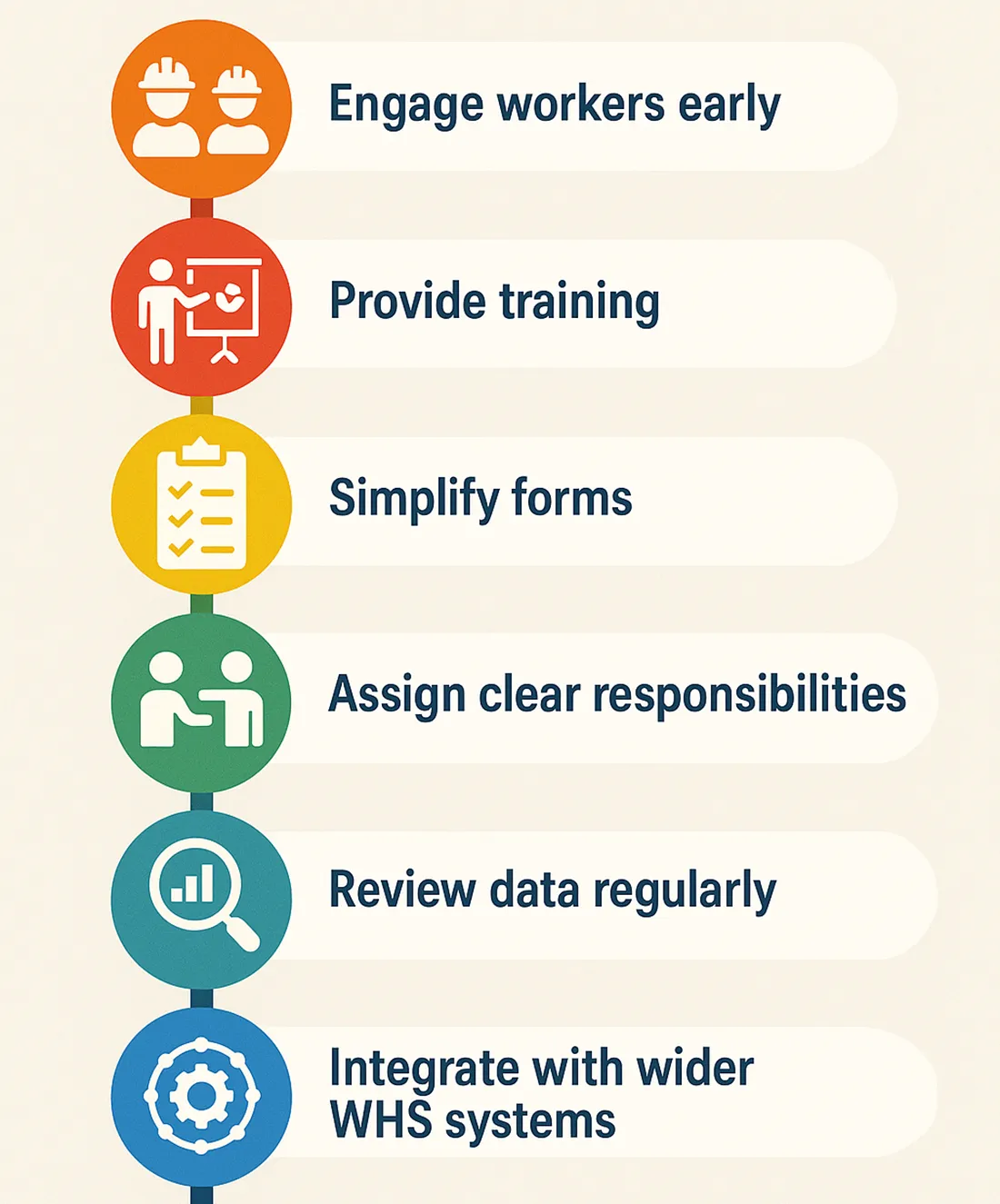
How to Successfully Implement Incident Reporting Software
Implementation is just as important as choosing the right system.
The Future of Incident Reporting in Australia
As AI and automation evolve, incident reporting will continue to transform. The future includes:
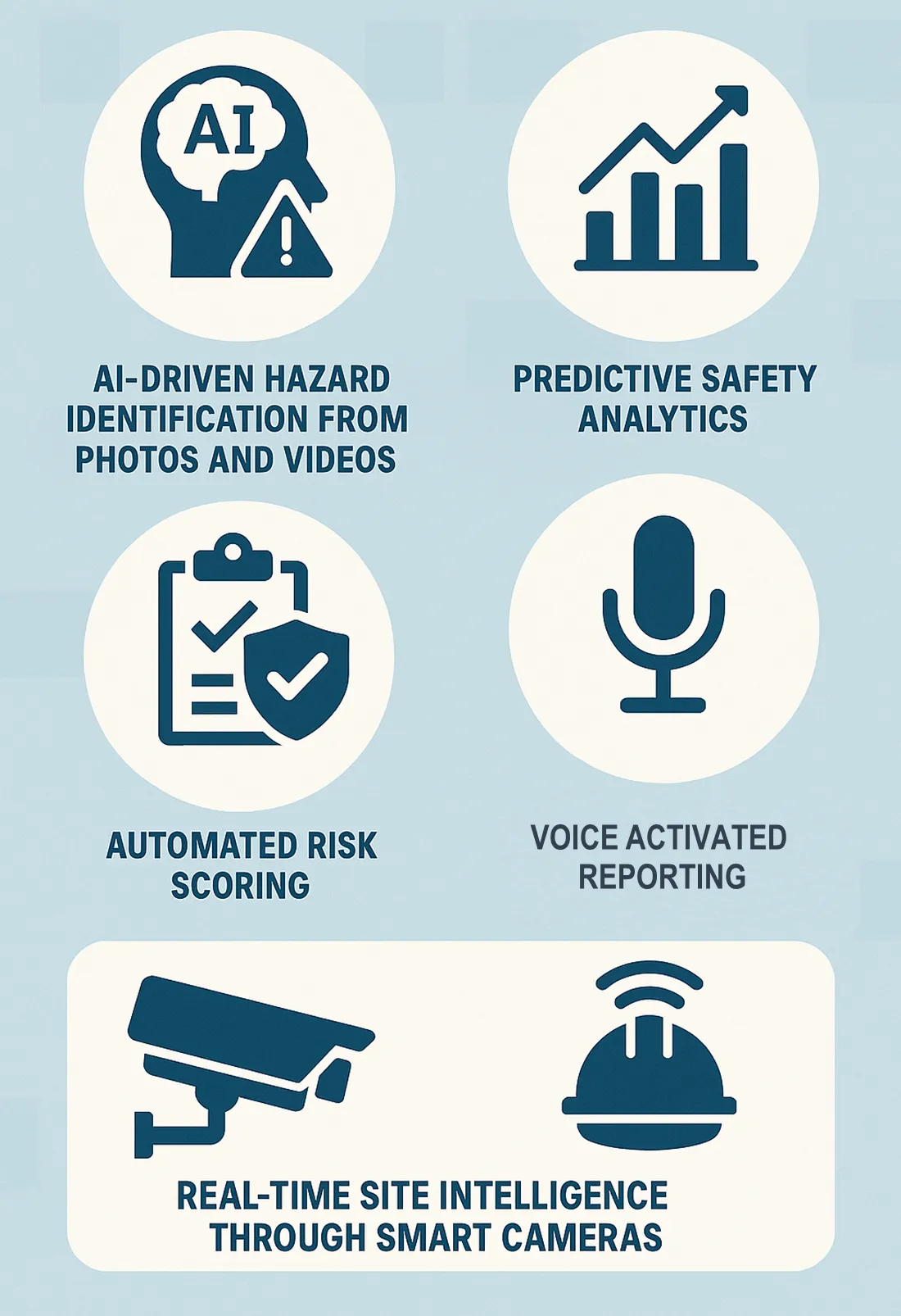
These tools will help organisations stay ahead of risk and respond faster to emerging issues.
Conclusion
A strong safety system depends on the ability to capture and act upon incidents, hazards, and near misses. Manual processes can no longer support the speed, accuracy, and compliance required by modern Australian workplaces. Digital solutions are now essential for building a proactive, transparent, and compliant safety environment.
Businesses that adopt incident reporting software for Australian solutions gain real time visibility, improved worker participation, stronger compliance outcomes, and enhanced operational control. As the regulatory landscape continues to evolve and expectations rise, organisations that embrace digital reporting will remain safer, more resilient, and better equipped to protect their people.
Whether you operate in construction, aged care, logistics, retail, education, or local government, digital incident reporting is no longer optional, it is an essential foundation of a modern workplace health and safety system. The shift toward smarter, faster, mobile enabled reporting is already shaping the future of workplace safety across Australia.
Stay in the loop.
WHS news, platform updates, and the occasional rant. No spam.
By subscribing you agree to our Terms.