
Safety
Contractor Management Software Australia: A Guide for Modern Businesses
SiteSherpa · 2025-12-05 · 16 min read
Introduction
Managing contractors has become one of the most complex, high-risk functions for Australian businesses. Whether it is construction, aged care, manufacturing, logistics, government, education, or utilities, organisations today rely heavily on external workers to deliver critical services and infrastructure. While contractors provide agility and specialised skills, they also introduce additional legal, operational, and safety risks risks that must be controlled under Australian Work Health and Safety laws.
Traditionally, managing contractor documentation, inductions, licences, insurances, risk assessments, and site activities involved endless emails, spreadsheets, and manual tracking systems. These outdated methods fall short in a regulatory environment where expectations around due diligence, evidence, reporting, and real-time visibility have never been higher.
This is why more organisations are adopting contractor management software platforms and digital systems that centralise compliance, automate workflows, and streamline contractor engagement from onboarding to offboarding. As the landscape shifts toward stronger governance and smarter technology, business leaders are recognising that digital contractor management is not just operationally efficient but essential for legal defensibility and sustainable safety outcomes.
This article explores everything you need to know about contractor governance, including the benefits, features, legislation, and best-practice strategies for selecting the right system. Whether you manage 20 contractors or 5,000, this guide offers insight into how technology can help you stay compliant, reduce risk, and improve workforce efficiency.
Why Contractor Management Matters More Than Ever
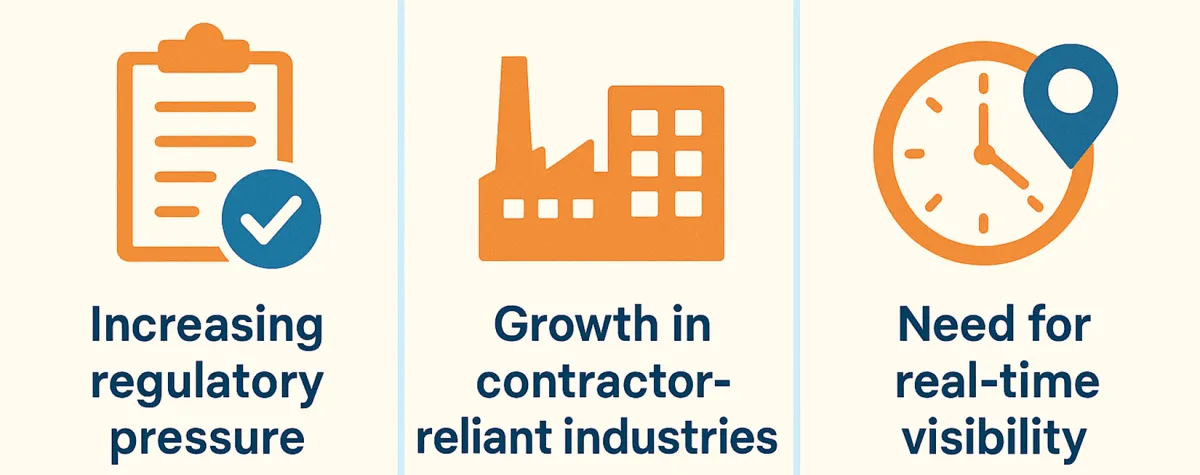
1. Increasing regulatory pressure
Across Australia, regulators such as Safe Work NSW, WorkSafe Victoria, WorkSafe Queensland, and Comcare are intensifying enforcement activities. Contractors are now under the same duty of care as employees, and the host employer must ensure:
- contractors are properly qualified
- risks are identified and controlled
- safe systems of work are followed
- inductions, licences, and insurances are up to date
- safety documentation is complete and accessible
- incidents are reported and investigated
- site access is controlled and monitored
Failure to manage these obligations can expose a business to prosecution, fines, stop-work notices, contract termination, and even industrial manslaughter charges in some jurisdictions.
2. Growth in contractor-reliant industries
Industries like renewable energy, aged care, infrastructure, commercial construction, engineering, and facility management are increasingly relying on contracted labour. This creates a dynamic and complex workforce where job roles, locations, and risks change rapidly.
A manual approach simply cannot keep up with these evolving conditions.
3. Need for real-time visibility
Boards and executives now expect real-time insight into:
- who is on site
- their credentials
- their compliance status
- live hazards and risks
- outstanding actions
- audit trails
- incident trends
Without a digital solution, achieving this level of visibility is nearly impossible.
What Is Contractor Management Software?
Contractor management software is a digital platform designed to streamline and automate the entire contractor lifecycle, including:
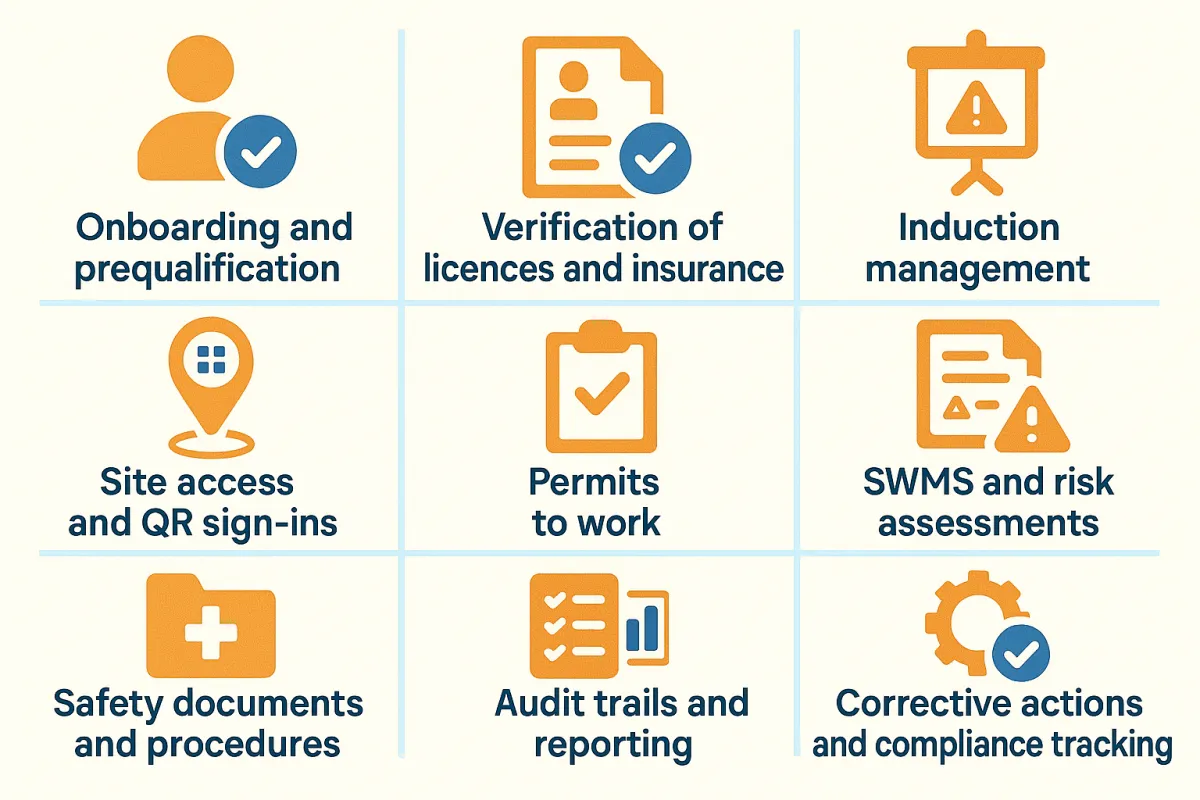
Modern systems integrate with mobile apps, dashboards, AI-powered workflows, document libraries, and communication tools to create a seamless, end-to-end safety experience.
When implemented correctly, contractor management software in Australian platforms reduce administrative workload, strengthen compliance, and cut down on duplicated tasks across teams.
The Business Case: Why Companies Are Adopting Digital Contractor Management
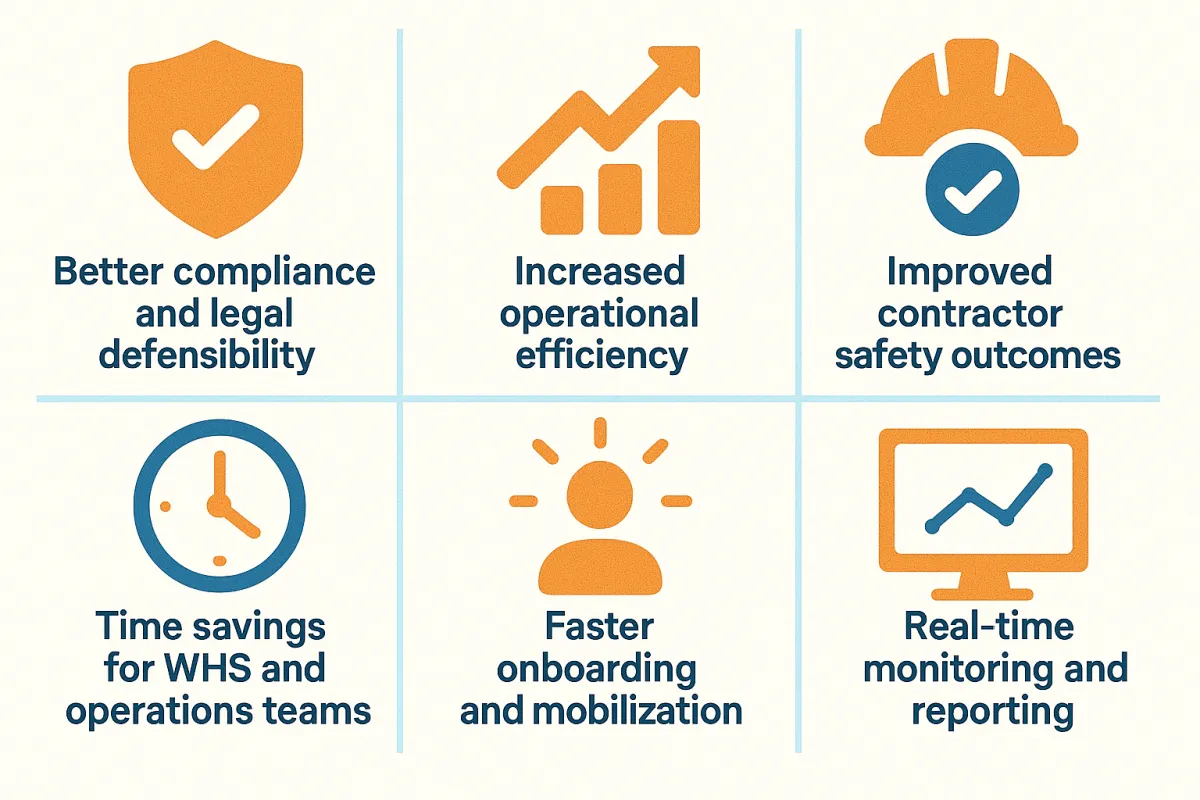
1. Better compliance and legal defensibility
Automated reminders prevent expired licences, training records, or insurances from slipping through the cracks. The system helps ensure contractors cannot enter a site without passing prequalification or completing required documentation.
2. Increased operational efficiency
Teams no longer chase emails, cross-check spreadsheets, or manually track approvals.
Digital workflows standardise the process and eliminate bottlenecks.
3. Improved contractor safety outcomes
Contractors receive clear guidance, consistent inductions, and access to up-to-date safety information. Hazards, risks, and incidents are recorded instantly via mobile devices.
4. Time savings for WHS and operations teams
A single source of truth removes duplication across procurement, safety, HR, and project teams.
Automation frees people to focus on higher-value activities.
5. Faster onboarding and mobilisation
Contractors can self-upload documents, complete inductions, and verify credentials before arriving on site reducing delays and downtime.
6. Real-time monitoring and reporting
Live dashboards provide insights into:
- compliance gaps
- contractor performance
- high-risk activities
- overdue actions
- incident trends
Executive teams gain clarity, transparency, and confidence in operational safety.
Key Features to Look for in Contractor Management Software
Not all systems are created equal. The best contractor management software from Australian providers offer powerful, scalable solutions designed for local regulation and industry requirements.
1. Prequalification and onboarding workflows
- document upload
- competency verification
- risk profiling
- company-level and worker-level compliance checks
2. Licence and insurance tracking
- automated expiry alerts
- digital storage
- instant verification
- regulatory linkage to Australian standards
3. Digital inductions and microlearning
- online induction modules
- site-specific inductions
- competency tests
- refresher training
Short-form microlearning (TikTok-style videos) supports better engagement.
4. QR-coded site access
- contactless sign-ins
- geolocation tagging
- contractor status checks at the gate
- emergency evacuation roll calls
5. SWMS and risk assessment submission
- upload templates
- AI auto-population (emerging trend)
- risk scoring
- control measure verification
6. Incident and hazard reporting
- voice-to-text reporting
- photo/video uploads
- automated notifications
- action assignment
Legislation Relevant to Contractor Management in Australia
Every host employer must meet obligations under:
Work Health and Safety (WHS) Acts & Regulations (varies by state)
Including:
- Work Health and Safety Act 2011 (NSW, QLD, SA, TAS, NT, ACT)
- Work Health and Safety Act 2020 (WA)
- Occupational Health and Safety Act 2004 (VIC)
- Work Health and Safety Regulations 2022, 2025 (as updated in each state)
These laws require:
- consultation
- shared duties
- risk management
- information sharing
- safe systems of work
Industrial Relations laws
Ensuring fair treatment of contractors and subcontractors.
Industry-specific regulations
For sectors like:
- construction
- mining
- aged care
- manufacturing
- transport
- energy
ISO Standards
Many organisations align with:
- ISO 45001 (Safety Management)
- ISO 14001 (Environmental Management)
- ISO 9001 (Quality Management)
Contractor management software helps provide audit-ready evidence.
Best Practices for Implementing Contractor Management Software
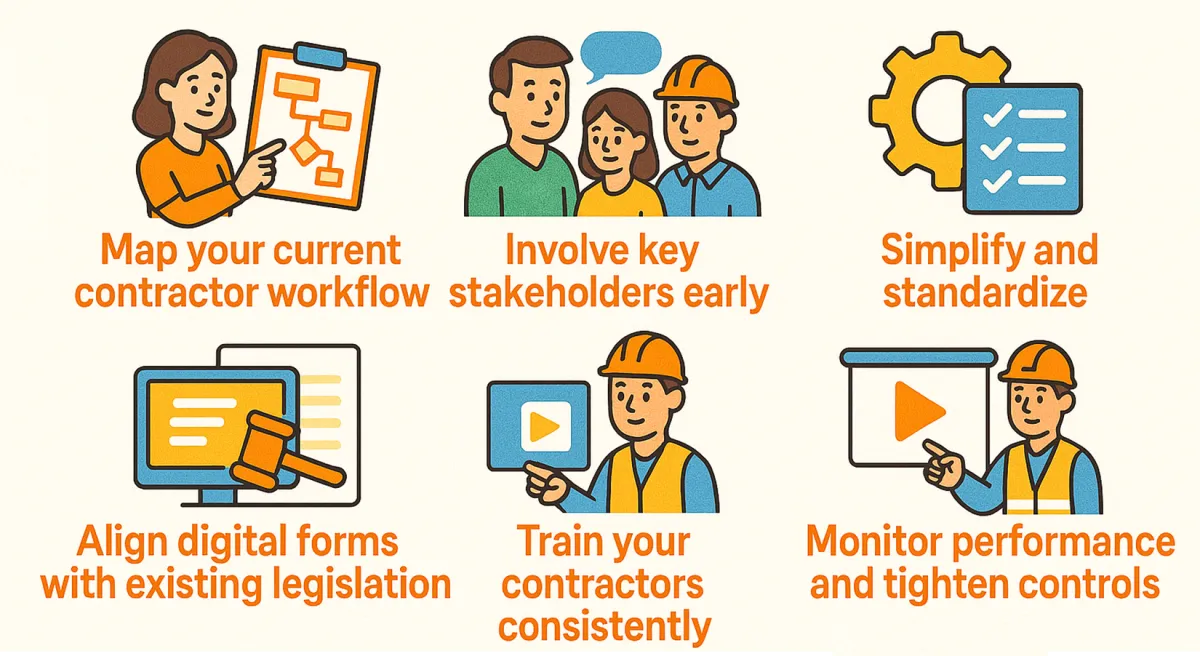
1. Map your current contractor workflow
Identify:
- pain points
- bottlenecks
- duplicated work
- manual steps
- compliance gaps
This forms your baseline.
2. Involve key stakeholders early
Include:
- WHS
- Procurement
- Operations
- IT
- HR
- Project Managers
They will help shape the correct system design.
3. Simplify and standardise
Avoid over-engineering the process. A streamlined workflow improves adoption.
4. Align digital forms with existing legislation
Ensure:
- SWMS
- risk assessments
- permits
- inductions
meet Australian compliance requirements.
5. Train your contractors consistently
Give them clear instructions and support during onboarding.
6. Monitor performance and tighten controls
Use dashboards to identify gaps early and apply corrective actions.
Common Mistakes Companies Make (and How to Avoid Them)
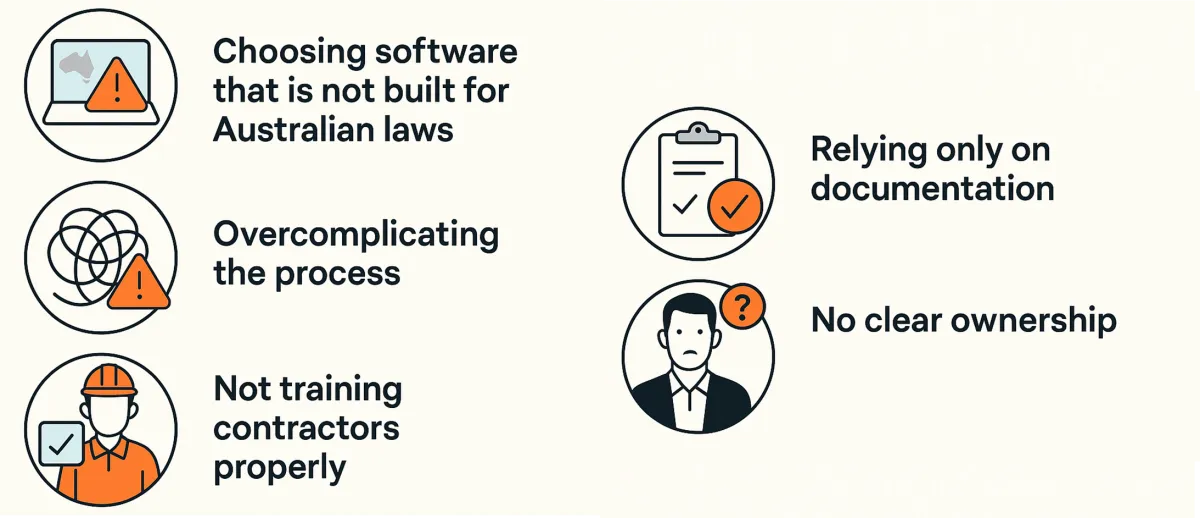
Mistake 1: Choosing software that is not built for Australian laws
Many international systems do not fit the WHS regulatory environment.
Choose a platform designed for Australia.
Mistake 2: Overcomplicating the process
Too many forms or unnecessary approval steps slow down mobilisation.
Mistake 3: Not training contractors properly
A system is only effective if people know how to use it.
Mistake 4: Relying only on documentation
Actual site verification is still essential documentation does not equal control.
Mistake 5: No clear ownership
Every system needs:
- a system admin
- safety ownership
- operational oversight
How to Choose the Right Contractor Management Software
When selecting a provider, consider:
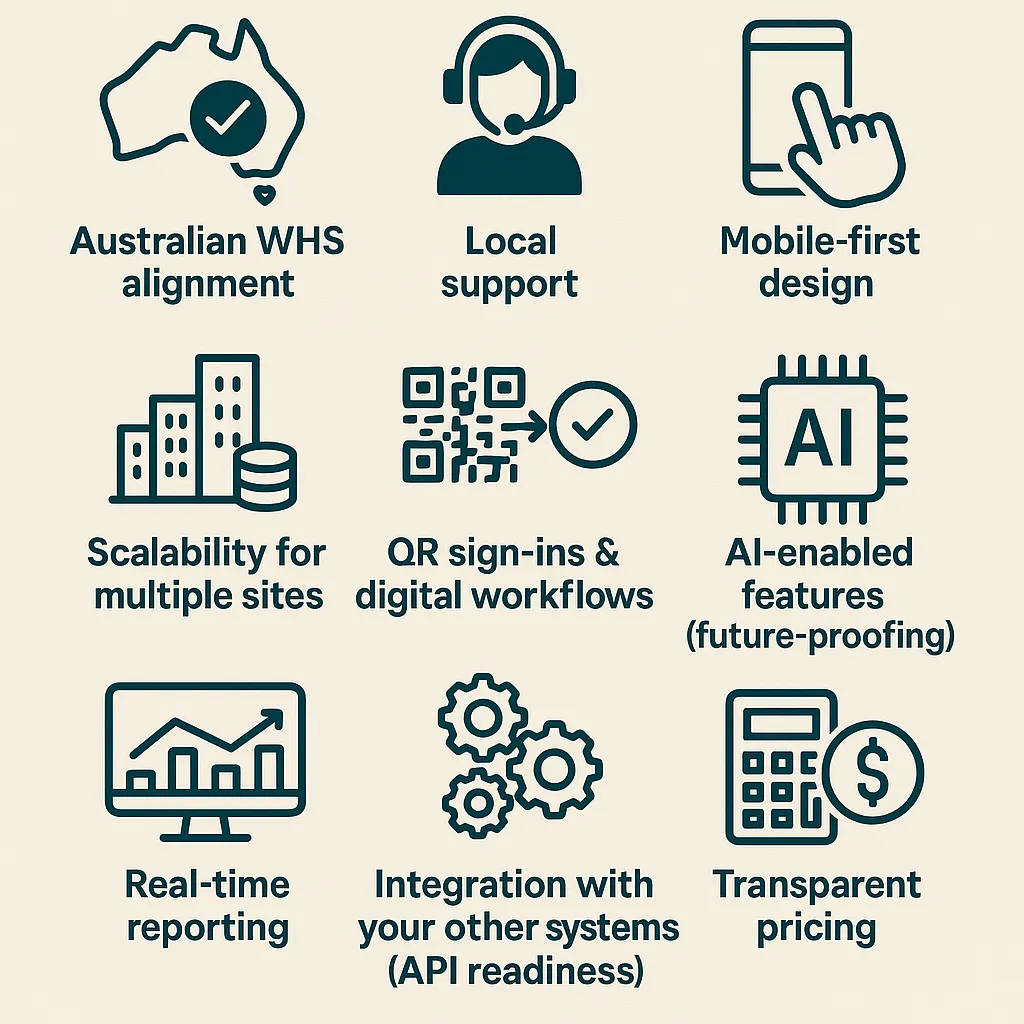
A pilot program can help validate performance before full rollout.
The Future of Contractor Management
The next wave of digital contractor systems will focus on:
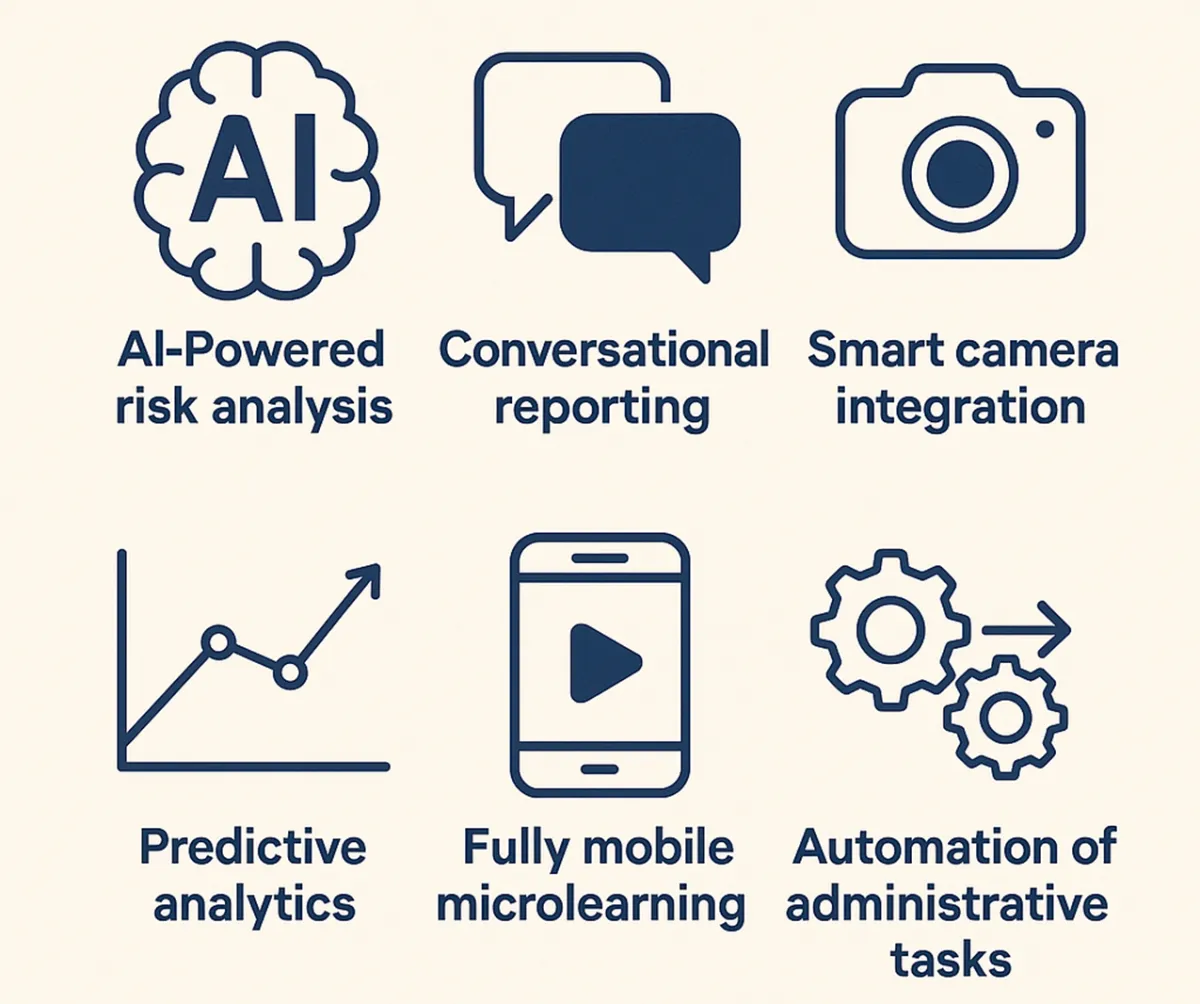
1. AI-Powered risk analysis
Identifying hazards from photos and videos.
2. Conversational reporting
Voice-guided workflows through AI safety assistants.
3. Smart camera integration
Real-time behaviour detection linked to contractor profiles.
4. Predictive analytics
Stopping high-risk activities before they occur.
5. Fully mobile microlearning
Short, engaging contractor training accessible anywhere.
6. Automation of administrative tasks
Reducing 80% of manual work for WHS teams.
Conclusion
Contractor governance is no longer optional, it is a core component of organisational safety, compliance, and operational success. Companies across Australia are embracing digital transformation to improve visibility, reduce risk, and streamline contractor workflows.
By adopting the right contractor management software solution in Australia, organisations gain stronger control, better legal defensibility, increased efficiency, and safer project outcomes.
Contractor management is complex but with modern technology, it becomes manageable, transparent, and scalable.
Stay in the loop.
WHS news, platform updates, and the occasional rant. No spam.
By subscribing you agree to our Terms.