WHS Audits Australia

Safety
Work Health and Safety Audits in Australia: A Guide for Organisations Seeking Compliance, Confidence, and Continuous Improvement
Turning compliance requirements into practical safety assurance and measurable improvement.
Work health and safety is no longer viewed as a purely regulatory obligation or a box-ticking exercise. Across Australia, organisations are facing increasing expectations from regulators, insurers, boards, workers, and the broader community to demonstrate that safety risks are being actively identified, managed, and reviewed. At the centre of this expectation sits the audit process.
When implemented properly, WHS audits in Australia plays a critical role in strengthening safety systems, supporting due diligence, and preventing incidents before they occur. This article explores what work health and safety audits involve, why they matter, how they are conducted, and how organisations can use them as a powerful tool for long-term improvement rather than short-term compliance.
Understanding Work Health and Safety Audits
A work health and safety audit is a structured and systematic review of an organisation’s safety management system, processes, and practices. The aim is to assess whether those systems are:
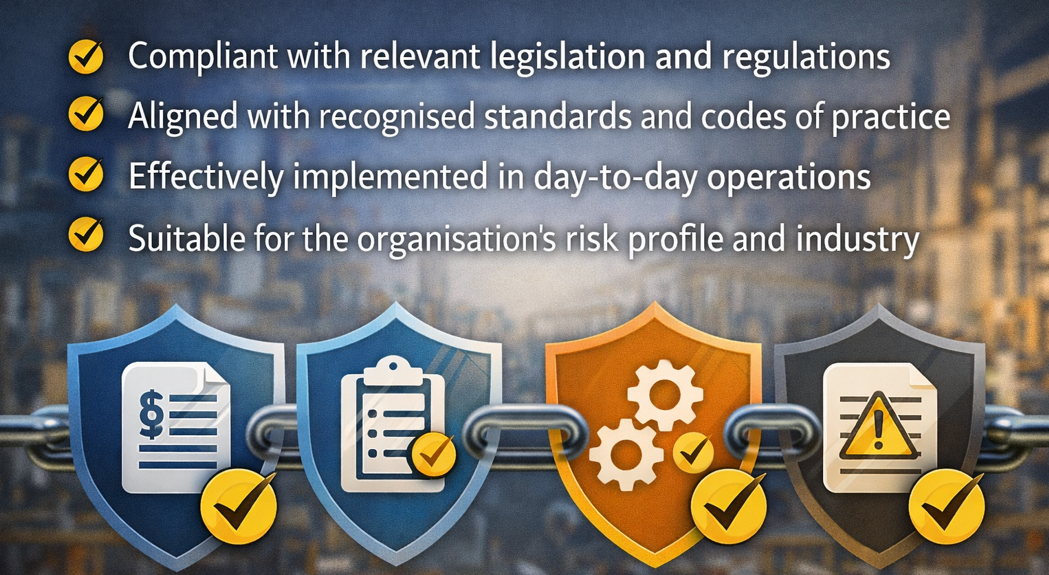
Unlike inspections, which tend to focus on observable site conditions at a point in time, audits look deeper. They examine governance, documentation, consultation mechanisms, training systems, incident management, and how risks are controlled across the organisation.
Audits may be conducted internally by trained staff or externally by independent auditors. Both approaches have value, depending on the objectives and maturity of the safety system.
The Legislative Context in Australia
Australia operates under a harmonised work health and safety framework adopted by most states and territories. While there are jurisdictional variations, the core duties are broadly consistent and place clear responsibilities on persons conducting a business or undertaking, officers, workers, and other duty holders.
Audits help organisations demonstrate that they are meeting these duties by providing evidence of:
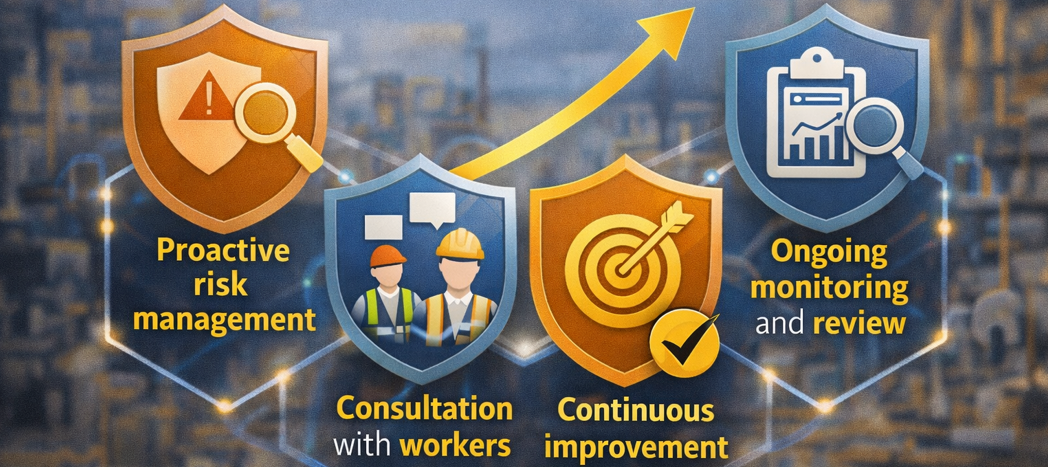
From a due diligence perspective, officers are expected to take reasonable steps to ensure their organisation has appropriate resources, processes, and controls in place. A structured audit program is one of the most practical ways to meet this expectation.
Why WHS Audits Matter Beyond Compliance
Many organisations still approach safety audits defensively, viewing them as something to prepare for only when required by a regulator, client, or insurer. This mindset significantly undervalues the benefits audits can deliver.
When used effectively, audits help organisations:
- Identify gaps before incidents or enforcement action occurs
- Validate whether documented procedures are actually followed in practice
- Improve consistency across multiple sites or teams
- Strengthen safety culture by reinforcing accountability and ownership
- Provide leadership with reliable data to support decision-making
Rather than asking “Are we compliant?”, a well-designed audit asks “Is our system working as intended, and where can it be improved?”
Common Types of WHS Audits
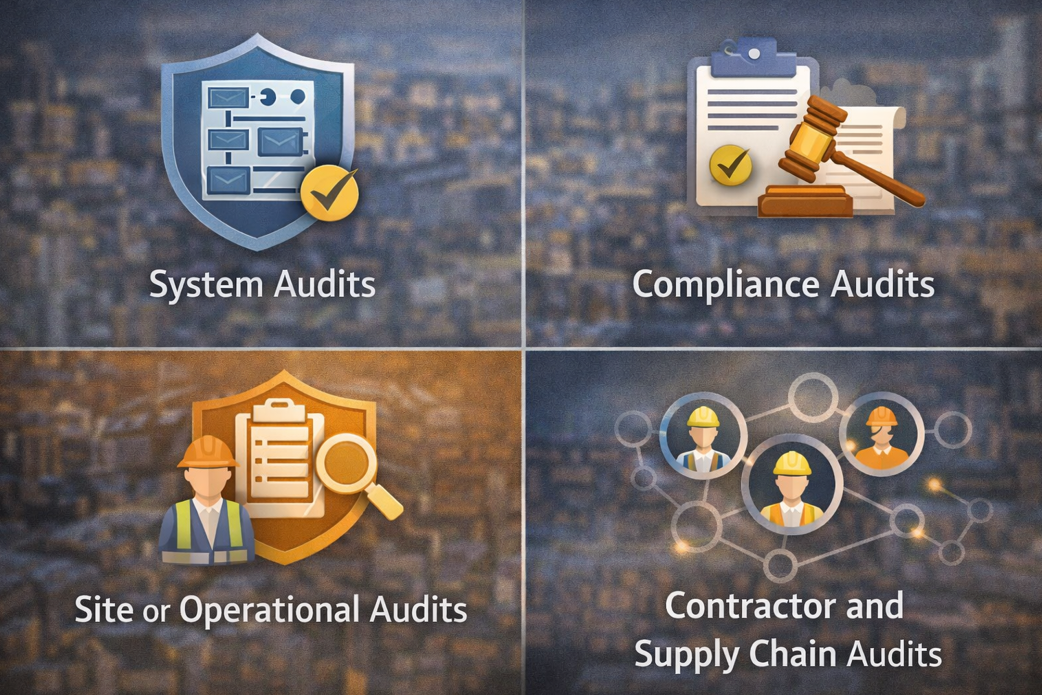
Not all audits are the same, and understanding the different types helps organisations select the right approach.
System Audits
System audits review the overall safety management framework. They typically examine policies, procedures, roles, responsibilities, and governance arrangements. These audits are often aligned to recognised standards such as ISO 45001.
System audits answer questions such as:
- Is there a documented safety management system?
- Does it align with legislative requirements?
- Are responsibilities clearly defined and understood?
Compliance Audits
Compliance audits focus specifically on whether legal and regulatory obligations are being met. This includes reviewing registers, training records, risk assessments, and incident reporting processes against legislative requirements.
These audits are particularly useful when entering new jurisdictions, industries, or contractual arrangements.
Site or Operational Audits
Operational audits assess how safety systems are implemented at the frontline. They involve site observations, worker interviews, and verification of controls.
These audits help identify gaps between “work as imagined” and “work as done”.
Contractor and Supply Chain Audits
With increased reliance on contractors and subcontractors, many organisations now audit their supply chains. These audits review prequalification processes, onboarding, supervision, and monitoring arrangements.
They help ensure safety responsibilities are not diluted or misunderstood across multiple parties.
The Role of WHS Audits in Australia’s Risk Landscape
Australia’s workforce is diverse, with industries ranging from high-risk construction and manufacturing to healthcare, logistics, education, and professional services. Each sector faces different hazards, but all share a common requirement to manage risk systematically.
In this context, WHS audits Australia have become an essential mechanism for organisations seeking to navigate complexity. Audits provide a structured way to understand whether risk controls are proportionate, effective, and responsive to changing conditions.
For example:
- In construction, audits often focus on high-risk work, contractor coordination, and site supervision.
- In healthcare, audits may emphasise psychosocial hazards, manual handling, and infection control.
- In office-based environments, audits increasingly address mental health, ergonomics, and remote work arrangements.
The flexibility of the audit process allows it to be tailored to different operational realities while maintaining a consistent framework.
What a Good WHS Audit Process Looks Like
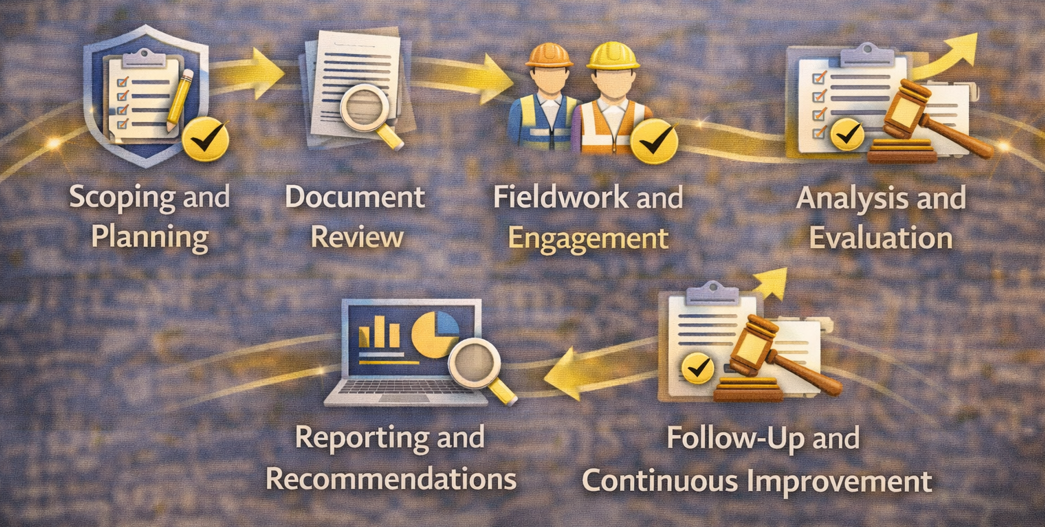
An effective audit is not a one-day event. It is a structured process with clear stages and defined outcomes.
1. Scoping and Planning
The audit scope should be clearly defined, including:
- The sites, activities, or systems being reviewed
- The standards or legislation used as criteria
- The timeframe and methodology
Clear scoping ensures the audit remains focused and relevant.
2. Document Review
Auditors typically review key documentation before site activities commence. This may include policies, procedures, risk registers, training matrices, and incident records.
This step helps auditors understand how the system is intended to function.
3. Fieldwork and Engagement
Site visits, interviews, and observations provide insight into how systems operate in practice. Worker engagement is critical at this stage, as it reveals whether safety processes are understood, accessible, and meaningful.
4. Analysis and Evaluation
Findings are assessed against the audit criteria and risk context. Not all gaps carry the same level of risk, so effective audits prioritise issues based on potential impact rather than volume.
5. Reporting and Recommendations
Audit reports should be clear, practical, and focused on improvement. Overly technical or generic reports often fail to drive meaningful change.
Good reports:
- Clearly describe findings
- Explain why they matter
- Provide actionable recommendations
6. Follow-Up and Continuous Improvement
The real value of an audit lies in what happens next. Corrective actions should be tracked, responsibilities assigned, and progress monitored.
Audits should feed into broader improvement planning rather than sit in isolation.
Internal vs External Audits: Choosing the Right Approach
Both internal and external audits have a place in an effective safety program.
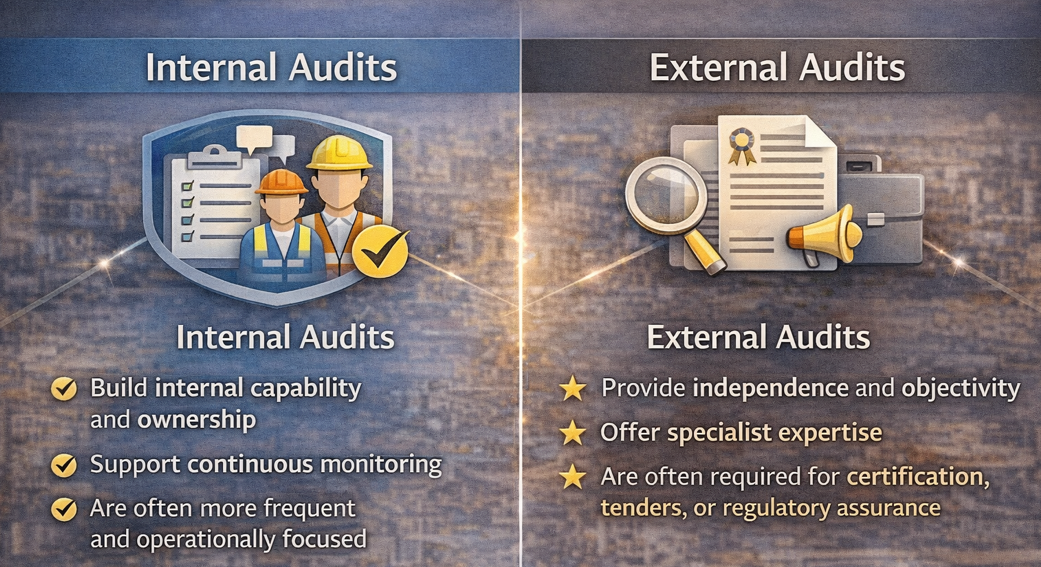
Many organisations adopt a blended approach, using internal audits for regular monitoring and external audits for periodic assurance.
Common Challenges and How to Avoid Them.
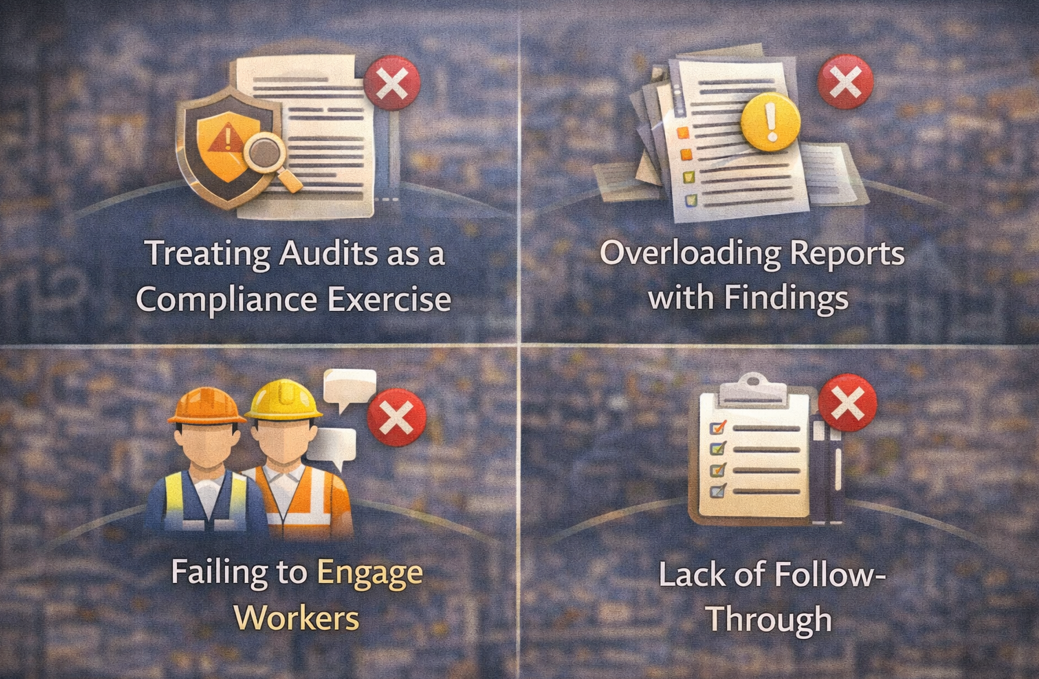
Despite good intentions, audits can fail to deliver value if they are poorly designed or executed.
Treating Audits as a Compliance Exercise
When audits are rushed or approached defensively, they often miss systemic issues. Shifting the focus from “passing” to “learning” changes the outcome.
Overloading Reports with Findings
Long lists of minor non-conformances can overwhelm teams and obscure critical risks. Prioritisation is essential.
Failing to Engage Workers
Audits conducted without meaningful worker input rarely reflect reality. Engagement improves accuracy and buy-in.
Lack of Follow-Through
Without clear action plans and accountability, even the best audit findings will not translate into improvement.
The Link Between Audits and Safety Culture
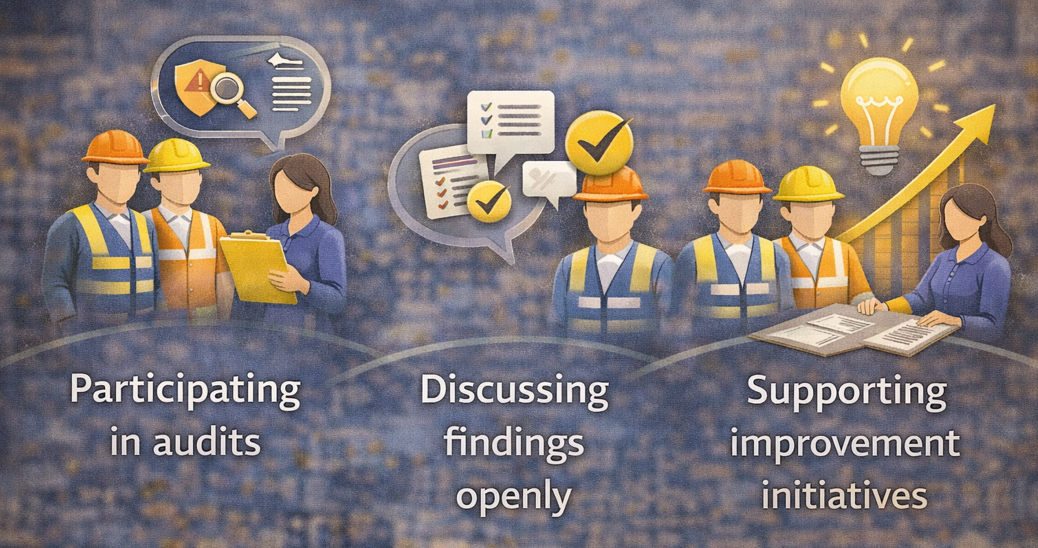
Audits do more than assess systems; they send a message about what an organisation values. When audits are conducted respectfully, transparently, and collaboratively, they reinforce a culture of learning and shared responsibility.
Conversely, audits perceived as punitive or disconnected from daily work can erode trust and engagement.
Leaders play a key role in setting the tone by:
Using Audit Data Strategically
Audit outcomes should not sit in isolation. When integrated with incident data, risk assessments, and performance metrics, they provide powerful insight into organisational risk.
Strategic use of audit data allows organisations to:
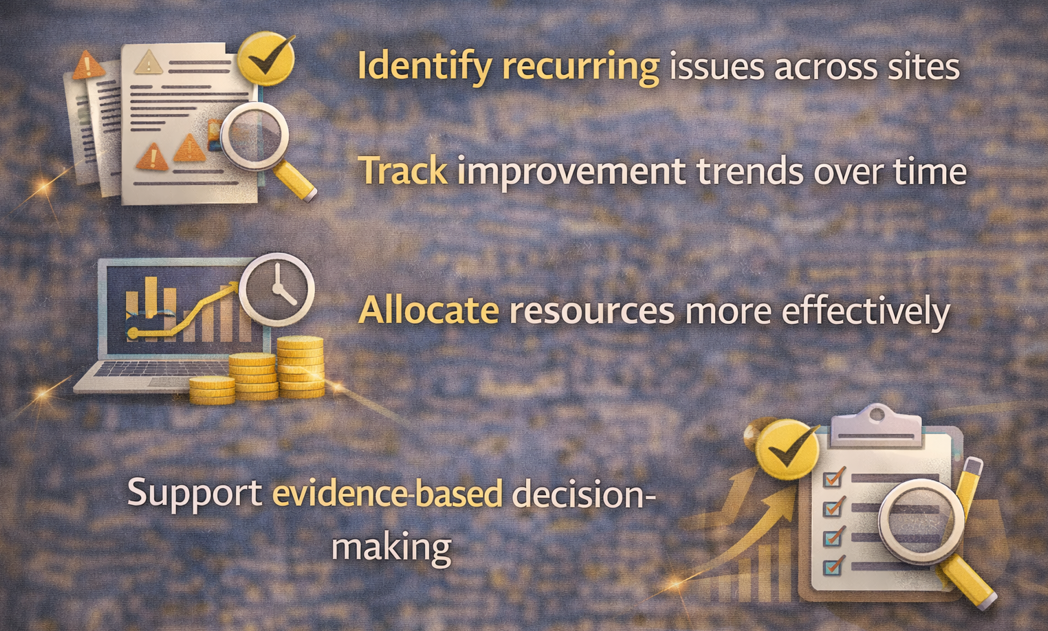
This approach elevates audits from a compliance tool to a strategic asset.
Future Trends in WHS Auditing
The way audits are conducted is evolving. Digital tools, real-time reporting, and integrated management systems are changing expectations around visibility and responsiveness.
Emerging trends include:
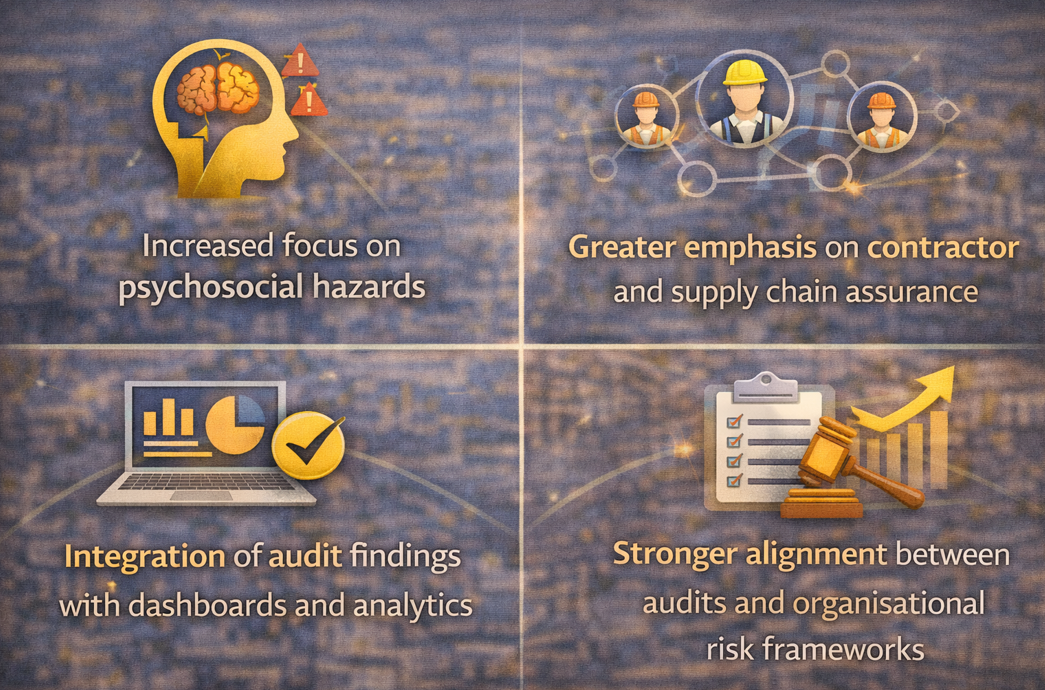
As these trends continue, audits will play an even more central role in organisational governance.
Making Audits Work for Your Organisation
To get the most value from safety audits, organisations should:
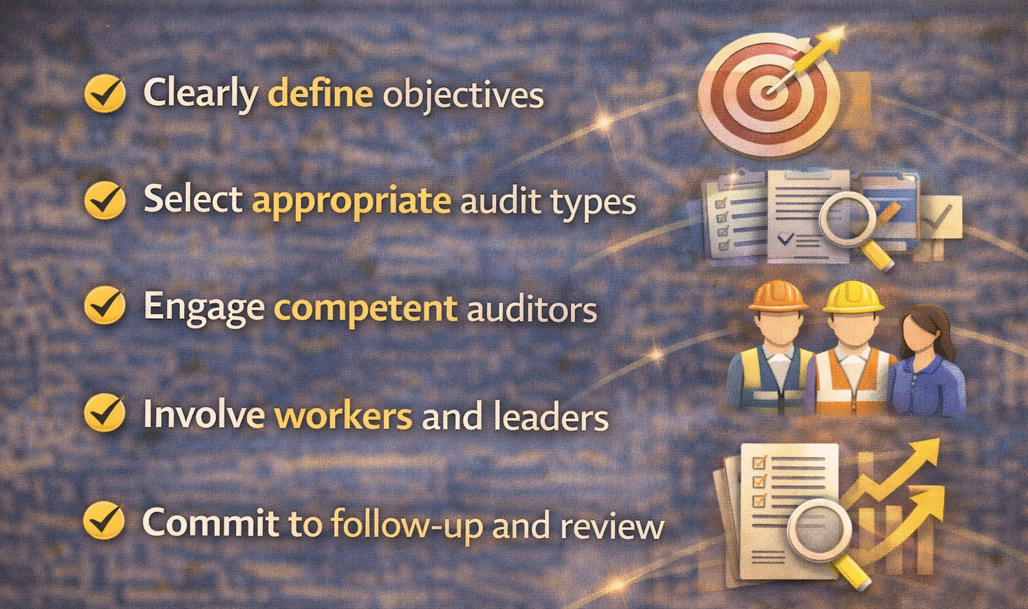
When these elements are in place, audits become a driver of improvement rather than a compliance burden.
Conclusion
Work health and safety audits are a cornerstone of effective risk management and organisational governance. When approached thoughtfully, they provide clarity, confidence, and a pathway to continuous improvement.
In a regulatory and operational environment that continues to evolve, WHS audits in Australia remain one of the most reliable tools organisations have to demonstrate due diligence, protect their people, and strengthen long-term performance.
Rather than asking whether an audit is required, the more valuable question is how it can be used to genuinely improve safety outcomes across the organisation.
Disclaimer
At SiteSherpa, we follow the Model Work Health and Safety (WHS) Act, along with other relevant legislation, regulations, and codes of practice applicable to Australia, to ensure our content reflects industry best practices. Our resources are designed to provide helpful guidance, but they don’t replace professional advice or legal requirements. We do our best to share accurate and reliable information, but businesses should always check their specific WHS obligations to stay compliant and keep their workplaces safe.
Related Content
.png)
.png)
.png)
.png)
.png)
.png)
.png)
.png)
.png)

Join Our Newsletter
Receive expert insights, safety updates, and the latest updates in our services and apps. Stay ahead of workplace safety, compliance, and operational efficiency—delivered straight to your inbox.
By clicking Subscribe you're confirming that you agree with our Terms and Conditions.