Workplace Safety Consultants Australia

Workplace
What are workplace safety consultants?
How expert support from Workplace safety consultants in Australia can elevate compliance, culture, and performance across diverse industries
Workplace safety is a fundamental obligation for every Australian organisation, regardless of size or sector. From legal compliance to employee wellbeing, managing safety effectively can be complex, particularly in dynamic work environments. While digital tools and internal systems play a vital role, many organisations benefit significantly from partnering with professionals who specialise in safety practice, regulation, and implementation. That’s where Workplace safety consultants in Australia come into play.
This article explores the role of workplace safety consultants, why they are essential in Australia’s regulatory and operational landscape, what services they provide, how they add value beyond internal capabilities, and how to choose the right consultant for your organisation. By the end, you will have a comprehensive understanding of how expert safety guidance can transform risk management from a compliance exercise into a strategic advantage.
What are workplace safety consultants?
Workplace safety consultants are professionals trained in occupational health and safety (OHS), risk management, legal compliance, and best practice methodologies. They work with organisations to assess current safety performance, identify gaps, design systems and controls, and support implementation of strategies that reduce risk and improve outcomes.
In the Australian context, safety consultants are typically well-versed in:
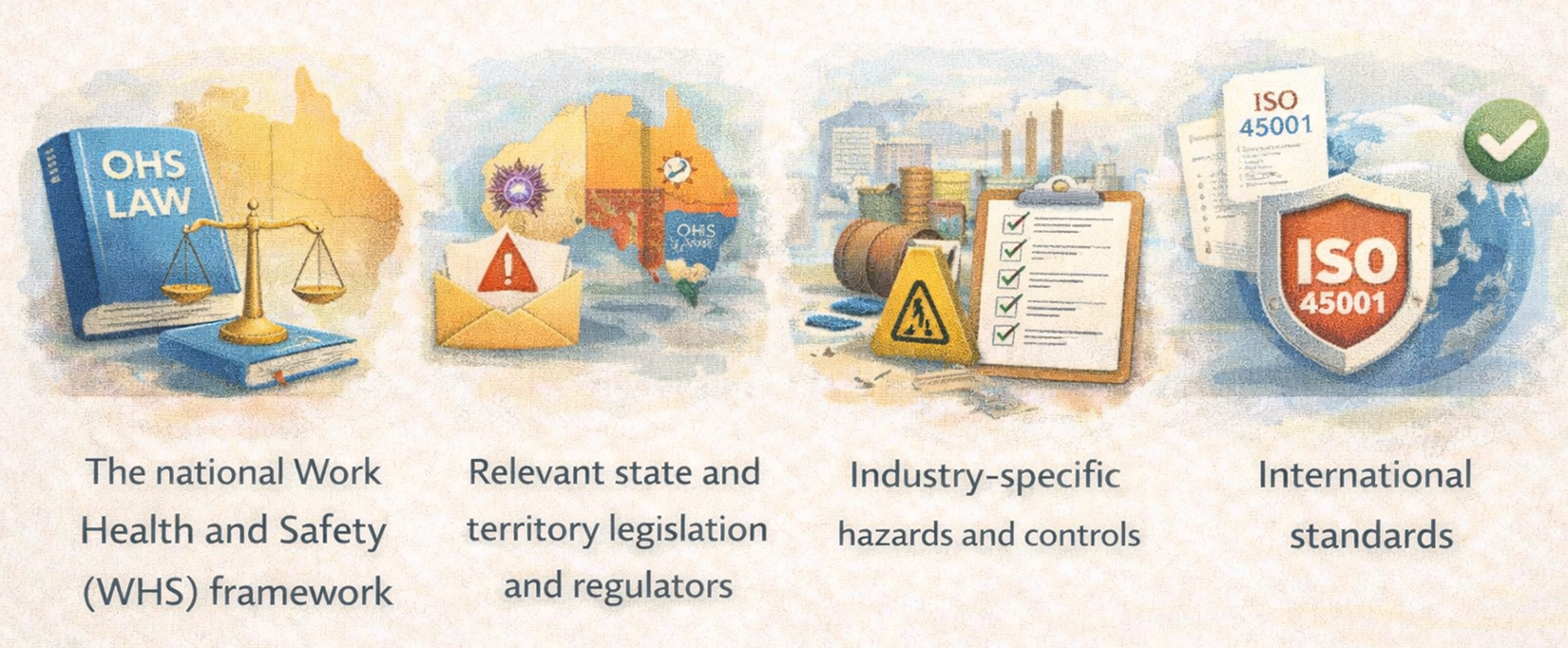
Unlike internal safety personnel who may be focused on daily operations, consultants bring external expertise, objectivity, and the experience of working across multiple organisations and industries.
Why organisations engage workplace safety consultants in Australia
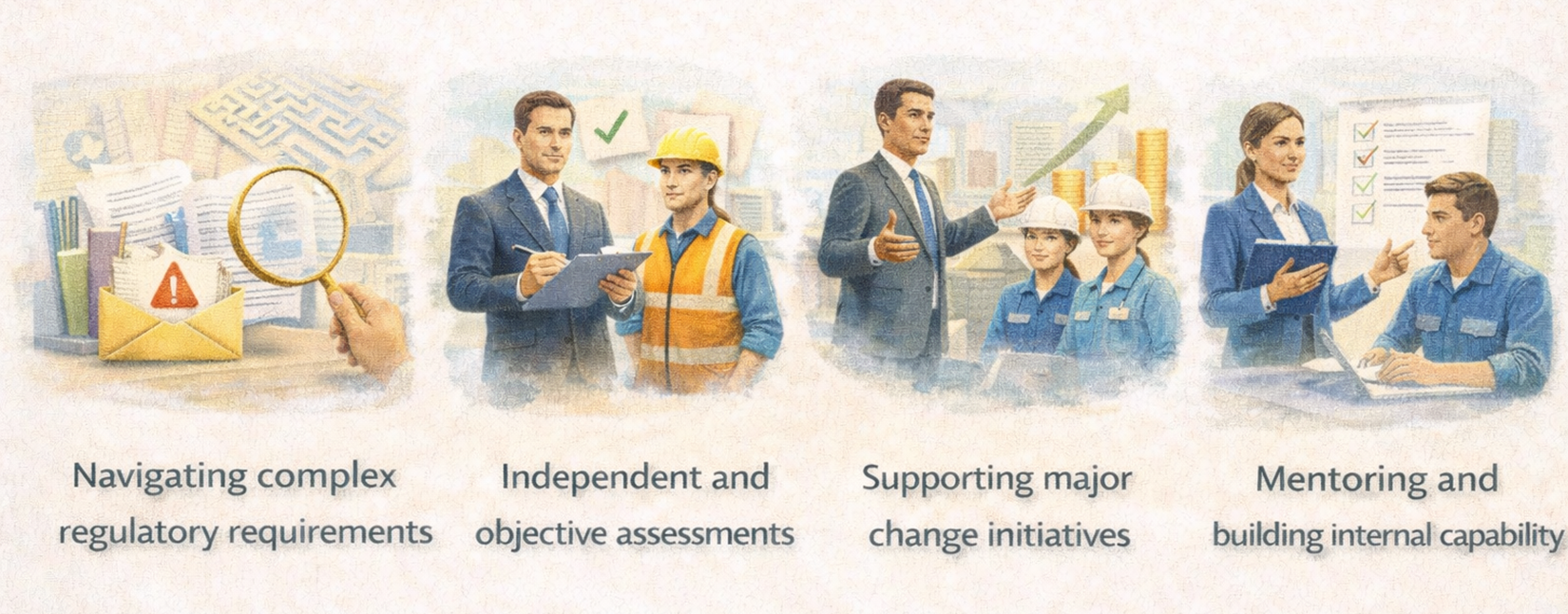
There are many reasons organisations choose to work with professional safety consultants, including:
1. Navigating complex regulatory requirements
Australia has one of the most comprehensive and sophisticated safety regulatory environments in the world. While harmonised WHS legislation exists in most states and territories, there are nuances and jurisdiction-specific requirements that can challenge even experienced internal teams.
Workplace safety consultants in Australia bring detailed legislative knowledge and practical experience applying it in real workplaces. They help organisations interpret requirements, map them to real-world operations, and ensure systems meet both minimum legal obligations and best practice expectations.
This expertise is particularly valuable in high-risk industries such as construction, mining, manufacturing, transport, health care, and aged care.
2. Independent and objective assessments
Internal teams can sometimes become too close to existing systems and practices, making it harder to identify underlying issues or areas for improvement.
An external consultant brings a fresh perspective grounded in professional experience. They can conduct unbiased safety audits, compliance reviews, and gap analyses that reveal hidden weaknesses and practical opportunities for improvement.
This objectivity is especially valuable before major audits, tenders, mergers, or incidents.
3. Supporting major change initiatives
Organisational change, such as mergers, rapid growth, new sites, or operational restructuring, often introduces new risks and complexities. Safety consultants provide structured frameworks to manage these transitions safely.
Whether implementing a new safety management system, integrating acquisitions, or rolling out digital risk and reporting tools, expert guidance helps maintain continuity and ensures safety is embedded in change processes.
4. Mentoring and building internal capability
While consultants are often engaged to deliver specific projects, many also act as mentors to internal safety teams. They provide training, coaching, and up-skilling that strengthens the organisation’s long-term capability.
This can include building internal auditing skills, improving hazard identification practices, or training leaders to better understand and manage risk.
Common services offered by workplace safety consultants Australia
Workplace safety consultants provide a wide range of services tailored to the needs of their clients. Some of the most common include:
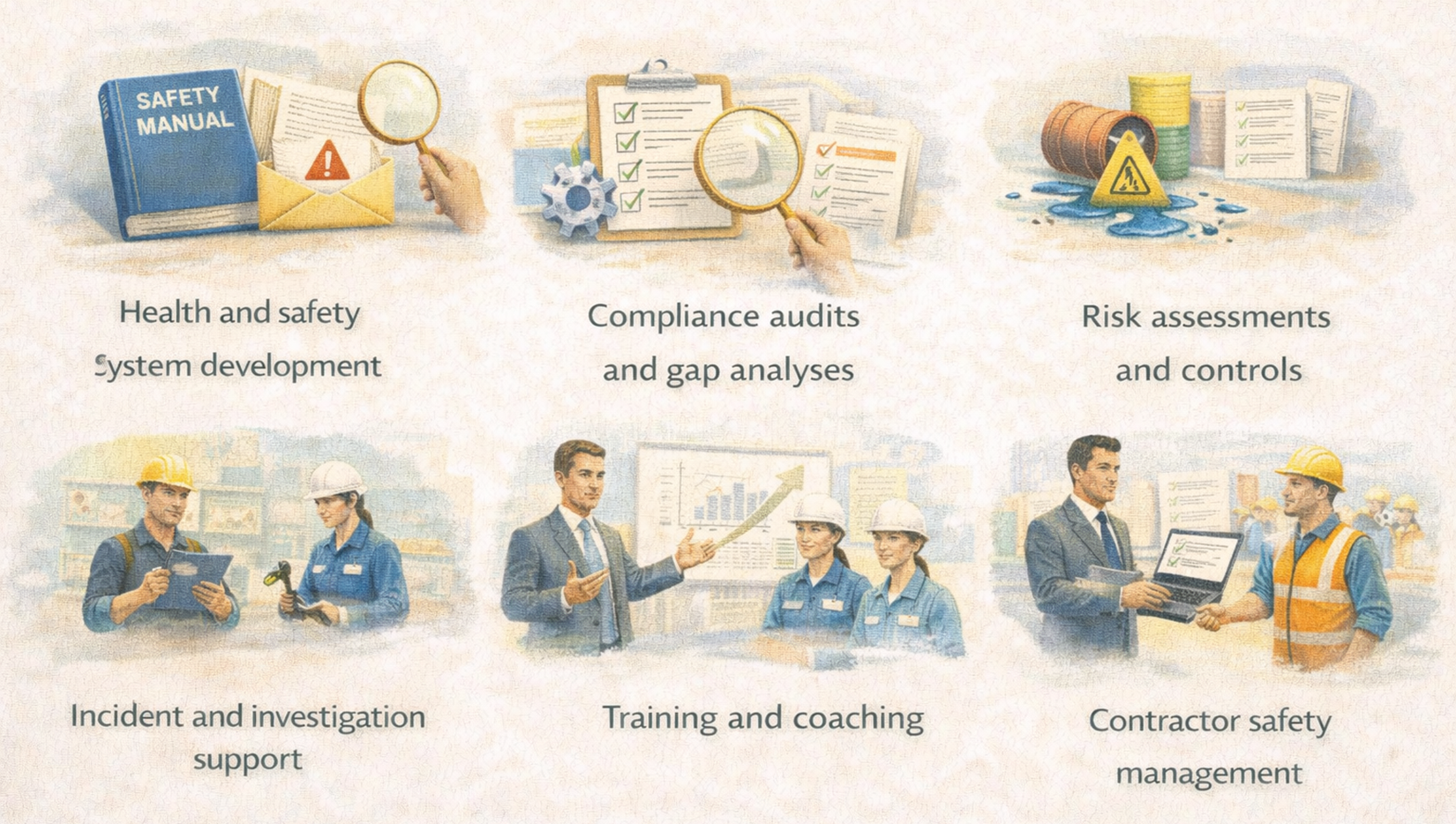
Health and safety system development
Consultants help organisations design or enhance safety systems that are compliant, practical, and tailored to operational realities. This often includes development of:
- Safety policies and procedures
- Risk management frameworks
- Hazard identification and reporting systems
- Emergency management plans
- Contractor management processes
These systems are documented, structured, and aligned with legislative requirements and industry standards such as ISO 45001.
Compliance audits and gap analyses
Consultants perform in-depth reviews of existing safety practices to identify gaps against regulatory requirements and best practice benchmarks. This includes:
- Desktop reviews of documentation
- Site inspections and observations
- Interviews with staff and leaders
- Reporting that clearly outlines risks, gaps, and recommended actions
The result is a roadmap organisations can use to close gaps and improve performance.
Risk assessments and controls
Effective risk management begins with a thorough understanding of hazards and their potential consequences. Consultants support organisations by:
- Identifying hazards across operations
- Assessing risk using consistent methodologies
- Recommending practical, risk-based controls
- Embedding risk registers and reviews into daily practice
This structured approach ensures risks are not only identified but actively controlled and reviewed over time.
Incident and investigation support
After an incident, a thorough investigation is critical to understand causes, learn lessons, and prevent recurrence. Workplace safety consultants can:
- Lead or support formal incident investigations
- Analyse root causes using structured methods
- Recommend corrective actions and track implementation
- Prepare reports suitable for regulators, boards, or insurers
Their experience ensures investigations are both legally compliant and genuinely focused on prevention.
Training and coaching
Effective safety culture depends on knowledge and behaviours at all levels of the organisation. Consultants deliver tailored training on topics such as:
- WHS legislation and obligations
- Risk assessment techniques
- Incident investigation fundamentals
- Leadership and behavioural safety
- Consultation and communication best practices
Training can be delivered in person, online, or as blended solutions.
Contractor safety management
Many Australian organisations rely on contractors and subcontractors. Managing their safety performance adds complexity. Consultants help organisations establish:
- Contractor pre-qualification frameworks
- Performance monitoring and reporting systems
- Integration of contractor data into safety systems
This improves visibility and reduces gaps between internal and external workforce practices.
How workplace safety consultants support culture and engagement
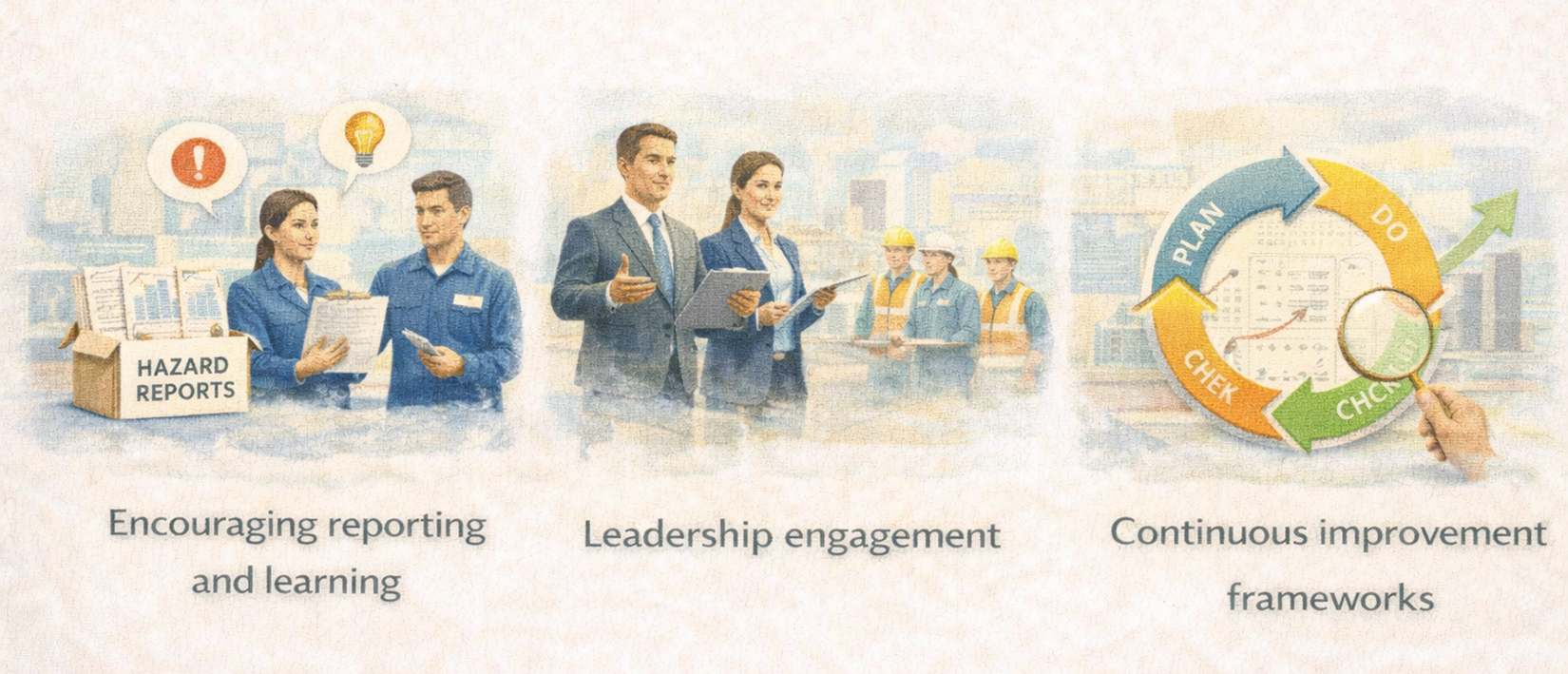
Technical compliance is important, but safety outcomes are ultimately shaped by organisational culture. Consultants play a critical role in helping organisations move beyond compliance toward positive culture.
Encouraging reporting and learning
Good safety systems depend on people reporting hazards, near misses, and unsafe behaviours. Consultants help design reporting processes that are accessible, non-punitive, and linked to visible action, encouraging higher participation.
Leadership engagement
Leaders set the tone for safety culture. Consultants work with leadership teams to build their capability in:
- Understanding risk beyond statistics
- Communicating safety expectations clearly
- Role-modelling desired behaviours
- Using safety data to inform decisions
When leaders are genuinely engaged, compliance becomes part of everyday work rather than an administrative burden.
Continuous improvement frameworks
Effective safety systems evolve. Consultants support organisations to embed continuous improvement through:
- Regular reviews and audits
- Trend analysis of hazard and incident data
- Feedback loops and action tracking
- Integration with business planning and performance reviews
This keeps safety relevant, responsive, and valued over time.
Case examples — real world impact
To illustrate the value consultancy brings, consider the following high-level scenarios (anonymised):
Construction firm improves compliance before major audit
A medium-sized construction company faced an upcoming WHS audit but had limited internal safety resources. A workplace safety consultant:
- Conducted a gap analysis against relevant legislation and codes of practice
- Updated key policies and procedures
- Trained site supervisors on hazard reporting and controls
- Led pre-audit inspections
Result: The company passed the audit with minimal corrective actions and improved on-site hazard awareness.
Manufacturing site reduces incidents through risk controls
A manufacturing site experienced frequent minor injuries despite having documented procedures. The consultant helped:
- Map risks related to machine operation and maintenance
- Redesign controls based on hierarchy of control principles
- Introduce cross-team risk reviews
- Mentor internal champions
Result: The site saw a measurable reduction in incidents and improved worker engagement with safety processes.
Healthcare provider strengthens incident investigation
A large healthcare provider struggled to identify systemic causes of recurring incidents. A consultant:
- Redesigned investigation templates
- Trained clinical leaders in root cause analysis
- Established action tracking and verification processes
Result: Investigations became more consistent, and corrective actions were implemented more reliably.
Choosing the right workplace safety consultant in Australia
Not all consultants offer the same depth of expertise, industry insight, or delivery approach. When evaluating potential partners, consider the following:
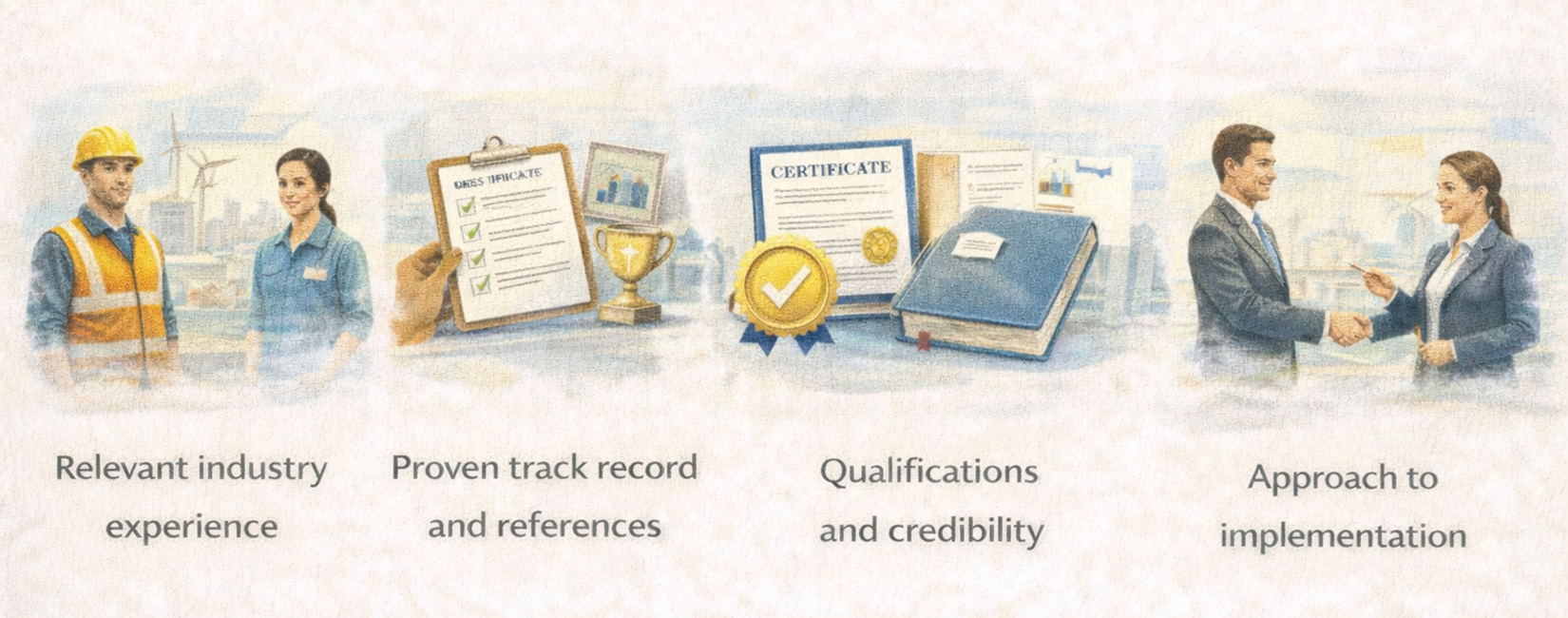
1. Relevant industry experience
A consultant with direct experience in your sector will better understand the specific hazards, regulatory nuances, and practical constraints you face.
2. Proven track record and references
Ask for case studies and client references. Real outcomes matter more than theoretical knowledge.
3. Qualifications and credibility
Look for recognised safety qualifications, professional memberships (e.g., Safety Institute of Australia), and familiarity with Australian legislative frameworks.
4. Approach to implementation
Effective consultants don’t just provide reports; they deliver practical, implementable solutions and support organisations through change.
How to engage a consultant successfully
To derive maximum value from a workplace safety consultancy engagement:
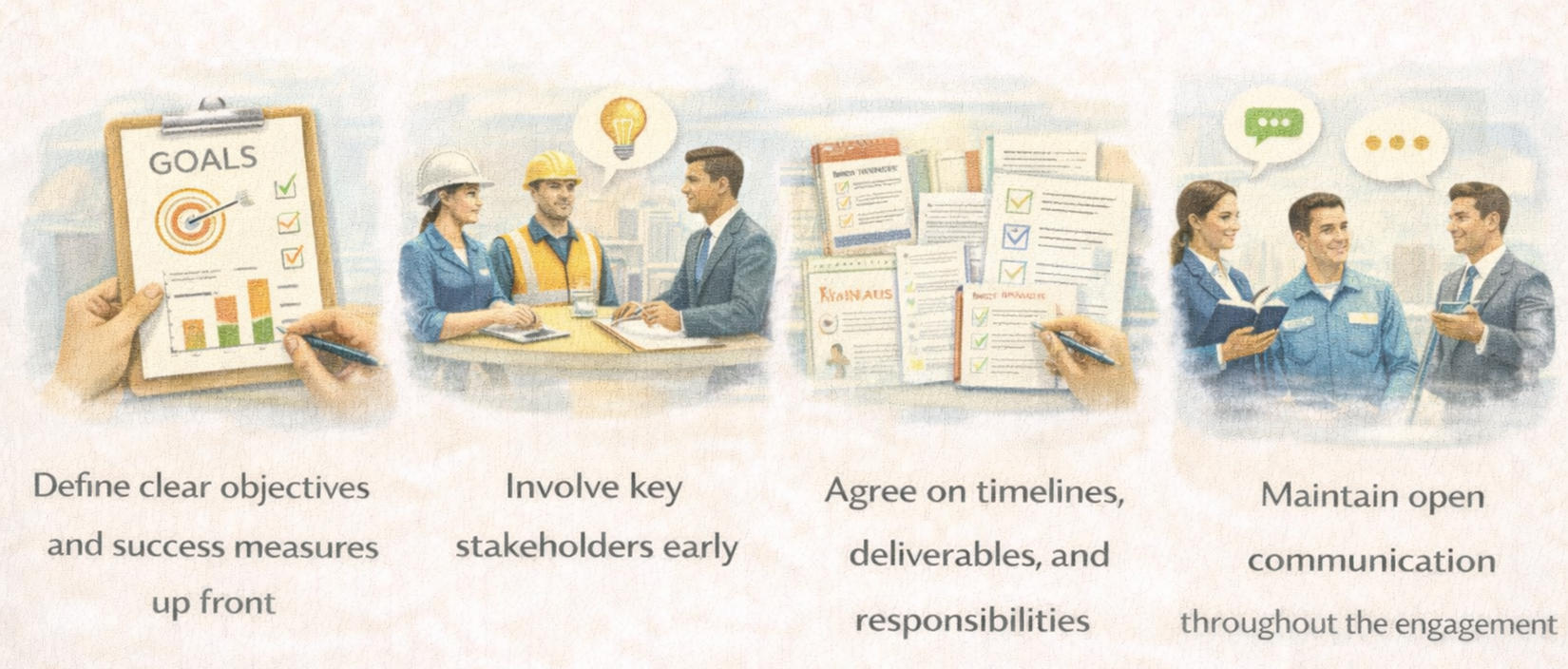
Regular check-ins help ensure the work stays on track and that outcomes align with expectations.
The future of safety consulting in Australia
As Australian workplaces continue to evolve, with digital transformation, diverse workforces, and changing regulatory focus areas such as psychosocial risks and due diligence, the role of workplace safety consultants will remain vital. Increasingly, consultants are combining traditional expertise with data analytics, technology implementation support, and strategic advisory services.
For organisations committed to long-term safety performance, partnering with experienced Workplace safety consultants in Australia is more than an optional expense, it’s a strategic investment in resilience, compliance, and people wellbeing.
Conclusion
Workplace safety is non-negotiable in Australia. While internal teams form the backbone of everyday risk management, workplace safety consultants provide the specialised knowledge, objectivity, and strategic insight that help organisations meet their obligations with confidence.
Whether you are preparing for regulatory scrutiny, addressing recurring issues, building internal capability, or striving for excellence beyond compliance, expert consultants can guide the journey. With the right partner, safety becomes a strength, not a risk, protecting people, reputation, and performance in equal measure.
Disclaimer
At SiteSherpa, we follow the Model Work Health and Safety (WHS) Act, along with other relevant legislation, regulations, and codes of practice applicable to Australia, to ensure our content reflects industry best practices. Our resources are designed to provide helpful guidance, but they don’t replace professional advice or legal requirements. We do our best to share accurate and reliable information, but businesses should always check their specific WHS obligations to stay compliant and keep their workplaces safe.
Related Content
.png)

Join Our Newsletter
Receive expert insights, safety updates, and the latest updates in our services and apps. Stay ahead of workplace safety, compliance, and operational efficiency—delivered straight to your inbox.
By clicking Subscribe you're confirming that you agree with our Terms and Conditions.