Risk Register Software Australia

Safety
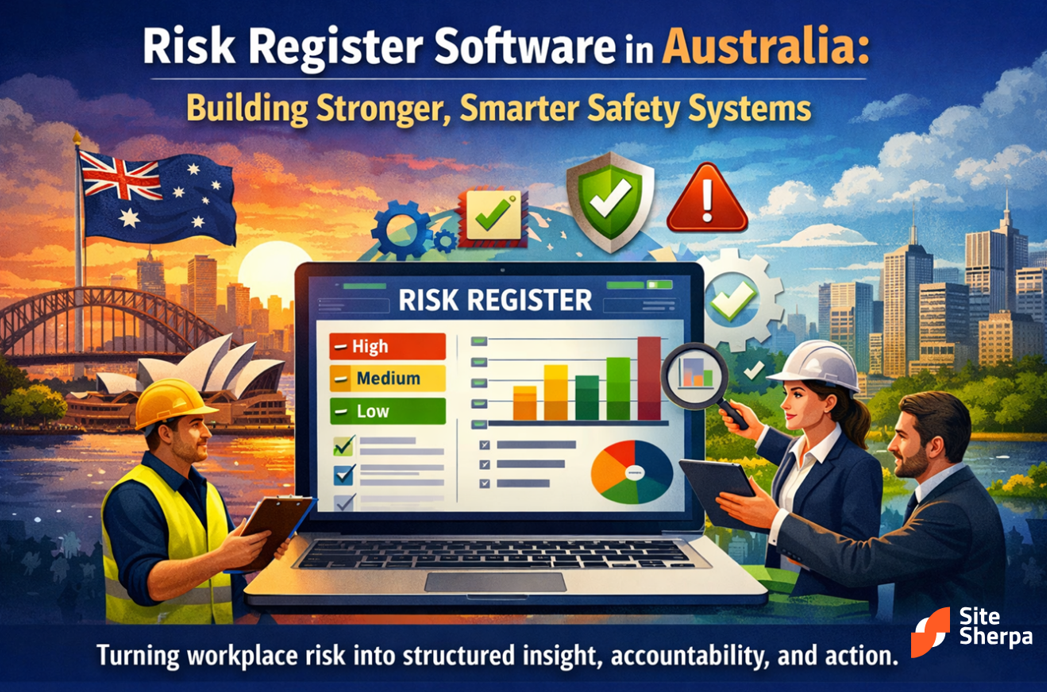
Risk Register Software in Australia: Building Stronger, Smarter Safety Systems
Turning workplace risk into structured insight, accountability, and action.
Introduction: Why Risk Management Has Changed in Australia
Australian workplaces are operating in an environment of increasing complexity. Organisations face heightened regulatory scrutiny, evolving Work Health and Safety obligations, expanding contractor supply chains, psychosocial hazards, and growing expectations around officer due diligence. Traditional paper-based registers and static spreadsheets are no longer sufficient to manage risk in a dynamic, multi-site, and often mobile workforce.
This shift has driven a growing reliance on Risk register software in Australia as organisations seek better visibility, stronger governance, and real-time control of hazards and operational risks. Rather than treating risk registers as compliance artefacts, modern businesses are using digital tools to embed risk management into everyday decision-making.
This article explores what risk register software is, why it matters in the Australian context, how it aligns with legislative and international standards, and what organisations should look for when selecting a solution.
Understanding Risk Registers in the Australian Context
A risk register is a structured record of identified hazards and risks, their potential consequences, likelihood, existing controls, and required actions. In Australia, risk registers are a foundational component of effective Work Health and Safety systems and broader enterprise risk management frameworks.
Under the Work Health and Safety Act, persons conducting a business or undertaking are required to identify hazards, assess risks, implement controls, and review their effectiveness. While legislation does not prescribe a specific format, regulators expect organisations to demonstrate a systematic and proactive approach.
What Is Risk Register Software?
Risk register software is a digital platform designed to centralise, manage, and analyse organisational risks. It provides structured workflows that guide users through hazard identification, risk assessment, control selection, and ongoing review.
Unlike static documents, software-based registers allow risks to be updated as conditions change. They also create a live record of decisions, actions, and reviews, which is critical when demonstrating compliance or responding to incidents and regulatory enquiries.
In the Australian market, these platforms are increasingly aligned with local legislation, industry codes of practice, and international standards such as ISO 45001.
Why Australian Organisations Are Moving to Digital Risk Registers
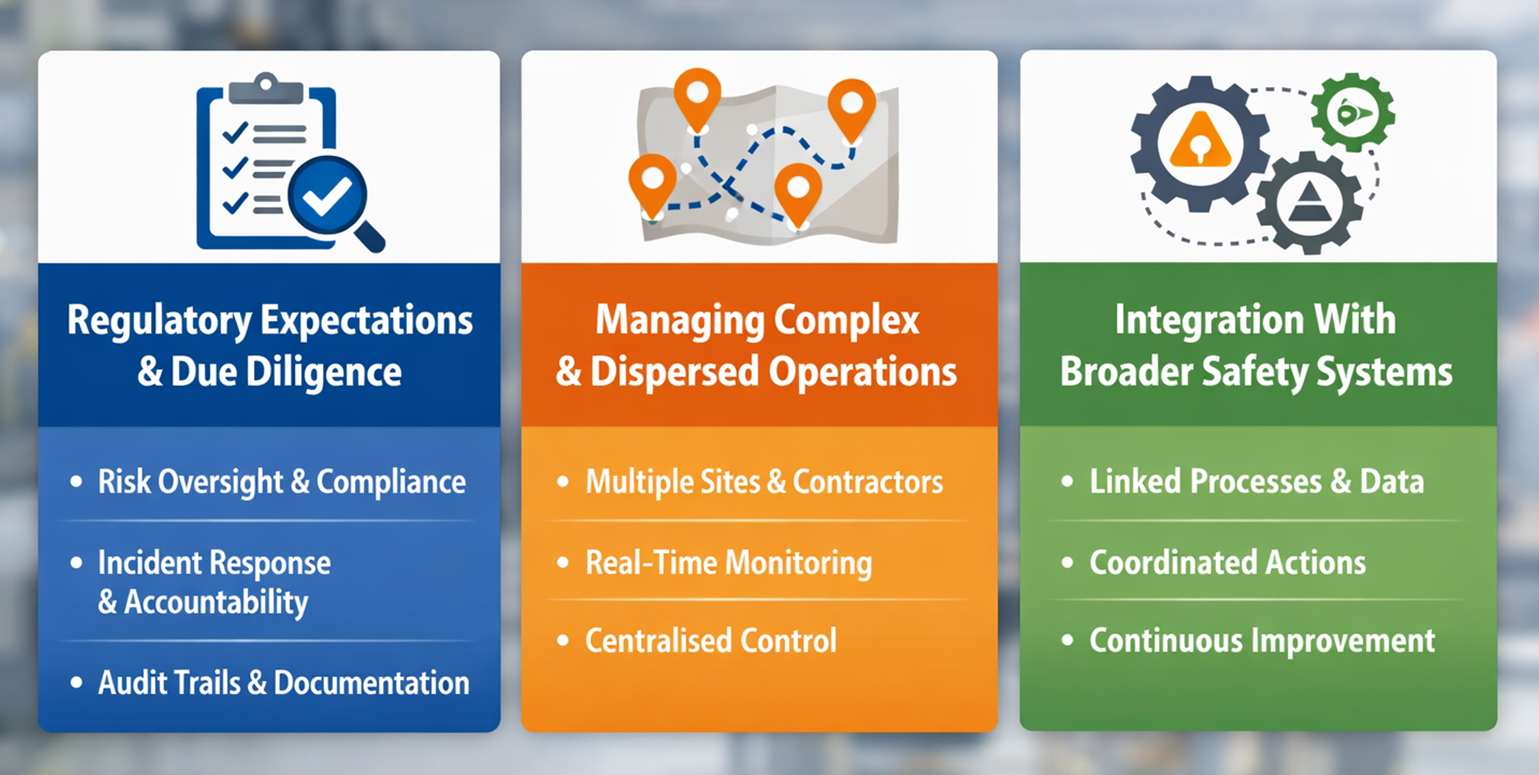
1. Regulatory Expectations and Due Diligence
Australian regulators expect organisations to show evidence of active risk management, not just completed documents. Officers must exercise due diligence by understanding hazards, ensuring controls are in place, and verifying that systems are working effectively.
Digital risk register systems support this by providing dashboards, reports, and audit trails that show how risks are identified, controlled, and reviewed over time.
2. Managing Complex and Dispersed Operations
Many Australian organisations operate across multiple states, regions, or project sites. Managing risk consistently across these environments is difficult with decentralised tools.
Risk register software allows central oversight while still enabling site-specific risk identification and management. This balance is essential for industries such as construction, aged care, logistics, manufacturing, and local government.
3. Integration With Broader Safety Systems
Modern safety management is interconnected. Hazards link to incidents, audits, training, and corrective actions. Digital platforms allow these elements to work together rather than existing in isolation.
For example, a hazard identified in a risk register can trigger a control review, a training requirement, or a scheduled inspection, all within the same system.
Key Features of Effective Risk Register Software
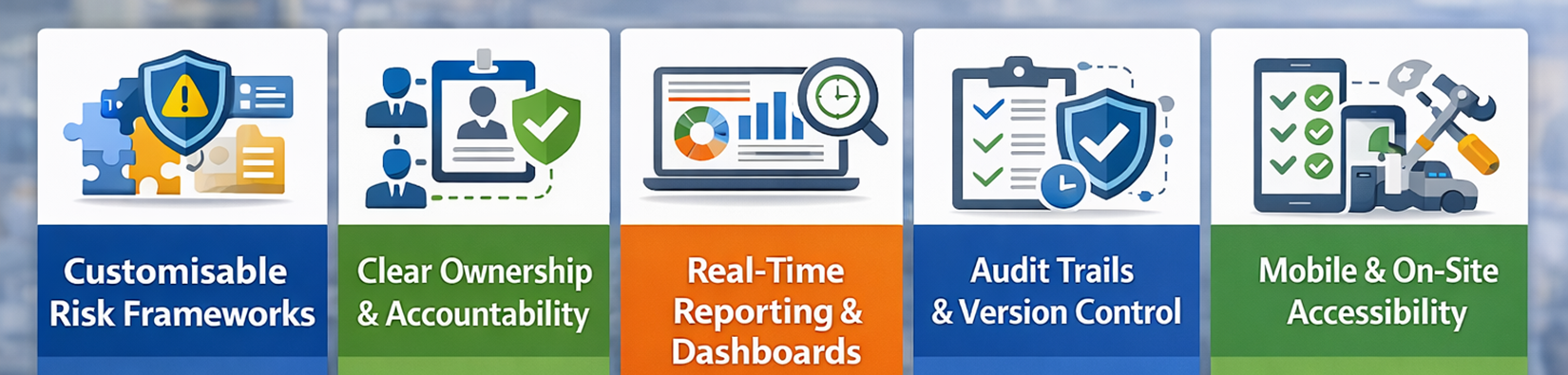
Not all platforms are created equal. When evaluating options, Australian organisations should look for features that support both compliance and practical usability.
Customisable Risk Frameworks
Risk matrices, scoring methodologies, and control hierarchies should be configurable to align with organisational risk appetite and industry standards. This is particularly important when managing both safety and operational risks.
Clear Ownership and Accountability
Each risk should have an assigned owner responsible for monitoring and reviewing controls. Automated reminders and escalation pathways help ensure risks do not become dormant entries.
Real-Time Reporting and Dashboards
Executives and managers need clear visibility of high-risk areas, emerging trends, and overdue actions. Visual dashboards transform raw data into actionable insight.
Audit Trails and Version Control
Being able to demonstrate when a risk was identified, who assessed it, and how controls were reviewed is critical during audits or regulatory investigations.
Mobile and On-Site Accessibility
Risk identification often occurs in the field. Mobile-friendly platforms allow workers and supervisors to capture hazards in real time, improving accuracy and engagement.
Alignment With Australian Legislation and Standards
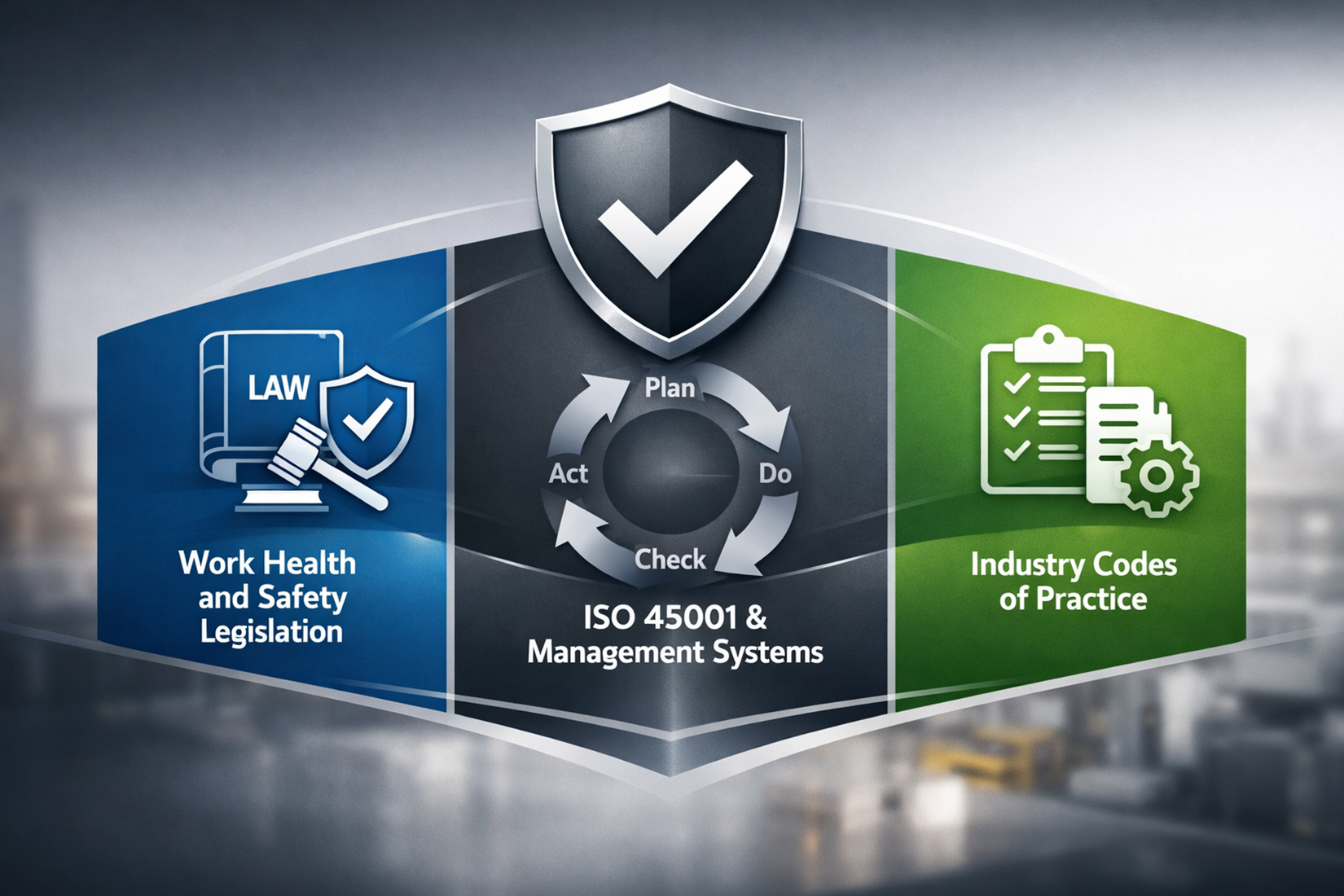
One of the key advantages of adopting Risk register software Australia is its ability to support legislative compliance and standardised frameworks.
Work Health and Safety Legislation
Digital risk registers help demonstrate compliance with duties to identify hazards, assess risks, and implement controls. They also support consultation requirements by providing shared visibility of risks and controls.
ISO 45001 and Management Systems
For organisations aligned with ISO 45001, a digital risk register supports the systematic approach required by the standard, including risk identification, evaluation, and continual improvement.
Industry Codes of Practice
Many Australian industries are subject to specific codes of practice covering areas such as construction work, hazardous manual tasks, and psychosocial risks. Software platforms can embed these requirements into assessment workflows.
Beyond Compliance: Strategic Benefits of Digital Risk Registers
While compliance is often the initial driver, organisations quickly realise broader benefits once risk registers become part of everyday operations.
Improved Decision-Making
When leaders have access to accurate, up-to-date risk information, they can make better decisions about resource allocation, project planning, and operational priorities.
Enhanced Safety Culture
Making risk management visible and accessible encourages worker participation. When employees see that hazards they report lead to action, trust and engagement increase.
Reduced Incidents and Costs
Proactive risk identification and control reduce the likelihood of incidents, injuries, and associated costs such as downtime, insurance premiums, and reputational damage.
Common Challenges and How Software Addresses Them
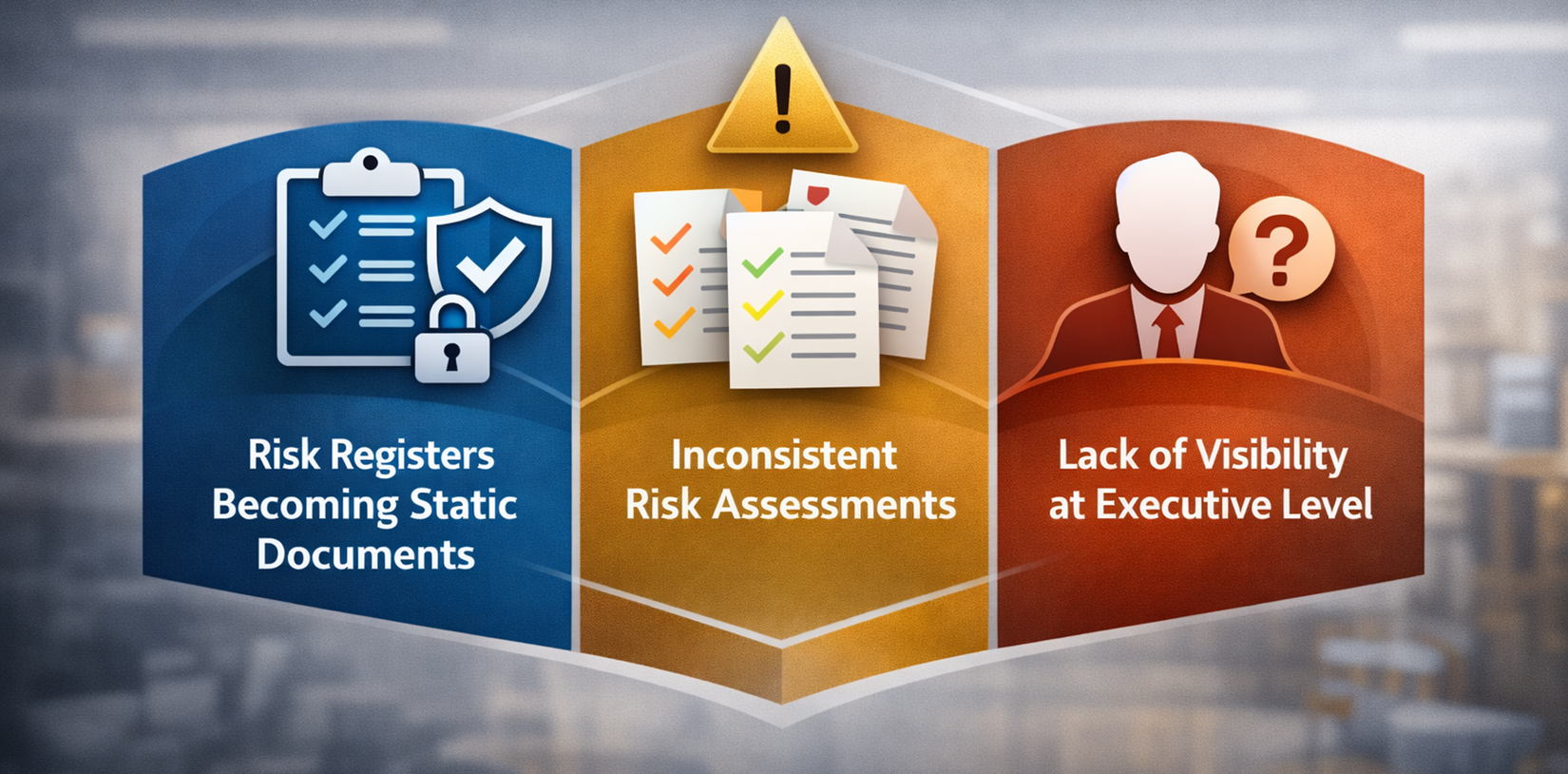
Risk Registers Becoming Static Documents
One of the most common issues is risk registers that are completed once and then forgotten. Software addresses this through scheduled reviews, alerts, and integration with other safety activities.
Inconsistent Risk Assessments
Different teams may assess similar risks differently. Standardised digital workflows promote consistency while still allowing flexibility for context.
Lack of Visibility at Executive Level
Paper registers often sit at site level with limited upward reporting. Digital platforms provide aggregated views that support governance and oversight.
Selecting the Right Solution for Your Organisation
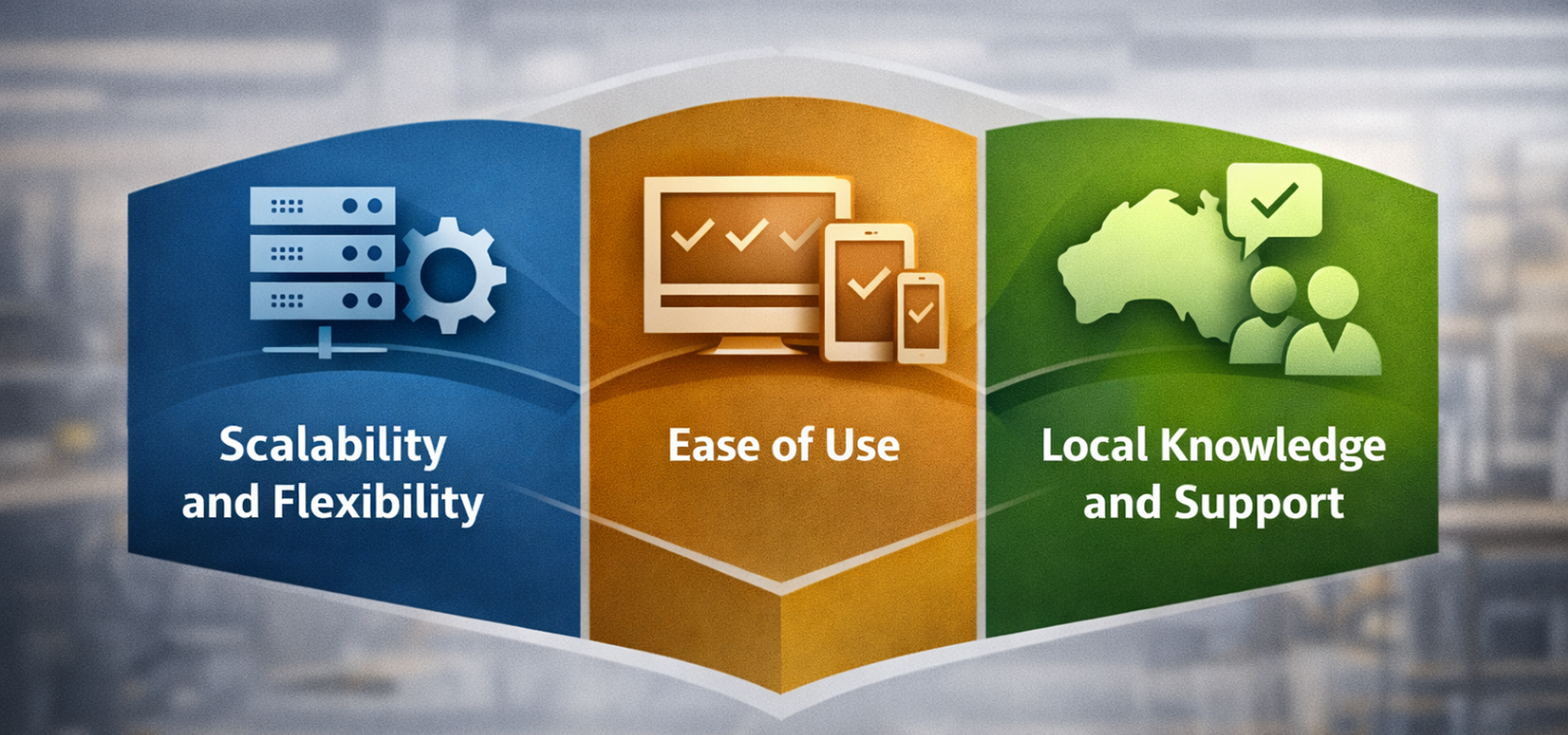
Choosing the right platform requires careful consideration of organisational needs, industry context, and future growth.
Scalability and Flexibility
The system should support growth, additional sites, and evolving risk profiles without requiring a complete overhaul.
Ease of Use
If the platform is overly complex, adoption will suffer. Intuitive design and clear workflows are essential.
Local Knowledge and Support
Australian-based providers often have a better understanding of local legislation and regulatory expectations. Alignment with guidance from bodies such as Safe Work Australia is a strong indicator of suitability.
Integrating Risk Registers With Broader Governance
Risk register software should not exist in isolation. Leading organisations integrate risk data with governance, assurance, and strategic planning processes.
This may include linking risks to business objectives, tracking control effectiveness through audits, and using trend data to inform leadership discussions. Over time, the risk register becomes a living tool that supports resilience and continuous improvement.
The Future of Risk Register Software in Australia
As technology evolves, risk management platforms are becoming more sophisticated. Emerging trends include predictive analytics, automation, and artificial intelligence-supported insights. These tools can identify patterns, highlight emerging risks, and support earlier intervention.
In an Australian context, expectations around psychosocial risk management, contractor oversight, and officer accountability are likely to continue growing. Organisations that invest in adaptable digital systems will be better positioned to respond to these changes.
Why Risk Registers Matter More Than Ever
The modern workplace is fast-paced, decentralised, and under constant scrutiny. Treating risk registers as static compliance documents is no longer sufficient. Digital platforms transform risk management into an active, visible, and strategic process.
For organisations seeking to strengthen their systems, improve safety outcomes, and demonstrate due diligence, Risk register software in Australia is not just a technology choice, it is a governance decision.
By embedding risk management into daily operations, organisations can move beyond minimum compliance and build safer, more resilient workplaces that protect people and support sustainable growth.
Disclaimer
At SiteSherpa, we follow the Model Work Health and Safety (WHS) Act, along with other relevant legislation, regulations, and codes of practice applicable to Australia, to ensure our content reflects industry best practices. Our resources are designed to provide helpful guidance, but they don’t replace professional advice or legal requirements. We do our best to share accurate and reliable information, but businesses should always check their specific WHS obligations to stay compliant and keep their workplaces safe.
Related Content

Join Our Newsletter
Receive expert insights, safety updates, and the latest updates in our services and apps. Stay ahead of workplace safety, compliance, and operational efficiency—delivered straight to your inbox.
By clicking Subscribe you're confirming that you agree with our Terms and Conditions.