
Product
A Guide to WHS Software in Australia: How Digital Safety Systems Are Transforming Modern Workplaces
SiteSherpa · 2025-12-15 · 8 min read
Introduction: The New Era of Workplace Safety
Work health and safety have evolved dramatically in the past decade. Laws have become stronger, penalties tougher, and expectations from regulators much more proactive. Businesses can no longer rely on paper based systems, scattered spreadsheets, or verbal communication to manage their legal obligations.
Whether you operate in construction, aged care, retail, logistics, health care, manufacturing, hospitality, or local government, your organisation has a legal duty to demonstrate that it identifies risks, controls hazards, and continually monitors safety performance.
This is where digital solutions come in. The rise of cloud platforms, mobile apps, automation, and artificial intelligence has completely reshaped safety management. Organisations are replacing bulky procedures with dynamic, real time systems that streamline workflows, strengthen compliance, and provide immediate visibility of what is happening across every site.
The term WHS software in Australia has surged in search volume because business owners, safety managers, and executives are actively seeking technology that meets Australian legislative requirements while improving efficiency and reducing risk. In a climate where compliance is no longer optional, these tools have become essential to day-to-day operations.
This article explores the role of digital WHS systems, why Australian businesses are rapidly adopting them, the essential features to look for, and how to confidently choose a platform that works for your organisation.
Why Australian Businesses Are Turning to Digital WHS Solutions
1. Increasing legal obligations
Australian WHS legislation especially under the Work Health and Safety Act 2011 and corresponding Regulations requires employers to take proactive, documented steps to keep people safe.
Regulators such as SafeWork NSW, WorkSafe Victoria, WorkSafe Queensland, and others expect businesses to maintain evidence of:
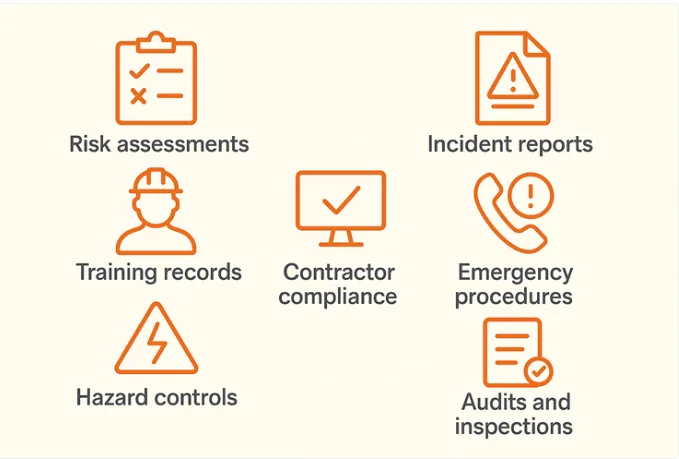
Paper systems simply cannot keep up. Digital platforms automate the heavy lifting, ensure records cannot be lost, and make it easy for teams to demonstrate compliance at any time.
2. Greater accountability from regulators
Since 2022, every state and territory has intensified its focus on psychological safety, industrial manslaughter provisions, and stronger enforcement.
Inspectors now request digital records, dashboards, and audit trails. Businesses that cannot produce these quickly are often considered non-compliant.
3. The rise of multi-site operations
Companies with multiple locations such as aged care facilities, retail stores, manufacturing plants, and construction sites need centralised oversight.
A WHS platform provides:
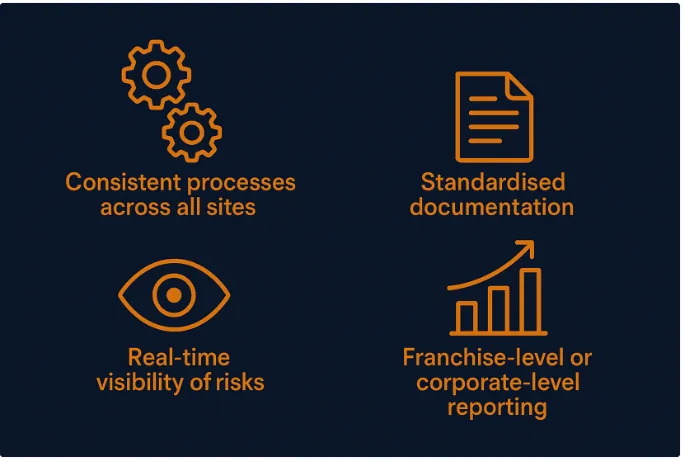
This is nearly impossible to achieve with manual systems.
4. Remote and mobile workforces
Modern teams no longer sit in one place. Contractors, technicians, educators, case workers, and field personnel require mobile tools to submit forms, conduct audits, complete training, or report hazards instantly.
Good WHS platforms make this seamless, enabling users to take photos, record voice notes, scan QR codes, complete forms, and access procedures straight from their phone.
5. Pressure to improve safety culture
The strongest safety cultures are built on transparency, reporting, participation, and real-time feedback.
Digital systems encourage:
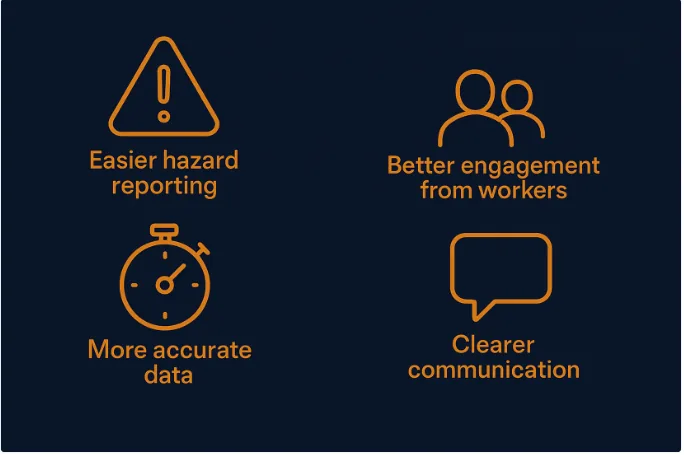
Businesses now recognise that investing in WHS technology directly improves culture and reduces incident rates.
What Is WHS Software?
WHS software is a digital platform designed to manage all aspects of work health and safety including risk management, incident reporting, contractor compliance, training, audits, and documentation in one central system.
The solutions available under the broad category of WHS software in Australia vary greatly, but the strongest platforms provide:
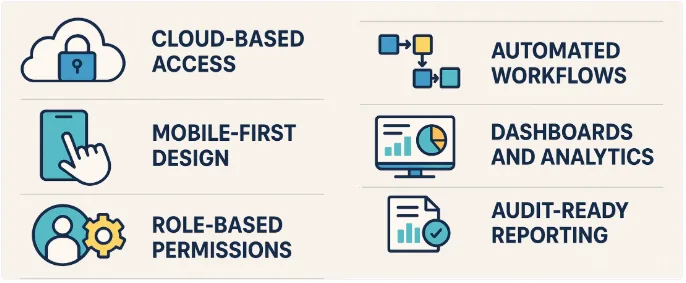
hese systems create a “digital safety ecosystem” that replaces outdated manual processes with automated, compliant, and easily monitored tools.
The Essential Features Your WHS Software Should Include
When evaluating digital safety systems, the following features are considered essential for any Australian workplace:
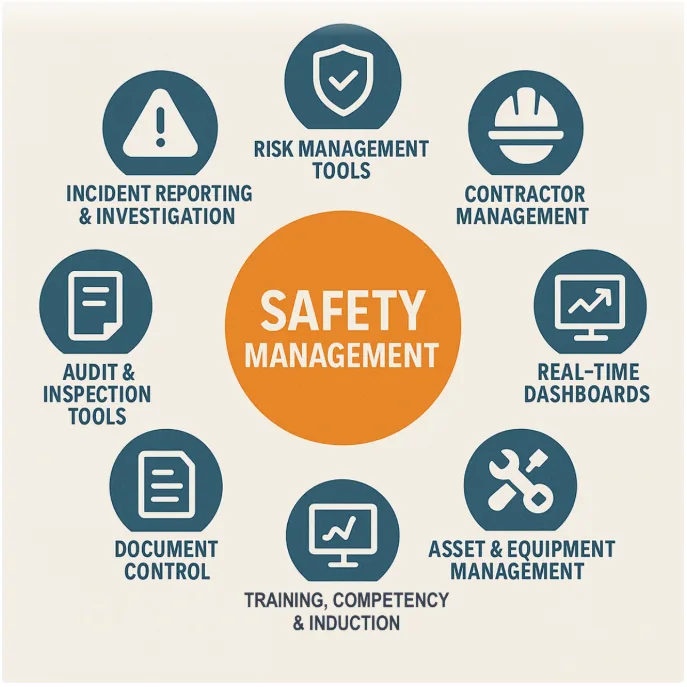
1. Incident Reporting & Investigation
A strong WHS system enables users to log incidents, injuries, hazards, near misses, and environmental events through mobile devices. The system should support:
- Photos and Videos
- Voice-to-text input
- Corrective actions Tracking
- Root cause analysis
- Reportable incident workflows
2. Risk Management Tools
Risk identification, risk assessment, and control monitoring are core legal obligations.
Look for tools that include:
- Risk matrices aligned with ISO standards
- Hazard Logs
- Automated reminders
- Controls verification
- Review schedules
3. Contractor Management
A must-have for construction, maintenance, cleaning, and infrastructure organisations.
The platform should support:
- Prequalification
- Document uploads
4. Training, Competency & Inductions
Your software must be capable of storing and managing:
- Certificates
- Competency Records
- Expiry Reminders
- Role-based Training Matrices
- Online Micro-Learning Modules
- Induction Courses
5. Audit & Inspection Tools
Audits ensure that safety controls are actually in place. Digital platforms allow for:
- Custom Inspection Templates
- Automated Scoring
- Instant Records
- Digital Checklists
- Photo Evidence
- Assignment of Corrective Actions
6. Document Control
Policies, procedures, safe work method statements, forms, and emergency guides must be kept up to date.
Your WHS system should include:
- Version control
- Distribution logs
- User acknowledgment tracking
- Secure access permissions
7. Asset & Equipment Management
Some platforms (including advanced safety systems) help manage:
- Maintenance schedules
- Calibration logs
- Service records
- High-risk equipment checks
- Fire safety and emergency equipment registers
8. Real-time Dashboards
Dashboards give leaders visibility into:
- Trends
- Incident frequency
- Training gaps
- Outstanding actions
- Site-by-site performance
This is essential for governance and reporting to boards, executives, or regulators.
How WHS Software Supports Compliance with Australian Regulations
Australia has one of the most comprehensive and strict safety frameworks in the world. WHS software helps organisations comply with:
- Work Health and Safety Act 2011 (Commonwealth, NSW, QLD, SA, TAS, NT, ACT)
- Occupational Health and Safety Act 2004 (Victoria)
- Corresponding WHS or OHS Regulations
- Codes of Practice
- Australian Standards (ISO 45001, ISO 14001, ISO 9001)
Digital platforms help organisations fulfil legal obligations such as:
- Providing safe systems of work
- Identifying and managing hazards
- Monitoring worker health
- Maintaining accurate WHS records
- Consulting with workers
- Providing training and supervision
- Managing contractors safely
- Ensuring emergency preparedness
A strong WHS system also supports due diligence for officers ensuring that directors, executives, and senior leaders can demonstrate oversight and proactive safety management.
Common Challenges Without WHS Software
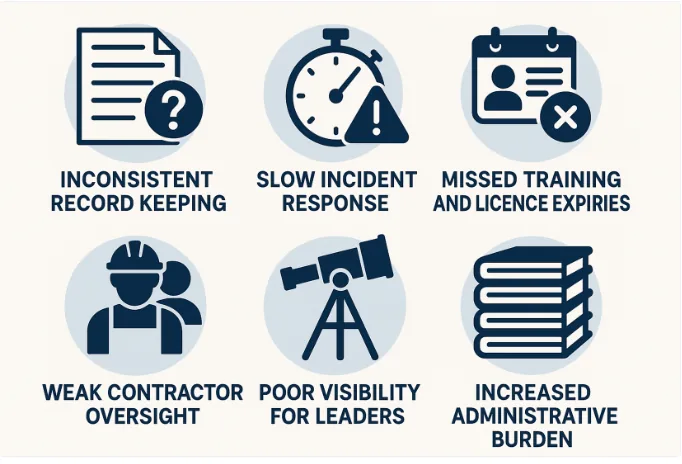
1. Inconsistent record keeping
Paper forms get lost, versions become outdated, and information becomes unreliable.
2. Slow incident response
Delayed reporting leads to uncontrolled hazards and repeated failures.
3. Missed training and licence expiries
Manual reminders cannot keep up with expiry dates.
4. Weak contractor oversight
Paper inductions and scattered documents leave significant gaps in compliance.
5. Poor visibility for leaders
Executives often have no real-time view of what is happening across sites.
6. Increased administrative burden
Safety staff waste time on paperwork instead of meaningful risk management.
WHS software eliminates these issues by digitising the entire lifecycle of safety data.
How to Choose the Right WHS Software for Your Organisation
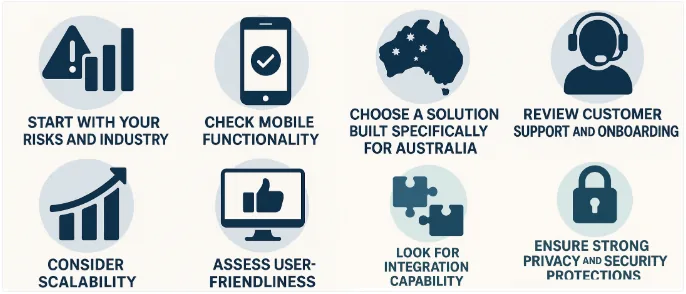
1. Start with your risks and industry
Different sectors have different needs.
For example:
- Construction: SWMS, permits, contractor tracking
- Aged care: resident safety, chemical management, audits
- Manufacturing: plant and equipment checks
- Retail: incident reporting, training, contractor access
- Local government: multi-site oversight
Choose software built for your industry.
2. Check mobile functionality
A strong WHS platform must be usable on:
- iOS
- Android
- Tablets
- Laptops
- QR-code stations
Look for offline capability if your team works in remote areas.
3. Consider scalability
Can it grow with your organisation?
Can it support multiple business units, sites, or projects?
4. Assess user-friendliness
The system must be simple enough for workers to use daily. Clunky systems create non-compliance.
5. Choose a solution built specifically for Australia
This is essential.
Only a small number of platforms are designed around Australian legislation, terminology, and compliance requirements. Systems built for overseas markets often lack local alignment.
This is why search volume for WHS software Australia has grown so significantly businesses want solutions that meet Australian standards rather than generic global platforms.
6. Review customer support and onboarding
You should have access to:
- Real WHS professionals
- Technical support teams
- Training materials
- Implementation guides
- Local support hours
7. Look for integration capability
Modern WHS systems should connect to:
- HR systems
- Payroll
- Contractor portals
- Learning management systems
- Asset management software
- Analytics tools
8. Ensure strong privacy and security protections
With the rise of cyber incidents, data security is critical.
Your WHS platform should comply with:
- Australian Privacy Principles
- ISO 27001 security frameworks
- Secure cloud hosting
- Multi-factor authentication
The Benefits of Implementing WHS Software
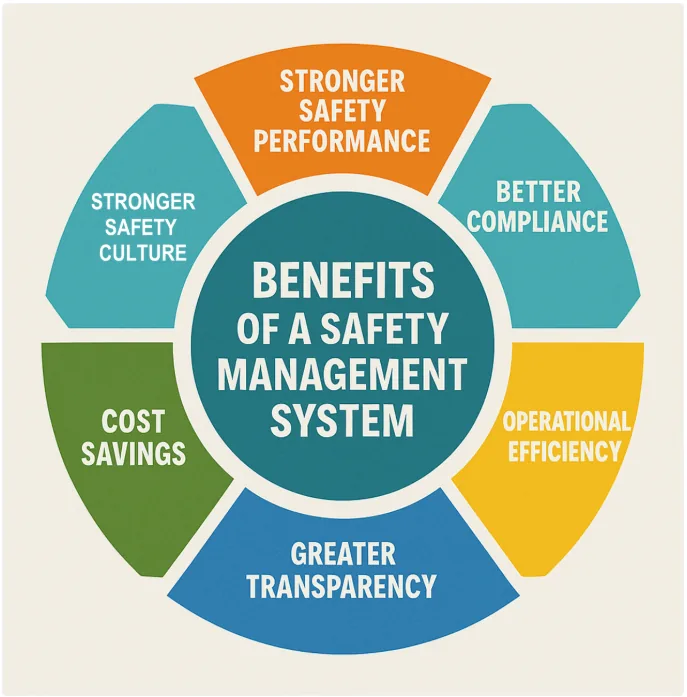
1. Stronger safety performance
Digital systems support:
- More hazard reporting
- Faster response
- Continuous improvement
- Fewer incidents
2. Better compliance
Automated workflows ensure:
- Nothing is missed
- Audits are easier
- Documented evidence is always ready
- Regulatory expectations are met
3. Operational efficiency
Teams spend less time on administrative work and more on meaningful tasks.
4. Greater transparency
Executives, board members, and operational leaders gain immediate visibility over risk.
5. Cost savings
Reduced:
- Injuries
- Insurance premiums
- Downtime
- Administrative overhead
6. Stronger safety culture
Workers feel heard, supported, and engaged.
The Future of WHS Software in Australia
The next generation of safety systems is driven by emerging technologies such as:

Businesses adopting modern, AI-enabled WHS platforms will have a significant advantage both in compliance and productivity.
Why Australian Employers Now Prioritise Digital WHS Solutions
In an environment where workplace injuries carry enormous legal, financial, and reputational risks, organisations must demonstrate strong governance and proactive risk management.
Digital WHS systems not only streamline safety processes but also demonstrate compliance, improve culture, and create safer, more productive workplaces.
Ultimately, the rising demand for WHS software Australia reflects a national shift: Australian businesses are embracing smarter, faster, technology-driven safety systems to protect their workers and meet their legal obligations.
Conclusion: The Right WHS Platform Is Now Essential
WHS software is no longer a luxury, it is a compliance requirement and a competitive advantage. Organisations that invest in digital safety systems reduce risk, improve participation, strengthen culture, and meet regulatory expectations with far less administrative burden.
If you want to improve safety performance, strengthen governance, digitise outdated processes, and build a resilient safety culture choosing the right WHS platform is one of the most impactful decisions your organisation can make.
Related content


Stay in the loop.
WHS news, platform updates, and the occasional rant. No spam.
By subscribing you agree to our Terms.