
Product
A Guide to Choosing WHS Compliance Software: A Modern Framework for Safer Workplaces
SiteSherpa · 2026-08-12 · 7 min read
Introduction: Why Digital WHS Compliance Is Now a Business Essential
Across Australia, the expectations around workplace health and safety have grown significantly. From construction sites and aged care facilities to warehouses, corporate offices, and educational institutions, every organisation now carries a legal responsibility to protect workers, visitors, and contractors from harm.
As workplace environments become more complex, paper-based safety systems and spreadsheets simply cannot keep up with the demands of modern compliance. Regulatory requirements are expanding, workforces are more mobile, and organisations operate across multiple sites with diverse risk profiles.
That’s why businesses of all sizes are now embracing digital transformation in safety. At the centre of this shift is WHS compliance software, an integrated, digital system that allows organisations to manage health and safety obligations efficiently, accurately, and in real time.
This guide provides a comprehensive breakdown of how digital WHS systems work, why they are becoming essential across industries, the features to look for, and how to select a solution that not only meets but enhances your organisation’s compliance requirements.
The Changing Landscape of WHS Obligations in Australia
Health and safety legislation across Australia is among the strongest globally. The introduction of model WHS laws, psychosocial hazard regulations, and industrial manslaughter provisions has placed greater pressure on businesses to demonstrate governance, risk management, and proactive safety leadership.
Key legal drivers affecting Australian workplaces include:
- Work Health and Safety Act 2011 (NSW, QLD, SA, NT, TAS, ACT, Commonwealth)
- Occupational Health and Safety Act 2004 (Victoria)
- WHS Regulations and the introduction of new psychosocial hazard provisions
- Codes of Practice and industry-specific safety guidelines
- Increasing expectations on officer due diligence
- Stronger enforcement powers for regulators
- Growing accountability for mental health and wellbeing
These obligations require organisations to maintain accurate records, demonstrate effective management of risks, provide training, consult with workers, and ensure that contractors operate to the same safety standards.
Without digital systems in place, meeting all these requirements can be overwhelming.
Why Organisations Are Shifting to Digital WHS Solutions
Manual forms get lost. Spreadsheets are rarely updated correctly. Version control issues create inconsistencies. Senior managers cannot gain real-time visibility.
Digital platforms resolve these gaps by automating data capture, storage, and reporting resulting in consistent, defensible documentation.
Inspectors increasingly ask for:
- Digital incident reports
- Documented risk assessments
- Audit logs
- Online training records
- Contractor compliance evidence
- Analytics and dashboards
Businesses using outdated systems risk appearing non-compliant simply because their information is inaccessible, incomplete, or inconsistent.

Retail chains, aged care networks, construction projects, and local government authorities must coordinate consistent safety processes across dozens or hundreds of locations.
A digital WHS system allows for:
- Standardised documentation
- Central oversight
- Immediate issue escalation
- Site-level reporting
- Unified contractor access

Many workers operate in the field or remotely. They need to:
- Report hazards
- Conduct inspections
- Complete checklists
- Upload photos
- Access procedures
- Verify compliance
- Complete training
All from their mobile device. Digital WHS systems enable this in real time.

Executives and board members have legal obligations under due diligence. They must be able to demonstrate awareness of risks and engage in proactive oversight.
Digital dashboards provide:
- Incident trends
- Training compliance
- Risk exposure levels
- Outstanding corrective actions
- Contractor performance
- Site-by-site comparisons
This visibility is crucial for governance.
What Is WHS Compliance Software?
WHS compliance software is a digital platform that centralises all health, safety, and compliance activities into one secure system. It replaces manual paperwork with automated workflows, ensuring that organisations meet their legal responsibilities efficiently and consistently.
Typical modules include:
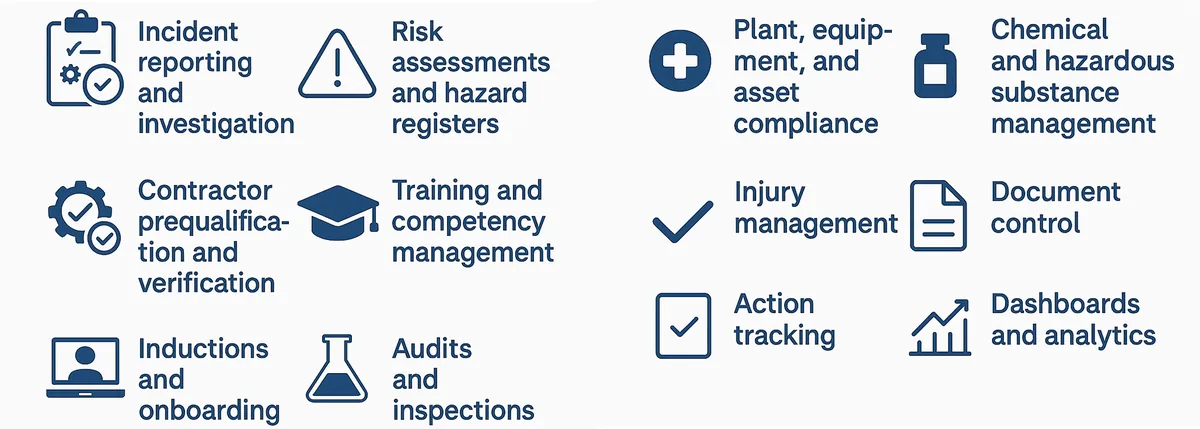
The best systems bring all of these components together, allowing organisations to manage safety performance holistically instead of through fragmented systems.
Essential Features to Look for in WHS Compliance Software
When selecting a platform, these are the core components that matter most:
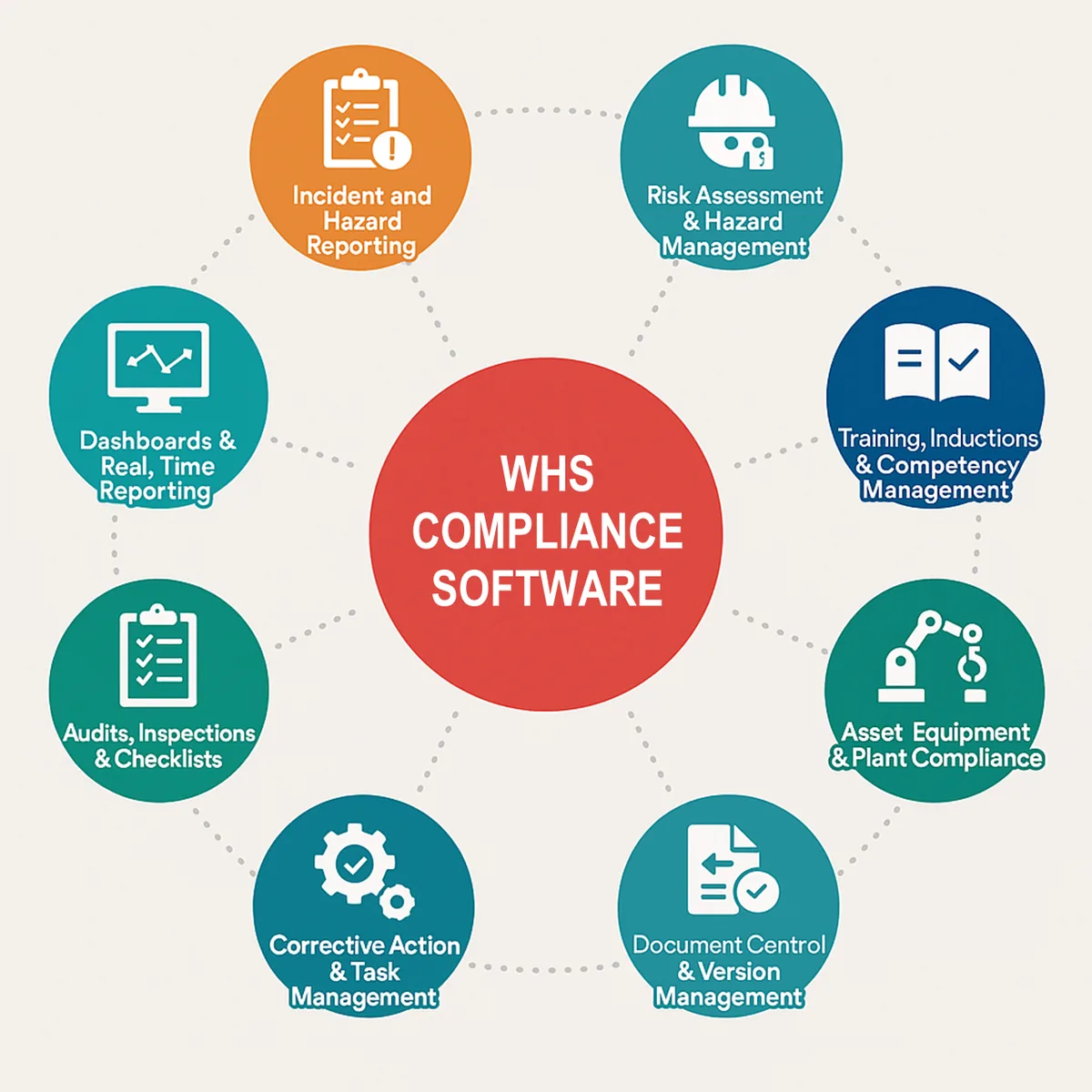
1. Incident and Hazard Reporting
Effective WHS management begins with timely reporting. A strong digital system should include:
- Mobile reporting from any device
- Photo and video evidence
- Voice-to-text functionality
- Categorisation of events
- Automated notifications
- Corrective action workflows
- Root cause analysis tools
- Reporting templates aligned with regulator requirements
Prompt reporting helps organisations react quickly, preventing repeat incidents and strengthening safety culture.
2. Risk Assessment and Hazard Management
Risk management is the backbone of compliance. Look for a platform that supports:
- Customisable risk matrices
- Preloaded hazards and controls
- Hierarchy of control templates
- Live hazard registers
- Review schedules and automated reminders
- Controls verification workflows
- Integration with contractor and site-specific risks
This ensures risks are not just identified but monitored and reviewed consistently.
3. Training, Inductions & Competency Management
Training records are one of the most requested evidentiary items during audits and investigations.
Your WHS platform should allow you to:
- Track training requirements by role
- Upload certificates and licences
- Generate expiry reminders
- Conduct online inductions
- Assign micro-learning modules
- Track completion status
- Produce competency matrices
This makes it easy to demonstrate that workers are properly trained and authorised.
4. Audits, Inspections & Checklists
Digital audits help standardise evaluation and enforce consistency.
Look for features such as:
- Mobile inspection capability
- Custom templates
- Photo capture
- Automated scoring
- Corrective action creation
- Time-stamped audit trails
- Exportable reports
This supports both compliance monitoring and continuous improvement.
5. Asset, Equipment & Plant Compliance
For high-risk workplaces, asset management is essential.
A strong system will include:
- Pre-start checklists
- Maintenance schedules
- Defect reporting
- Calibration dates
- Service logs
- Fire safety equipment registers
- Heavy plant and machinery records
Assets must be safe to use at all times, and a digital system helps manage this.
6. Document Control & Version Management
Safety documentation must always remain current.
Your WHS platform should provide:
- Version control
- Document approval workflows
- User access permissions
- Acknowledgment tracking
- Policy distribution logs
- Secure cloud storage
This ensures workers always access the latest, authorised version of each document.
7. Corrective Action & Task Management
Action management is one of the most critical compliance activities.
Your system should allow:
- Automatic action creation from incidents, audits, hazards, and inspections
- Priority levels and due dates
- Assignment by user or role
- Automated reminders
- Escalation workflows
- Real-time tracking
- Closure validation
This ensures that issues are not simply identified, but resolved.
8. Dashboards & Real-Time Reporting
Data drives safety improvements. Leadership teams need visibility.
Dashboards should show:
- Incident trends
- Risk exposure
- Training gaps
- Contractor compliance
- Outstanding actions
- Audit results
- Site-by-site comparisons
This supports executive oversight and legal due diligence.
How WHS Compliance Software Improves Safety Culture
Safety culture depends on participation, transparency, and trust. Digital systems support this by making safety easier and more accessible.
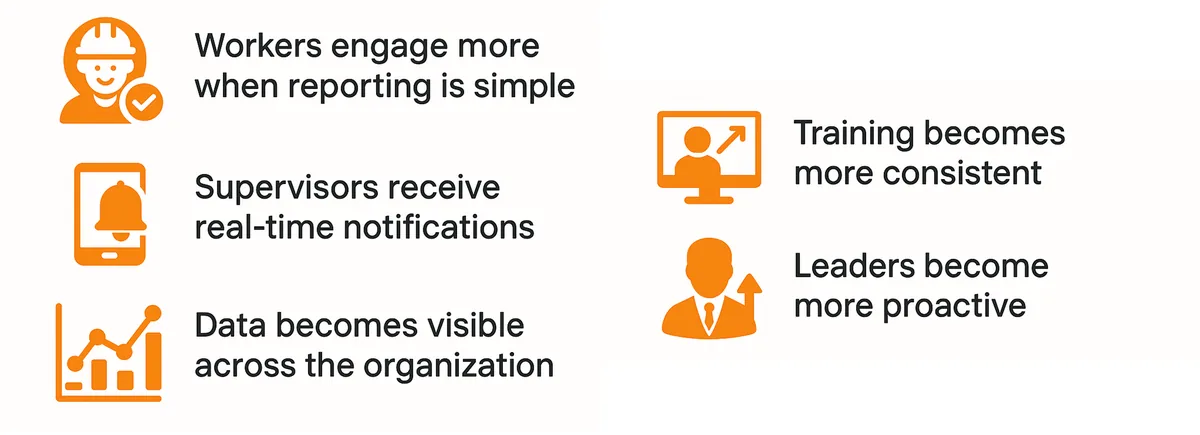
The Role of WHS Compliance Software in Meeting Legal Requirements
Digital WHS platforms help businesses meet obligations such as:

During investigations or audits, digital evidence is often the difference between compliance and prosecution.
Common Problems Solved by WHS Compliance Software
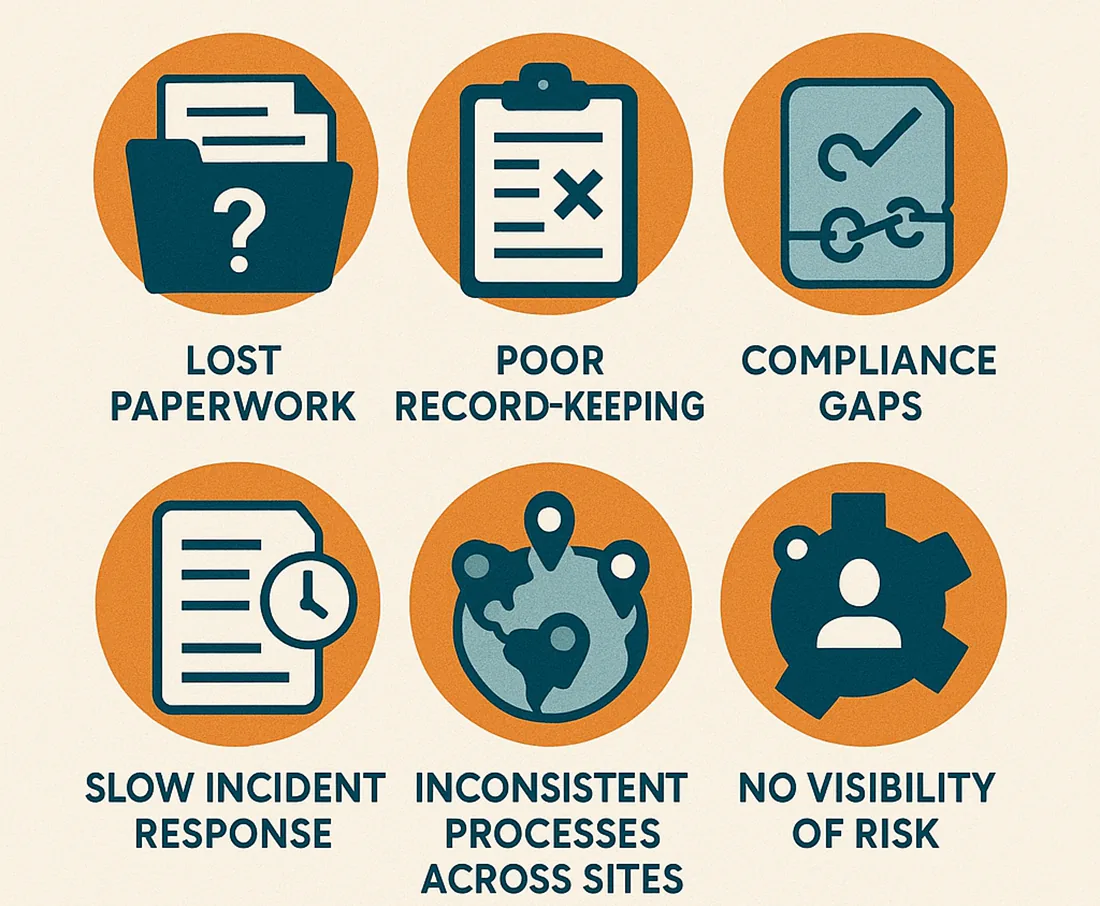
1. Lost paperwork
Forms no longer disappear into folders.
2. Poor record-keeping
Digital systems create consistent, time-stamped, auditable trails.
3. Compliance gaps
Training, licences, and inspections never expire unnoticed.
4. Slow incident response
Notifications ensure immediate escalation.
5. Inconsistent processes across sites
Centralised templates keep everyone aligned.
6. No visibility of risk
Dashboards reveal trends, patterns, and problem areas.
How to Select the Right Platform for Your Organisation
When choosing a digital WHS solution, consider the following:
1. Is it designed specifically for Australian WHS requirements?
Many overseas platforms do not reflect Australian legislation, regulator expectations, or industry standards.
Ensure the system you choose is compliant, relevant, and local.
2. Is it truly mobile-first?
Your workforce must be able to use it anywhere, anytime.
3. Does it integrate with your existing systems?
Look for:
- HRIS integration
- Payroll integration
- Contractor platforms
- Asset management systems
- Learning management systems
- Reporting tools
4. Is the system intuitive for frontline workers?
If it is not simple, staff will not use it—and compliance will drop.
5. Does it scale across multiple sites or business units?
Scalability is essential for growing organisations.
6. What support and training is provided?
Reliable customer support is essential for long-term success.
7. What security standards does it meet?
Look for:
- ISO 27001 alignment
- Multi-factor authentication
- Secure data storage
- Data sovereignty guarantees
The Future of WHS Compliance Software
The next generation of digital safety platforms will integrate:

These technologies will transform safety, making workplaces more proactive, responsive, and intelligent.
The demand for WHS compliance software will continue rising as organisations recognise the need for efficient, defensible, real-time systems that reduce incidents and protect their people.
Conclusion: Digital WHS Systems Are No Longer Optional
Modern workplaces are too complex and too regulated for manual safety systems to cope. Whether you manage a construction company, aged-care service, retail network, government department, or manufacturing facility, digital WHS systems are now essential.
They reduce administrative work, improve compliance, strengthen safety culture, and provide leadership with the visibility required to meet due diligence obligations.
Choosing the right platform will help your organisation:
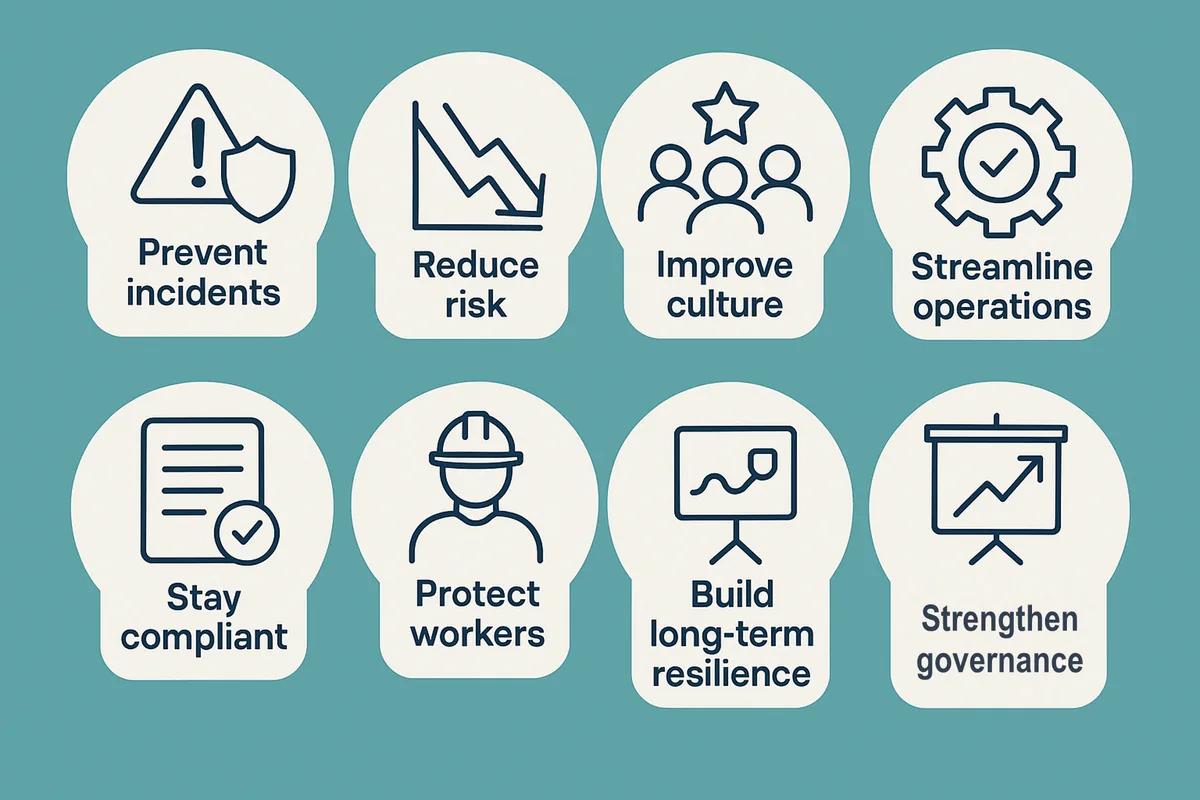
As organisational expectations, legislative requirements, and workplace complexity continue to increase, investing in modern WHS compliance software is one of the most effective steps any organisation can take to protect its people and its future.
Related content
Stay in the loop.
WHS news, platform updates, and the occasional rant. No spam.
By subscribing you agree to our Terms.