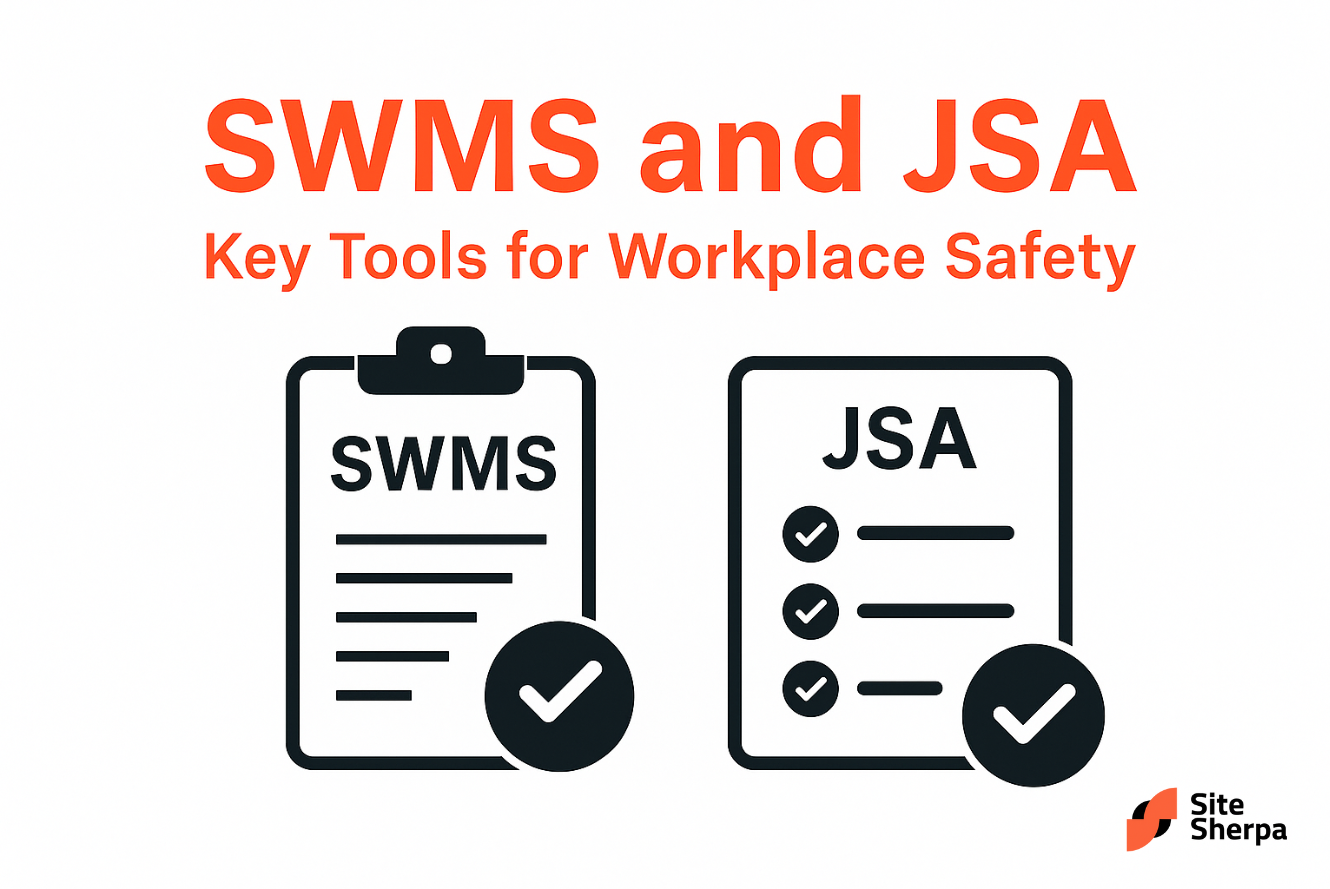
SWMS
JSA

Why They Matter and How Digital SWMS Simplify Compliance
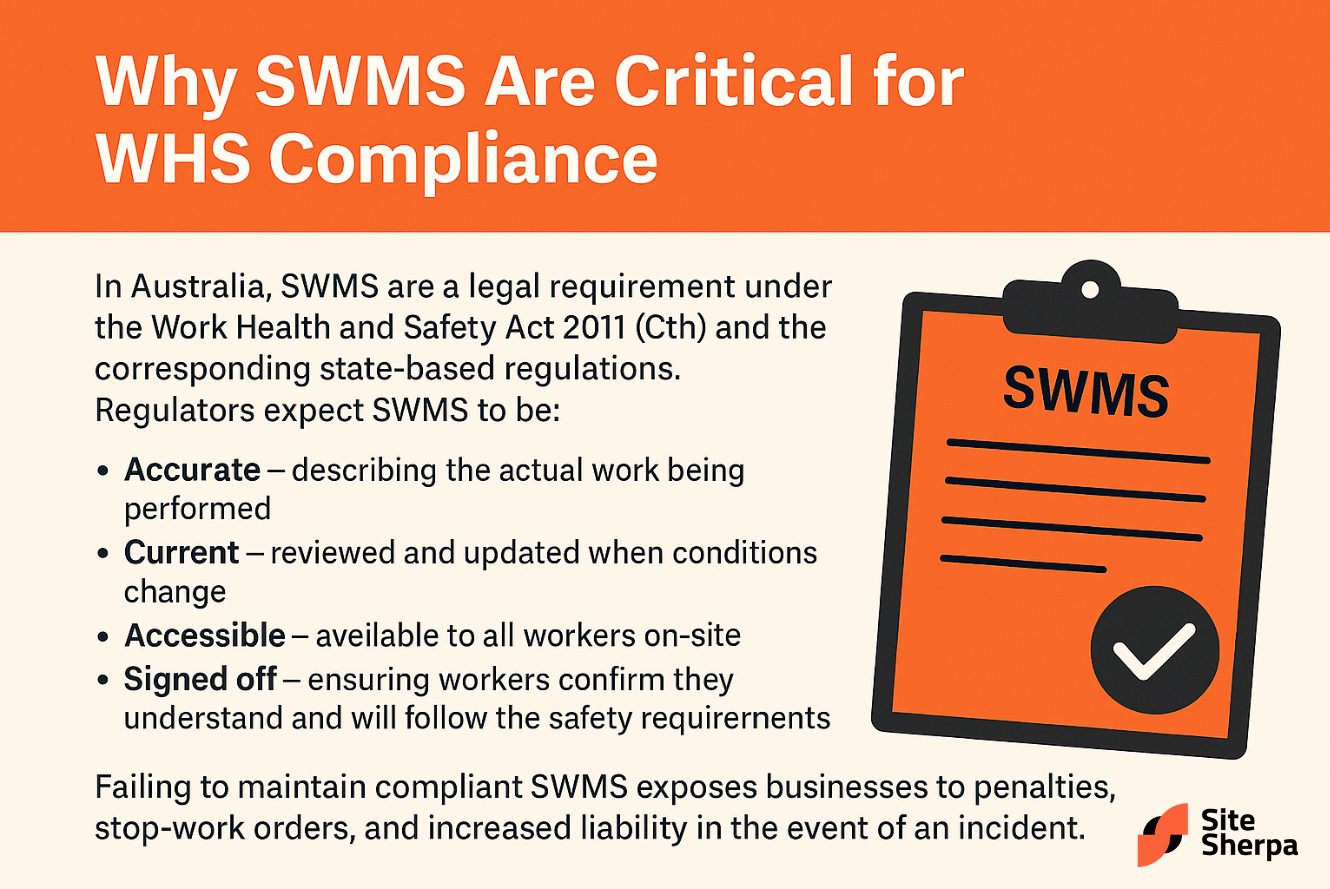
Safe Work Method Statements (SWMS) are an essential part of workplace health and safety in Australia. Required for all high-risk construction activities under the Work Health and Safety Regulations, they set out how specific tasks will be carried out safely, what hazards are involved, and the control measures in place.
For businesses, SWMS are not just a legal requirement, they’re also a critical tool for reducing risks, protecting workers, and demonstrating compliance. Yet too often, SWMS are treated as paperwork rather than a live safety tool. This is where digital SWMS solutions, such as SiteSherpa’s WHS platform, make a real difference.
A Safe Work Method Statement is a document that:
Every worker involved in the task must understand the SWMS, and it must be available on-site for the duration of the work.
While SWMS are critical, many businesses struggle to manage them effectively. Common issues include:
These challenges highlight the need for a smarter approach.
A digital SWMS system, like SiteSherpa’s, transforms how businesses manage safety documentation. Key benefits include:
.png)
This reduces administrative burden while strengthening WHS compliance and safety outcomes.
Whether paper-based or digital, organisations should follow these best practices:
Safe Work Method Statements (SWMS) are a cornerstone of workplace safety in Australia, ensuring high-risk tasks are performed safely and legally. But compliance is only effective if SWMS are actively managed, regularly updated, and easily accessible to workers.
👉 SiteSherpa’s digital SWMS platform takes the hassle out of safety paperwork. With mobile access, real-time updates, and automatic compliance logs, we make SWMS practical, auditable, and effective. Contact us today to see how we can help you streamline SWMS management and strengthen workplace safety.